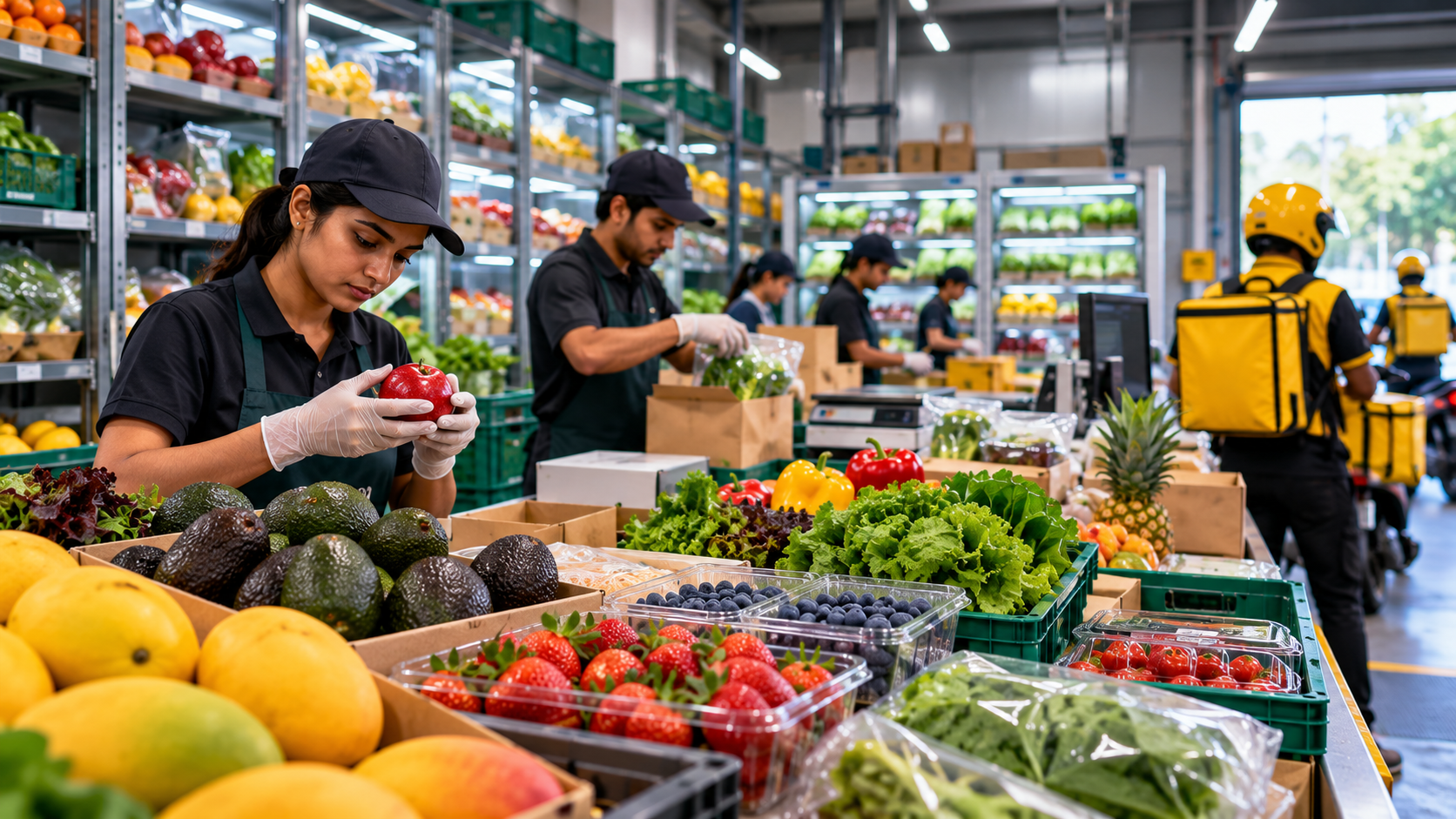
Quick-commerce platforms Blinkit and Zepto are expanding into premium fruits and vegetables, but industry experts say maintaining freshness, consistency and quality could be harder than delivering orders in 10 minutes.
New Delhi, October 21 — Blinkit and Zepto are pushing deeper into premium fruits and vegetables through their respective Gourmet and Select offerings, but the move is creating a new operational challenge for quick-commerce companies: balancing speed with consistent freshness and quality.
The premium produce segment is very different from packaged groceries because the quality of items such as mangoes, avocados and berries can vary widely from one piece to another.
A poor-quality delivery can quickly damage consumer trust, especially when buyers are paying a premium for freshness and consistency.
The challenge is particularly important because the traditional 10-minute delivery model depends on keeping inventory close to customers in dark stores.
While that model improves availability and speed, pre-stocking highly perishable products can increase the risk of spoilage, wastage and inconsistent quality.
Specialist fresh-commerce players are taking a different approach.
Handpickd, for example, procures products against live customer orders instead of holding large inventories in warehouses. Customers receive their produce the following morning rather than within minutes.
Founder and CEO Anant Goel said freshness matters more than speed when customers are buying fresh kitchen essentials.
Industry experts say success in the category will depend on factors such as sourcing standards, traceability, cold-chain integrity, inventory management and fulfilment quality.
Ankur Mittal, co-founder of Inflection Point Ventures, said delivery speed could become secondary if platforms can consistently deliver produce closer to the time it was harvested.
For consumers, knowing where produce was grown and when it was harvested could become more valuable than whether it arrives in 10 minutes or 40 minutes.
Deloitte South Asia partner Anand Ramanathan said quick-commerce companies may eventually need a tiered fulfilment model.
Frequently purchased produce could continue to be stocked locally, while specialised or imported items could be delivered through same-day or next-day scheduled fulfilment.
The opportunity remains substantial.
A Google-Deloitte estimate cited in the report projects India’s quick-commerce market could reach $50-90 billion by 2030-31, serving between 70 million and more than 100 million shoppers.
However, premium fresh produce may require a different operating model from the one that made quick commerce popular.
The next phase of growth could therefore depend less on shaving minutes from delivery times and more on building trust around quality, sourcing and freshness.