crop disruptions and higher freight costs are pushing up prices ahead of the festive season.
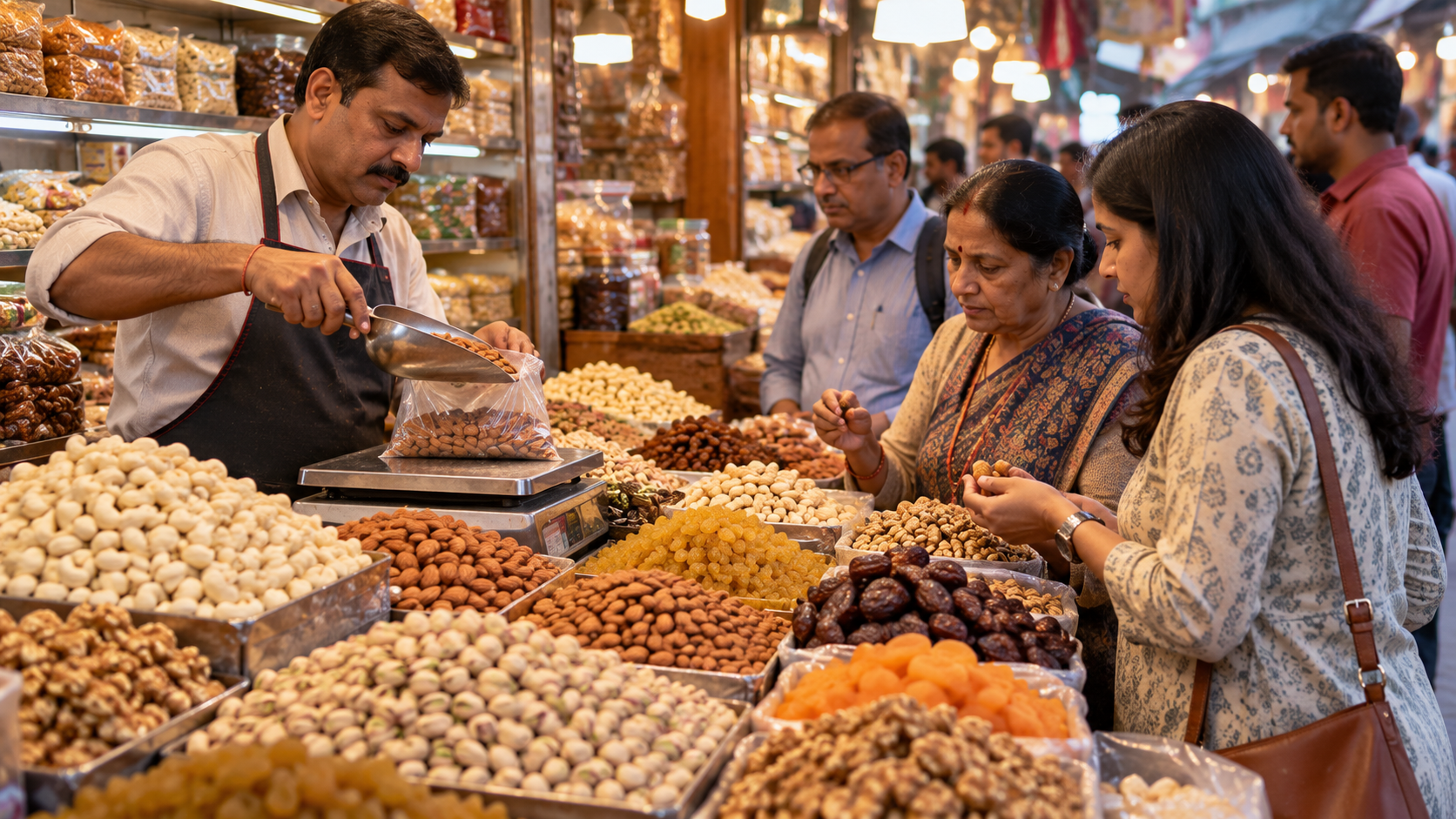
Consumers are expected to pay more for dry fruits this festive season as geopolitical tensions, supply disruptions and higher freight costs push prices higher across several varieties.
Prices of several dry-fruit varieties have increased by around 15–30% amid disruptions in the West Asia region, higher freight rates and crop-related constraints, according to industry representatives.
International Nuts and Dry Fruits Council said the price impact could affect sales, with traders anticipating a 10–15% decline due to higher prices and weaker consumer demand.
Supply disruptions caused by the conflict in the region have contributed to a sharp increase in container freight rates. The situation has added to costs for importers and traders dealing in dry fruits and other imported commodities.
Cashews have remained comparatively resilient, with prices largely unchanged from the previous year. Retail prices of cashews were around ₹900–₹1,400 per kg, while broken cashews were available at lower prices.
The impact has been more visible across other categories. Almond prices have increased by around 10–20%, while production of almonds and other dry fruits has been affected by weaker crop yields in the United States.
Pistachios, pumpkin seeds, pecans and dates have also faced supply-related pressures. Traders are increasingly looking towards alternative sourcing destinations as disruptions affect established supply chains.
Industry representatives said consumers could increasingly shift towards more affordable varieties as premium dry fruits become expensive. Retailers are therefore expecting changes in buying patterns during the festive season.
The rise in prices comes at a time when dry fruits typically see stronger demand because of festivals and gifting. However, sustained price increases could encourage consumers to reduce quantities or choose lower-priced alternatives.
Importers and traders are closely watching international crop conditions, freight costs and geopolitical developments, which are expected to determine the availability and pricing of dry fruits in the coming months.