
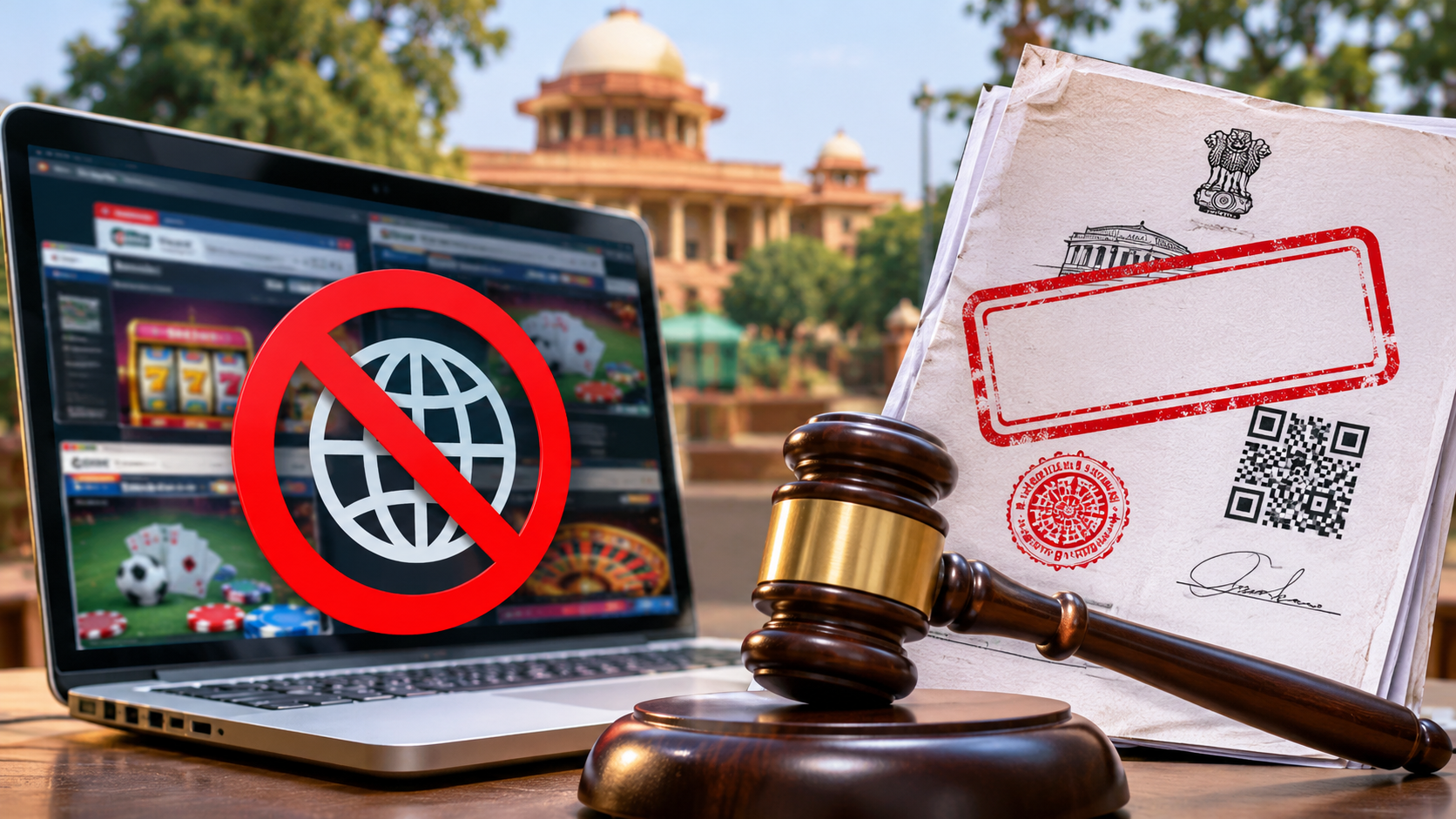
A Reuters investigation has revealed that 129 betting websites were ordered blocked in India using forged court documents attributed to the Rajasthan and Allahabad High Courts. Police have launched an investigation, while the possible involvement of AI remains unclear.
Highlights
- Indian authorities ordered 129 betting websites blocked using fake court orders.
- Forged documents impersonated the Rajasthan and Allahabad High Courts.
- Government issued blocking directions on July 21 and September 2.
- Fraudsters allegedly used fake court seals, QR codes and emails.
- Allahabad High Court filed a police complaint on November 6.
- Investigators have not established whether artificial intelligence was used.
India Orders Blocking of 129 Websites Based on Fake Court Orders, Police Launch Investigation
India’s Department of Telecommunications (DoT) ordered internet service providers to block 129 betting websites based on forged court orders purportedly issued by the Rajasthan and Allahabad High Courts, according to an investigation by Reuters.
The revelations have raised serious concerns about the verification procedures used by government authorities before implementing website-blocking directives. The documents appeared to carry authentic judicial seals and were submitted through emails impersonating legal professionals. Reuters+1
How Was the Fraud Uncovered?
According to Reuters, the Department of Telecommunications issued two blocking directions on July 21 and September 2, 2026, relying on documents attributed to the two High Courts.
However, a review of official court records found no evidence that either judicial order existed.
The Rajasthan High Court’s registrar confirmed that the purported order was not available on the court’s server and appeared fraudulent.
Similarly, the Allahabad High Court confirmed that a document issued in its name was fake.
Following these findings, the Allahabad High Court filed a police complaint on November 6, prompting an investigation into alleged forgery and cheating.
Fake Emails Led to Website Blocking
The investigation revealed that emails played a significant role in the suspected fraud.
On July 19, an individual identifying himself as advocate Aryan Chaudhary emailed a purported Rajasthan High Court order to the telecom department, demanding action within 24 hours.
Two days later, authorities issued instructions to block 34 betting websites.
In another instance, an individual identifying himself as Kartikey Pandey submitted a purported Allahabad High Court order through email on August 22.
Based on subsequent correspondence, the telecom department directed internet service providers to block another 95 betting websites on September 2.
Fake QR Code Used to Make Documents Look Genuine
The forged Allahabad High Court document contained an official-looking logo, blue court seal and a signature attributed to Justice Garima Prashad.
It also featured a QR code that appeared to provide a way to verify the document.
However, scanning the code reportedly redirected users to an unrelated webpage displaying only a case number.
The judge’s office subsequently confirmed that no such judicial order had been issued.
Was Artificial Intelligence Involved?
The case has also raised questions about the potential misuse of artificial intelligence in generating convincing legal documents.
However, investigators have not established whether AI technology was used to create the forged court orders.
Reuters reported that the identities of those responsible remained unknown.
Police Investigation Underway
Police have registered a case against unidentified individuals in connection with the forged Allahabad High Court order.
Authorities are investigating the alleged fabrication of judicial documents and their submission to government departments.
As of the Reuters report published on November 11, no arrests had been made.
The incident highlights potential weaknesses in India’s online content-blocking mechanism and raises broader questions about document authentication, cybersecurity and safeguards against fraudulent government takedown requests.