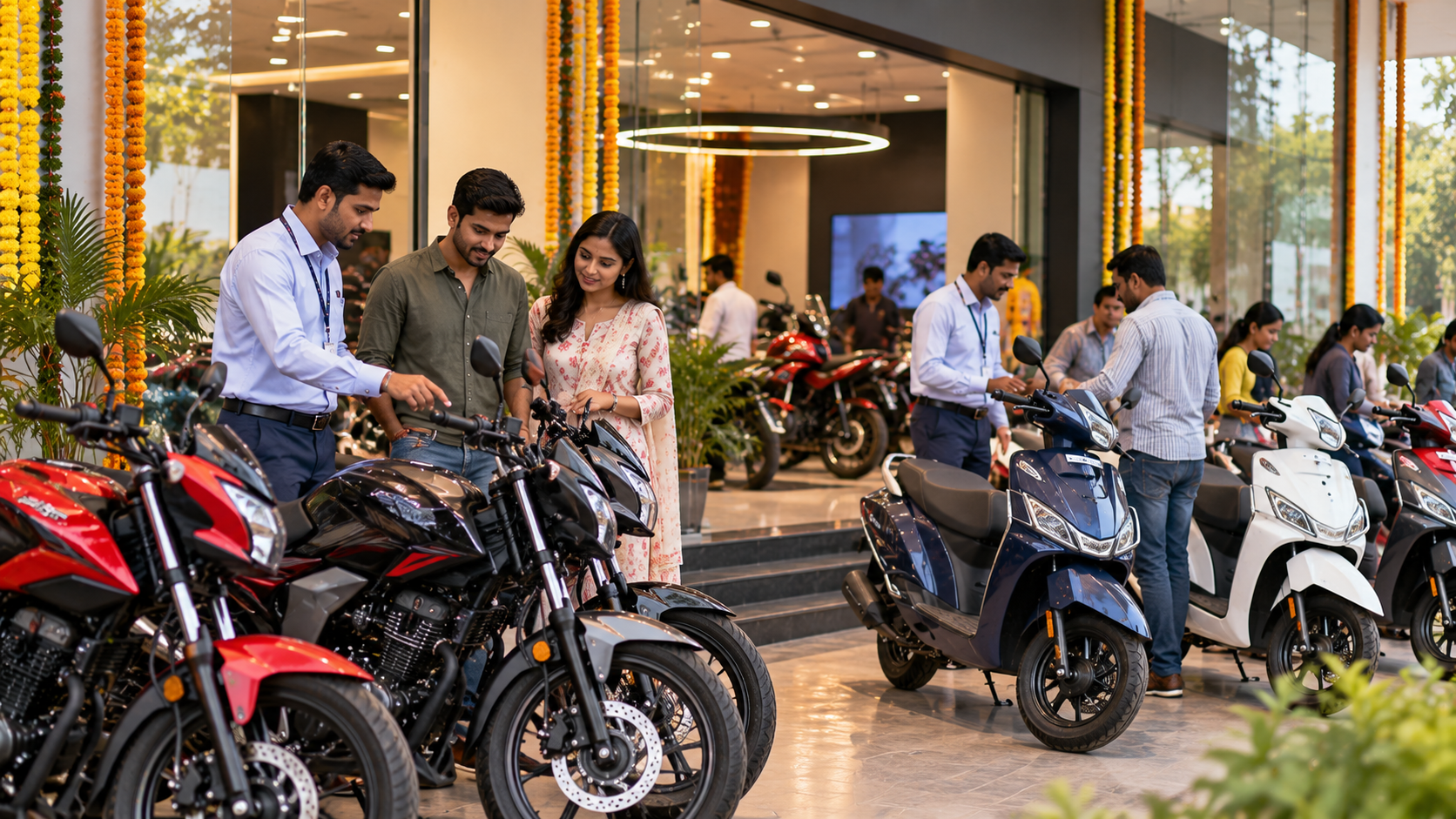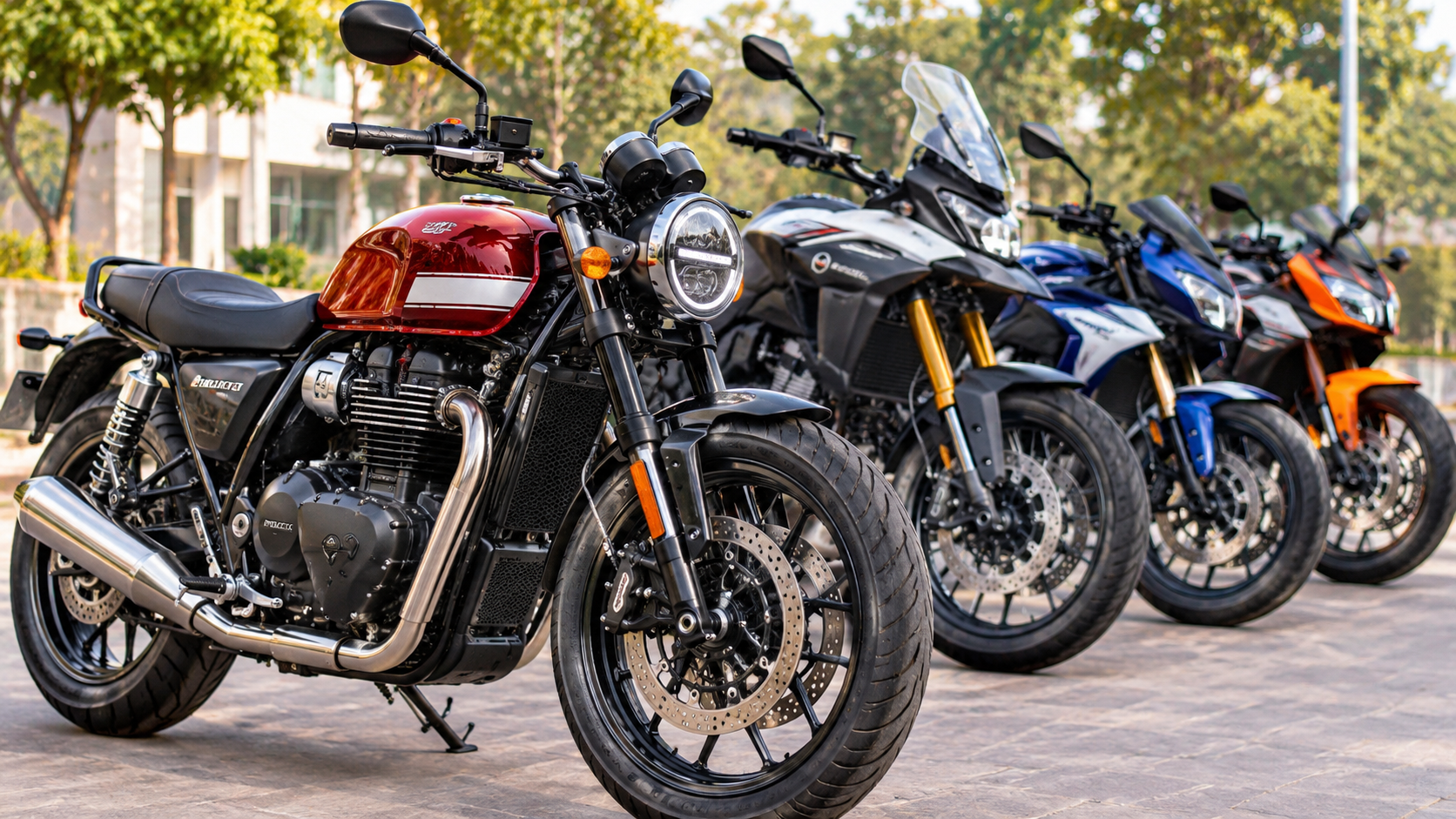
Motorcycles above 350cc face higher taxes under GST 2.0, while lower rates on smaller engines have boosted demand for 250-350cc and 350cc motorcycles, according to SIAM data.
Highlights
- GST 2.0 introduced revised tax slabs for motorcycles in September 2026.
- Motorcycles above 350cc attract the highest GST rate of 40%.
- Sales of 350-500cc motorcycles jumped 41% to 68,510 units.
- Sales of 500-800cc motorcycles declined 20% to 23,114 units.
- The 250-350cc segment recorded a 41% increase in sales.
- Overall motorcycle sales grew 10% to 6,928,700 units during April-September FY27.
New Delhi, November 1, 2026: India’s motorcycle market is witnessing a shift in demand following the implementation of GST 2.0 in September 2026. While motorcycles with engines above 350cc face a higher tax burden, lower taxes on smaller motorcycles have helped drive strong sales growth in several segments.
According to April-September FY27 sales data released by the Society of Indian Automobile Manufacturers (SIAM), the revised GST structure has influenced consumer preferences, particularly in the premium motorcycle category.
350-500cc Motorcycle Sales Jump 41%
The 350-500cc motorcycle segment recorded a sharp 41% increase in sales during April-September FY27, reaching 68,510 units compared with 40,541 units in the corresponding period of the previous financial year.
However, the segment now faces pressure from the higher GST rate applicable to motorcycles with engine capacities above 350cc.
Under GST 2.0, motorcycles exceeding 350cc attract a 40% tax rate, while motorcycles with engine capacities up to 350cc fall under the lower 18% slab.
Industry experts believe the tax difference could influence buying decisions and encourage customers to choose models with smaller engines.
500-800cc Motorcycle Sales Decline 20%
The 500-800cc motorcycle category recorded a 20% decline in sales, falling from 28,823 units to 23,114 units during the April-September period.
In contrast, the tax-friendly 250-350cc segment registered a significant 41% increase in sales, rising from 500,419 units to 703,329 units.
The contrasting performance highlights the growing importance of engine capacity in determining motorcycle affordability.
GST 2.0 Changes Motorcycle Tax Structure
The revised GST framework, which came into effect in September 2026, introduced a higher tax slab for motorcycles above 350cc.
Manufacturers producing premium motorcycles could face challenges as higher taxes increase the effective purchase price for customers.
Meanwhile, companies offering motorcycles within the lower tax bracket may benefit from stronger consumer demand.
Overall Motorcycle Market Grows 10%
Despite differences across engine categories, India’s overall motorcycle market continued to expand.
SIAM data showed that motorcycle sales increased by approximately 10% during April-September FY27, reaching 6,928,700 units compared with 6,273,944 units in the same period last year.
The growth indicates continued demand for two-wheelers, although the impact of the revised GST rates may become clearer in the coming months.
As manufacturers adjust pricing and product strategies, the 350cc engine-capacity threshold could become an increasingly important factor in India’s premium motorcycle market.