
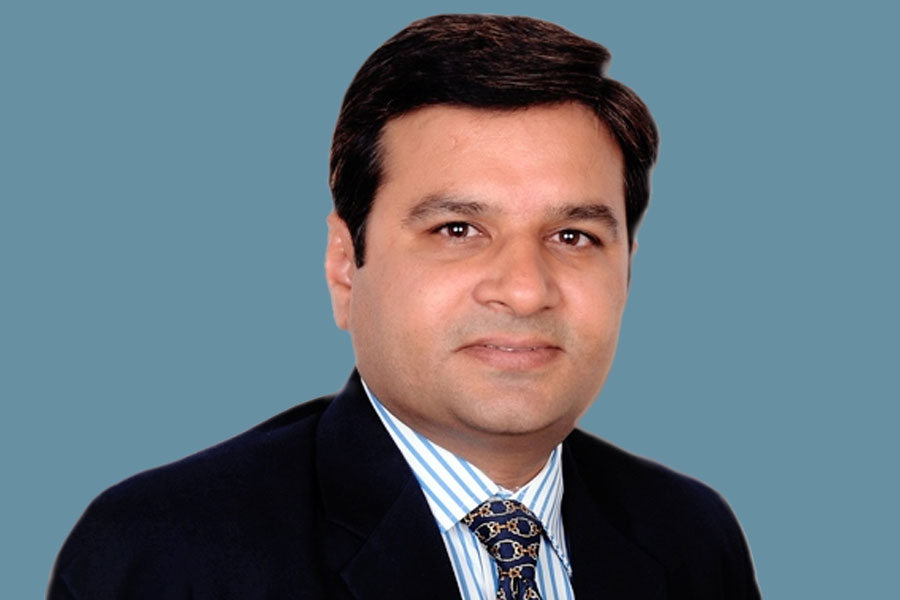
Dr Pralok Gupta, Associate Professor, Centre for WTO Studies and Member, Committee for Advanced Trade Research, talks about India’s prospects and possible strategies for growth in healthcare services exports post-pandemic.
IBT: How do you see the change in global approaches to healthcare infrastructure and capabilities because of the pandemic as every country struggled to contain its spread and impact?
Dr Pralok Gupta: We can see this from two perspectives – hospitals and government. Hospitals or health service providers are focusing more and more on online delivery of healthcare services and use of telemedicine and digital tools to supply services through online mode. Also, there is an increasing focus on supply chain issues post-pandemic – building more resilience, developing stocks of critical inputs like oxygen, testing equipment, etc. So, there is more awareness and concerns about supply chain issues in the post pandemic world.
In situations such as the present pandemic, supply chain issues move beyond the domain of healthcare providers and become more public policy issues. The government is actively involved in creating these capacities, like developing dedicated plants for oxygen in India, or increasing the supply of certain imports through reducing import duties or specifically creating manufacturing avenues, corridors for producing some of the critical inputs, etc. For instance, in India, we are making dedicated efforts to reduce our reliance on APIs.
Also important is how you increase the interaction between the healthcare service providers and the available infrastructure. In developed countries, there are shortages of healthcare service providers. So, they are relaxing their norms to attract talent from other countries, at least for key areas and skills. And this was more prominent during the pandemic, when they relaxed visa norms for certain paramedics, nurses or doctors.
We must note, however, that mobility is a very sensitive issue for developed countries, so they constantly review the kind of relaxation they have done for medical professionals as well. So, these are three distinct changes I can see happening in the post-pandemic world.
IBT: What are the factors so far which have driven India’s growth in health care services? Apart from cost, what has made us competitive?
Dr. Pralok Gupta: We need to think from both demand side and supply side perspectives. So, from demand side, our population size is continuously increasing, which obviously implies high demand for healthcare services. Also the kind of lifestyle or work profiles we have are contributing more to lifestyle diseases. The third aspect is external factors, like the pollution or environment in which we are living, which weakens our immunity, leading to different kinds of illnesses and demand for healthcare services.
On the supply side, two important factors are the increasing purchasing power or income, particularly of the middle class. Of course, there are some variations during the pandemic because income got reduced, particularly those in the private sector. But in general, if we see the trend over the past 10-15 years, there is a rise in the income or purchasing power, particularly of the middle class, with increasing demand for healthcare services.
The second is increasing insurance penetration. Though insurance penetration is still much lower in India for healthcare services as compared to developed countries, it has increased over the years. Consequently, more and more individuals are going to good hospitals, because they have insurance and there is an increasing awareness about health insurance, even in tier 2 and 3 cities.
IBT: Coming to exports, what are the major modes that India has developed so far to, in terms of exports of healthcare services and how do you see it changing post-pandemic?
Dr. Pralok Gupta: India has done remarkably good in Mode 2 or medical tourism, where foreign patients come get treatment in Indian hospitals. Medical tourism has grown significantly in the past few years, leaving aside this pandemic when travel restrictions were imposed. Government of India has also taken steps to increase Mode 2 exports in health care services. The other one, is Mode 4 or movement of natural persons in terms of like doctors, nurses, or other health care professionals. There also, we have done well.
Post-pandemic, there was all kinds of troubles that affected patient movement. Also, there was increasing concern about hygiene. So many persons tended to avoid travel. So that way, Mode 2 of health services exports got affected significantly in the post-pandemic time.
Now, how these are shaping up in the post-pandemic world? Mode 2 is likely to revive in coming years as the fear of COVID comes down and normalcy get restored. For Mode 4, it is better, because as I mentioned in my previous remarks, some countries have relaxed their norms to allow doctors, nurses, etc. So that way, it’s a good thing that there are increasing avenues for Indian health care professionals.
But it’s not applicable to all kinds of healthcare professionals. It’s kind of a nuanced approach taken by foreign countries to allow relaxed norms only for certain key professionals. We need to analyze what kinds of relaxation some countries have done and whether our healthcare professionals can provide those kinds of specialized services. Demand and supply needs to be mapped accordingly.
And the third change is Mode 1, which is online delivery of services. So, in the pre-pandemic world, it was not that prominent. But now post-pandemic, it has gained traction both within domestic as well as in the international context. It is going to get only better.
Mode 1 has an important role to play in the revival of Mode 2 as well. For instance, consider somebody is having some kidney transplant in India. A kidney transplant procedure is not limited to the surgery and recovery period of 10-15 days. It requires a continuous attention for a prolonged period of time and follow up on aspects like medicines and precautions to be taken. But it may not be possible for the foreign patient to visit India again and again every month. This is where Mode 1 would be very helpful.
The critical aspects of treatment where doctor-patient physical interaction is important, can be done when the patient is coming to India (Mode 2). But post-operative follow up can be taken care of by online follow-up/telemedicine (Mode 1) ,where the patient can consult with the doctor at regular intervals and the latter can monitor the progress.
There could be diagnostics in the home country of the foreign patient, like blood tests, X-rays, ultrasound etc. and the same can be analyzed online by doctors in India. Based on that, there can be an assessment whether the person needs to come to India again or certain medicines can be prescribed online, which (s)he can purchase in the home country. So, that way Mode 1 will help in a great way in improving Mode 2 exports for India.
But the challenge here is that in some countries, Mode 1 requires certain kind of data flow regulations also, so data protection, sharing and privacy issues come into play. Some countries may have stringent data protection requirements, which India may not be able to follow, like EU. If some person is coming from EU for treatment in India, then health data sharing would be difficult because of the GDPR requirements.
IBT: How can India benchmark itself better to its healthcare services, either mode wise or segment wise. Also, how can India build adequate quality healthcare infrastructure?
Dr. Pralok Gupta: If we see the competition, particularly for Mode 2, Singapore and Thailand are key players in this region. That is because they provide good infrastructure, state-of-the-art facilities, good user experience, end-to-end solutions, etc. To some extent, India is lacking in this aspect. This is why we are able to attract patients from African countries, immediate neighbors like Bangladesh or Nepal and Afghanistan, but not from most of the ASEAN and Asia-Pacific countries. To improve our medical tourism as compared to markets, we need to improve on our infrastructure and end-to-end user interface.
For Mode 4, particularly nurses, our competition is mainly from Philippines. It’s a very important nursing services provider globally. And they have specialized agreements with certain countries, for example, US, they have agreement for the supply of nurses. Unfortunately, we do not have those kinds of dedicated agreements. That is something which need to work upon to promote our healthcare services exports.
IBT: Are we able to utilize our commitments in existing FTAs effectively? What should be the approach for healthcare services in FTAs at present?
Dr. Pralok Gupta: Generally, there are not very significant or very liberal commitments in health care services across FTAs that India has signed so far. And usually, even in the negotiations happening across the world, countries are a bit apprehensive or sensitive on committing on health care services, considering that it is very important for their public and issues like consumer protection are involved. So that way, the commitments are not much. But having said that, in some FTAs, for example, in Singapore, we had a very good commitments with respect to mutual recognition agreement for nurses, dentists and medical professionals.
As far as realization of these commitments is concerned, it’s been a mixed kind of success. For dental services, we could not have an MRA still, though there was a timeframe for that in the agreement itself of three years. It was signed in 2005, but now we are in 2022. But for nursing services, we were successful in getting an MRA, which recognized initially four nursing institutions of India to supply the nurses to Singapore. In a later review, it was increased to seven institutions.
As far as future FTAs are concerned, generally countries are apprehensive about making commitments on health care services. And whatever commitments are being taken are very much dependent on the mutual recognition agreements. Unless there is a dedicated mechanism or good provisions for mutual recognition agreement, it would be very difficult to increase our healthcare services exports on account of FTAs.
Of course, there could be an increase because there is a demand in developed countries and many developing countries, so that’s an autonomous mechanism. But in terms of what FTA may contribute, one avenue could be this mutual recognition agreement. Usually, the concern is that mutual recognition is in the domain of regulators which are independent, so the government cannot force them to recognize certain qualification.
These are the kinds of realistic situations which make it difficult to get MRA provisions in the FTAs. But even in those situations, the facilitative elements or some kind of pushing the regulators (if not compelling, but at least some kind of moral persuasion or pushing), or starting some kind of facilitated dialogue, can help, at least moving in thaedirection of signing an MRA.
IBT: Can AYUSH be a kind of catalyst for medical/healthcare services tourism? And how do you see it happening?
Dr. Pralok Gupta: This is certainly one area where we need to focus more and more and it has a scope for growth also. But we need to focus again, on recognition. Our well-being services like Yoga or Ayurveda, may not be present in other countries. Of course, there may be certain followers at an individual level, but not at an institutional level.
Efforts need to be done there both by the trade ministry as well as the health ministry in that direction, so that at least there are certain results. With Mauritius, we have some kind of recognition with respect to yoga and other services and we have an MoU with Switzerland for the recognition of Yoga. So these incremental steps gradually will help in wider recognition of yoga across geographies.
The second is the internal quality, in terms of both products and services and the professionals we are producing. That is very important, because if you are seeking recognition and projecting your traditional medicine, you have to prove the quality of those products and services. And if there are suboptimal products or services, that will create a bad name for the entire sector. So ranking of AYUSH institutions is also important, so that at least there is some signaling of quality.
We can project that these are the institutions ranked through objective and transparent processes. That is a clear-cut signal that we have a quality benchmarking of these services. So, there should be an objective criterion to have those kinds of rankings and that, I think, that would play an important role in getting recognition of Indian professionals.
Well being services is another area to focus in the post pandemic recovery. Even in the developed world, there is a greater realization, though more at an individual level, that Yoga and Ayurveda have the power to cure post-pandemic issues like mental issues, depression tendencies or physical issues. So, more awareness and systemic efforts would be required in this direction, so that whatever is there at the individual level in these countries, becomes institutional. These are some of the key things I think, which we need to work on in future to ensure more and more exports of our traditional medicines.
The author is Associate Professor, Centre for WTO Studies and Member, Committee for Advanced Trade Research, TPCI. Views expressed are personal.