By: Himanshu Kumar
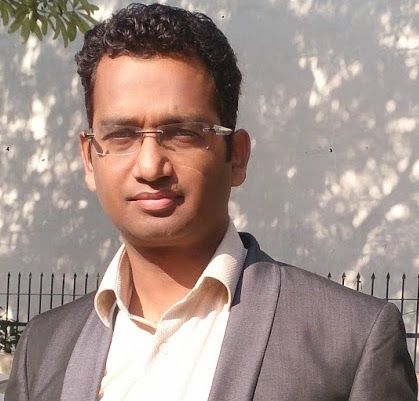
India needs to invest more in ambitious technologies and give entrepreneurs time to build them, CA Himanshu Kumar, founder of TaxbotGPT.ai, argues in an article questioning the country’s approach to innovation.
In his November 16 article, titled “A Rocket Fell From the Sky and Landed in Two Giant Arms. Why Isn’t This Happening in India?”, Kumar uses SpaceX’s Starship programme to make a broader case for long-term investment and a greater willingness to accept failure.
He describes the spacecraft’s return from orbit and capture by a tower’s giant arms as an example of what sustained technological ambition can achieve. His central argument is that breakthroughs require repeated experiments, expensive setbacks and investors willing to keep funding development.
Citing Reuters’ reporting on SpaceX’s financial disclosures, Kumar writes that the company spent about $3 billion on Starship research and development in 2025, compared with around $1.8 billion in 2024. Total spending on the programme, he notes, had exceeded $15 billion.
For Kumar, those figures illustrate the scale of commitment needed to create something fundamentally new.
Turning to India, he acknowledges the country’s engineering talent, large market and strong startup culture. However, he questions whether enough capital from major business groups is going towards technologies that could create entirely new industries.
Packaged foods, beverages and other established consumer businesses generate employment and have economic value, he writes. His concern is whether investment remains too concentrated in familiar opportunities.
Kumar also challenges the way innovation is discussed in the startup ecosystem. In his view, e-commerce primarily improves the movement of goods through better warehousing, transport, tracking and delivery. He recognises the work involved and its contribution to employment, but distinguishes these improvements from developing reusable rockets, new chip designs or foundational language models.
His criticism extends to investors. According to Kumar, funding discussions often focus on revenue, profitability and product stability, with less attention paid to what new capability a founder is attempting to create. He argues that this preference can direct capital towards versions of businesses that already work elsewhere.
The article also questions India’s ability to build a language model with widespread global adoption. Kumar attributes the perceived gap largely to an unwillingness to wait five or ten years for returns, rather than treating it solely as a shortage of money, computing power or talent.
His concluding appeal is for entrepreneurs to attempt difficult technological problems—and for investors to support them through uncertainty. India’s technological leadership, he argues, will require sustained backing for ideas whose commercial rewards may take years to emerge.
CA Himanshu Kumar is the founder of TaxbotGPT