India is expanding its expressway network to accelerate freight movement and reduce logistics costs, but expensive tolls and limited affordable roadside facilities are discouraging some truck drivers from using the new routes.
Highlights
- India is investing heavily in modern expressways to improve freight transportation.
- Many truckers continue to prefer older highways because of lower operating expenses.
- Affordable food, vehicle repairs and rest facilities remain important considerations.
- Expressways are designed to reduce travel times and improve logistics efficiency.
- Low commercial vehicle adoption could weaken the economic benefits of infrastructure investment.
- Better roadside services and competitive toll charges may encourage greater truck usage.
India’s $130 Billion Expressway Bet Faces Challenge as Truckers Stick to Older Highways
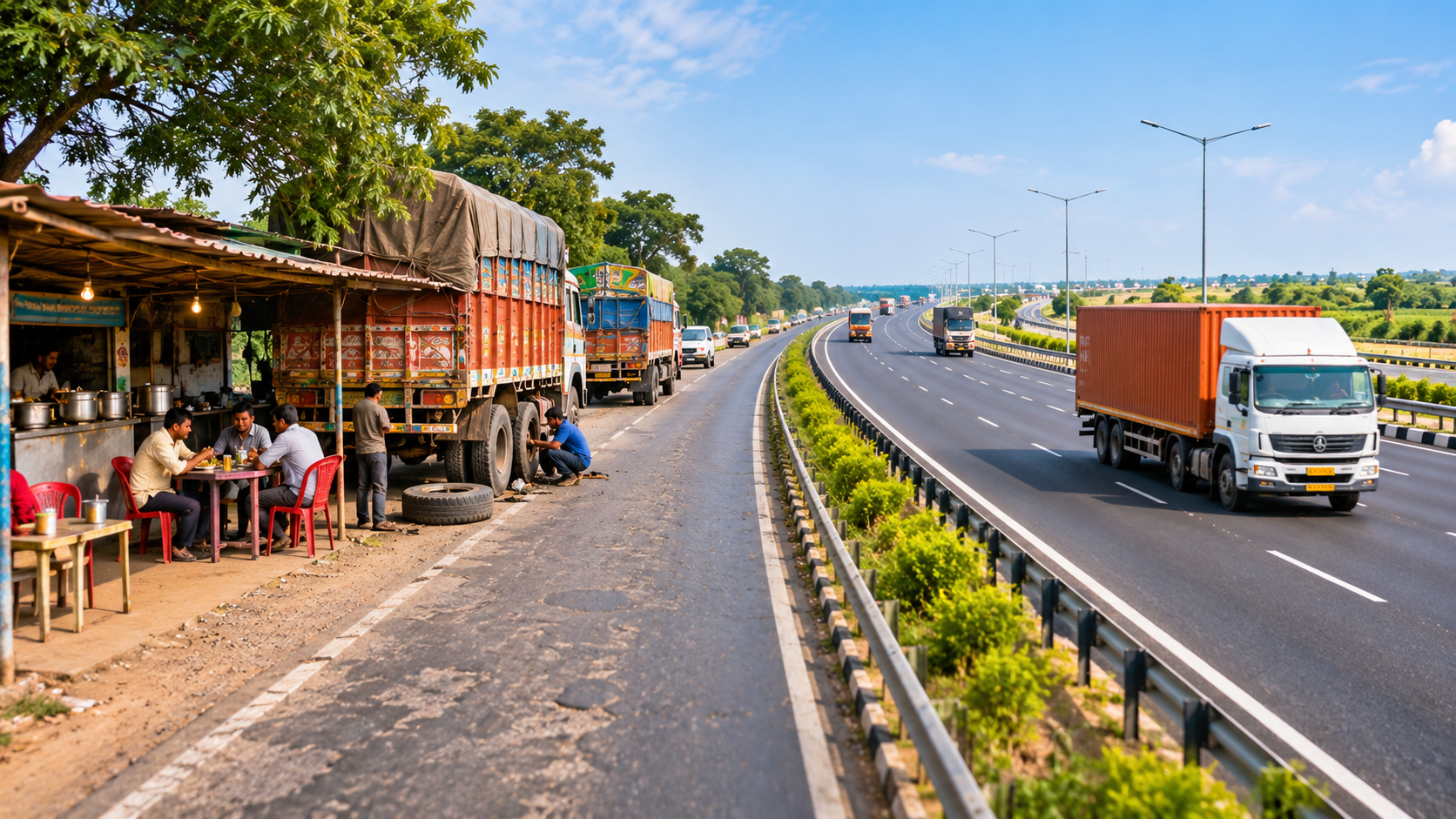
New Delhi, November 3: India’s ambitious plan to transform its freight transportation network through modern expressways is facing an unexpected challenge. Despite major investments in high-speed road infrastructure, many truck drivers continue to prefer older highways because they offer cheaper food, vehicle repairs, accommodation and rest facilities.
According to a Bloomberg report by Aryan Gupta, India’s approximately $130 billion expressway investment faces a critical test as the government seeks to encourage commercial vehicles to shift from traditional roads to faster routes.
Why Are Truckers Avoiding New Expressways?
India’s modern expressways are designed to reduce travel times, improve connectivity between industrial centres and accelerate goods transportation.
However, for truck drivers operating on tight budgets, travelling faster is not always the most economical option.
Traditional highways have developed extensive roadside ecosystems over decades. These include affordable dhabas, roadside mechanics, tyre repair shops, fuel stations and inexpensive accommodation.
Such facilities are particularly important for long-distance truckers who spend several days transporting goods between cities.
On newer expressways, affordable services may be less accessible, while toll charges can increase overall transportation expenses.
Higher Tolls Could Offset Time Savings
One of the biggest considerations for commercial transport operators is the balance between travel time and operating costs.
Although expressways can reduce journey times and fuel consumption, higher toll expenses may offset some of those savings.
For fleet operators and independent truck owners, the decision to use an expressway depends on whether faster deliveries generate enough financial benefits to justify additional costs.
As a result, some drivers may continue choosing conventional highways even when modern alternatives are available.
India’s Logistics Ambitions Face a Test
India has been expanding its road infrastructure to strengthen manufacturing, improve supply chains and make freight movement more efficient.
Modern expressways are expected to support industrial corridors, logistics parks, ports and major consumption centres.
However, the economic benefits of these investments depend partly on whether commercial vehicles actually use the new infrastructure.
Lower-than-expected truck traffic could limit the anticipated improvements in freight efficiency and affect toll revenue.
What Needs to Change?
Transport industry experts have long emphasised the importance of reliable roadside facilities for commercial vehicle operators.
Affordable food outlets, secure truck parking, rest areas, repair workshops and accessible fuel stations could make expressways more attractive to truckers.
Competitive toll structures and improved connections to industrial hubs could also help encourage adoption.
India’s expressway expansion represents a major infrastructure opportunity, but its success will depend not only on faster roads but also on whether they offer practical and affordable solutions for the country’s trucking industry.
Source: Bloomberg — Aryan Gupta.