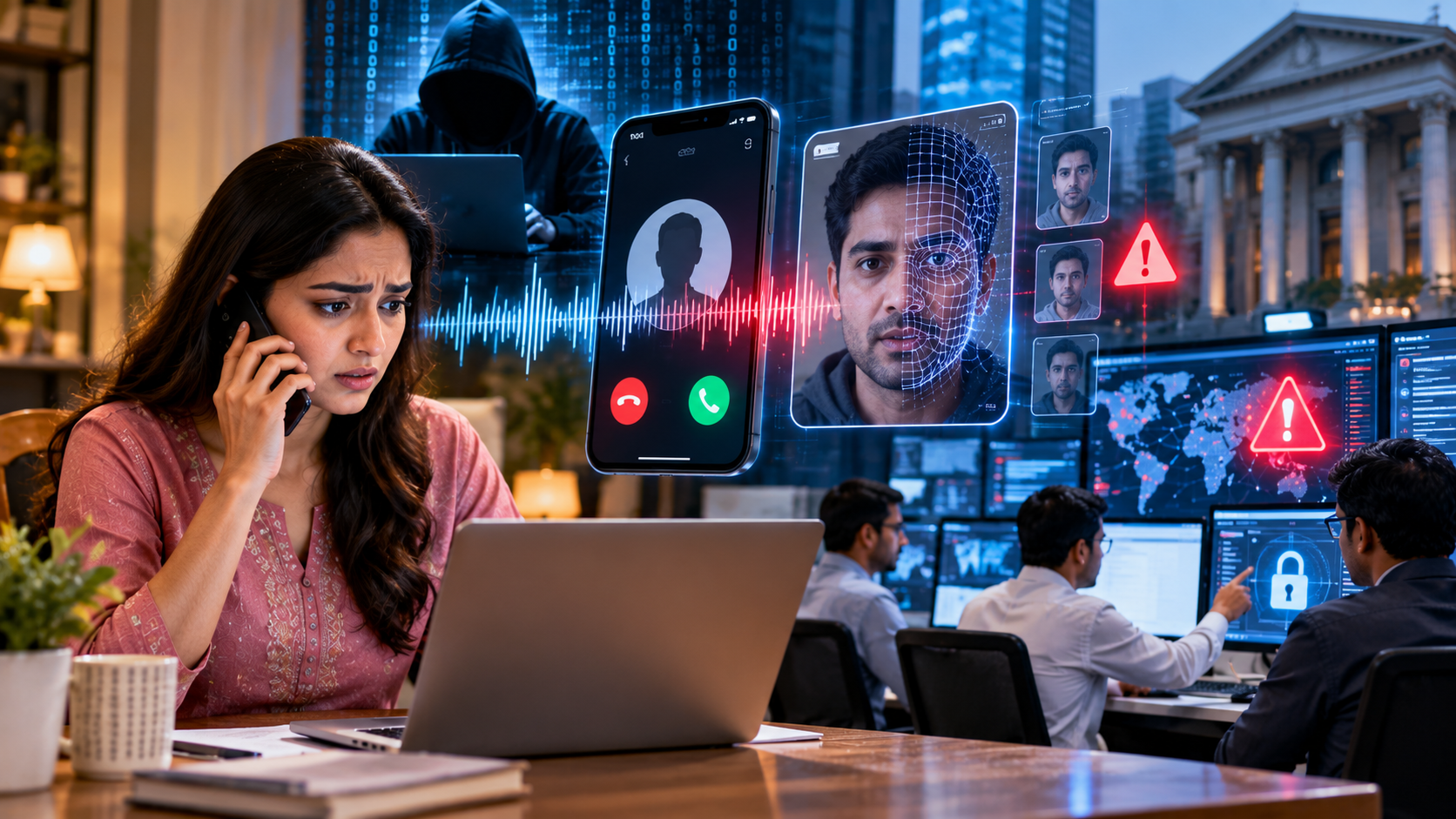
Punjab National Bank has warned customers about a rise in AI-enabled cyber frauds, including voice cloning, deepfake videos and personalised phishing messages, urging users to verify requests before transferring money or sharing sensitive information.
New Delhi, October 20 — Punjab National Bank (PNB) has cautioned customers against increasingly sophisticated AI-enabled cyberattacks, including voice cloning, deepfakes and phishing, amid a rise in digital fraud cases.
The public-sector lender issued the advisory as October is observed as National Cyber Security Awareness Month.
PNB said fraudsters are increasingly using artificial intelligence to make scams appear more convincing and personalised.
According to PNB Managing Director and CEO Ashok Chandra, many cyber frauds exploit human behaviour, especially trust, fear, urgency and routine digital habits.
Fraudsters may clone the voice or appearance of a family member, friend or other trusted person and create a fake emergency to pressure victims into making an immediate money transfer.
Similarly, fraudulent emails, SMS messages and other communications can be made to resemble genuine bank messages, making them more difficult for customers to identify.
PNB said such scams are often designed to create panic so that victims act before verifying whether the request is genuine.
Banks in India are increasing investment in IT infrastructure and cybersecurity as they face threats linked to advanced AI tools, quantum computing risks and stricter regulatory requirements from the Reserve Bank of India.
Srinivas L, Joint MD and Joint CEO of 63SATS Cybertech, said urgency remains one of the most common tools used by fraudsters.
Examples include a cloned voice claiming that a family member has been arrested, a fake video of a police officer threatening a “digital arrest”, or a message warning that a bank account will be blocked within an hour.
He advised customers to pause and verify independently whenever they receive such requests.
Users should hang up and call the person back using a number already saved in their phone rather than relying on the number provided by the caller.
Families can also create a private code word known only to household members, providing another way to verify identity when confronted with suspicious emergency calls.
Customers have also been advised to enable two-factor authentication for banking, email and social-media accounts and to use different passwords for different services.
Setting daily limits on UPI and card transactions can also reduce the potential financial damage caused by a fraudulent transaction.
PNB said customer awareness, combined with banks’ security systems, remains one of the strongest defences against evolving cyber fraud.