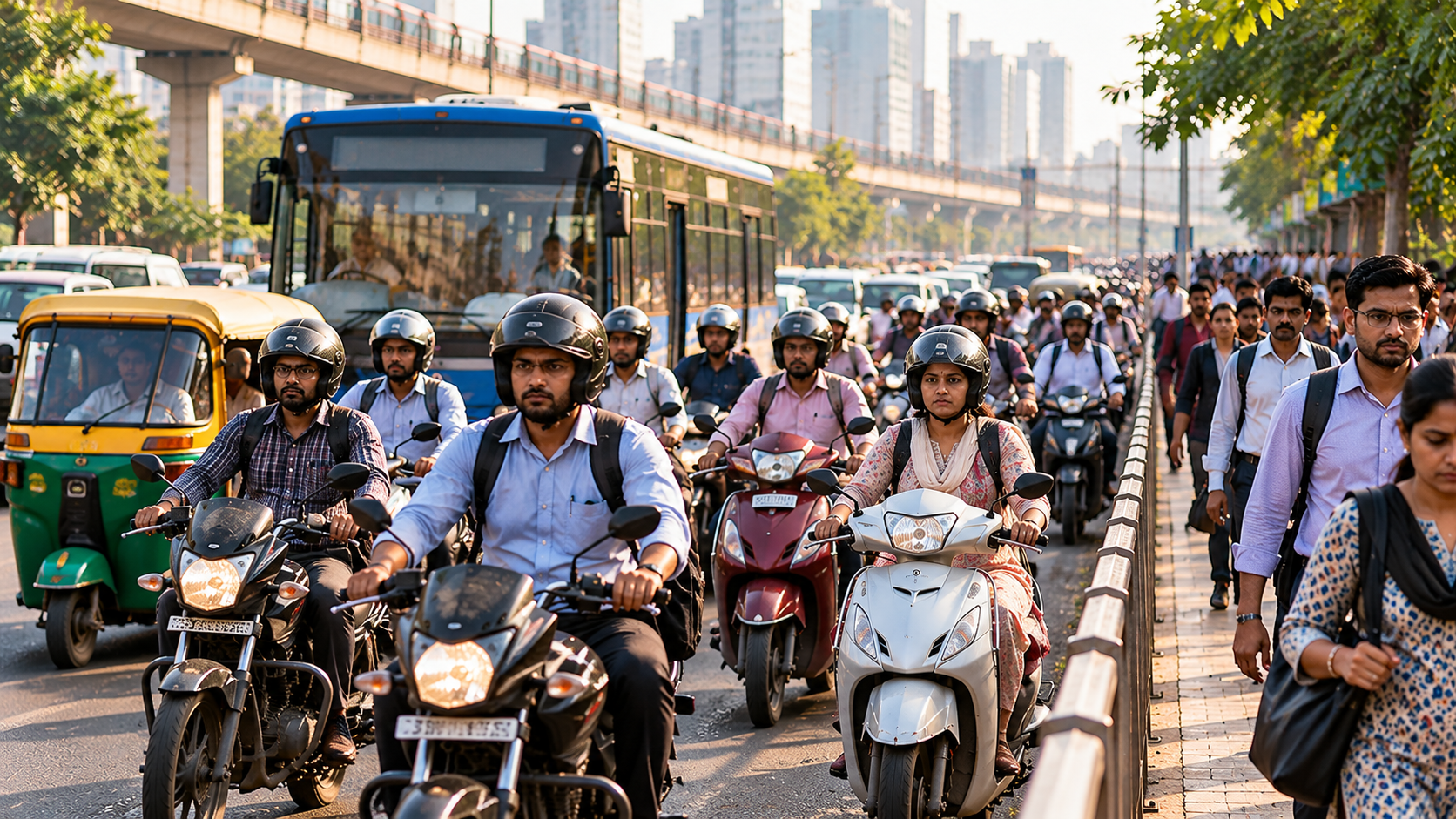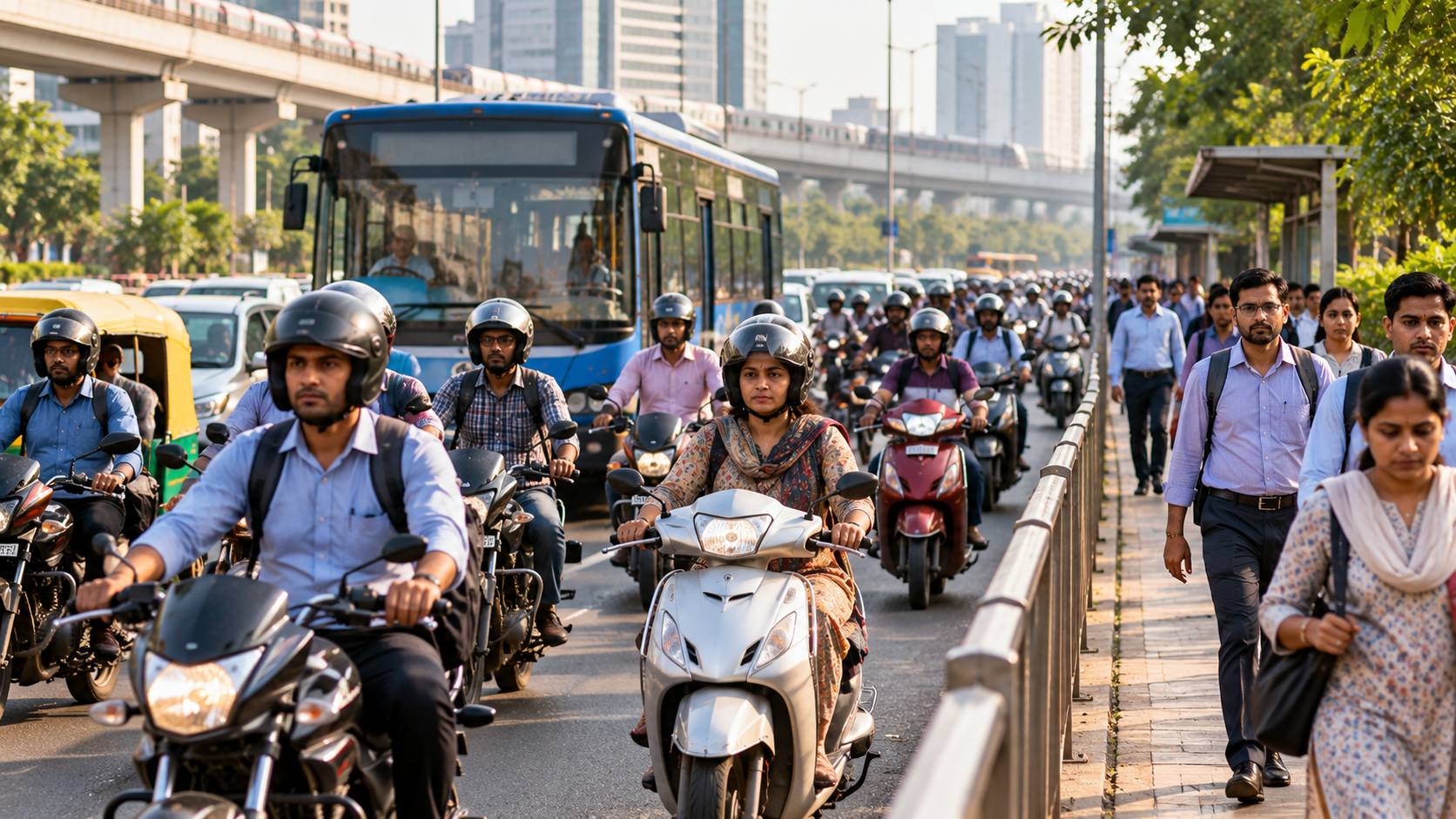
Nearly 30% of workers use two-wheelers to travel to work, while public transport remains a less-used option.
Nearly 30% of workers in India use two-wheelers to commute to work, making them one of the most commonly used modes of daily travel, according to data from the Ministry of Statistics and Programme Implementation (MoSPI).
The data shows that walking also remains a significant mode of commuting, particularly among workers travelling shorter distances. Around 28.3% of workers walk to their workplaces, making it one of the most preferred commuting options.
Public transport, meanwhile, accounts for less than 10% of workers’ daily commuting choices. The findings highlight the continued importance of personal and non-motorised transport in India’s urban and rural workforce.
The survey found that around 42.6% of workers commute to a fixed workplace. Among those workers, two-wheelers and walking are prominent modes of transportation.
Commuting costs also vary significantly between urban and rural workers. The average monthly expenditure on commuting to the workplace was estimated at ₹785 per worker.
Urban workers spent an average of around ₹1,044 per month on commuting, substantially higher than the ₹612 spent by rural workers. The difference reflects longer travel distances, higher transport costs and greater dependence on motorised mobility in urban areas.
The findings also point to differences in commuting patterns based on location. Urban workers are more likely to face higher travel expenses and longer daily journeys, while rural workers tend to rely more heavily on walking and other relatively low-cost modes.
The data provides an indication of how Indian workers move between their homes and workplaces and the financial burden associated with daily commuting.
The continued reliance on two-wheelers also highlights their importance in India’s mobility ecosystem, particularly for workers seeking relatively flexible and affordable transportation for regular journeys.