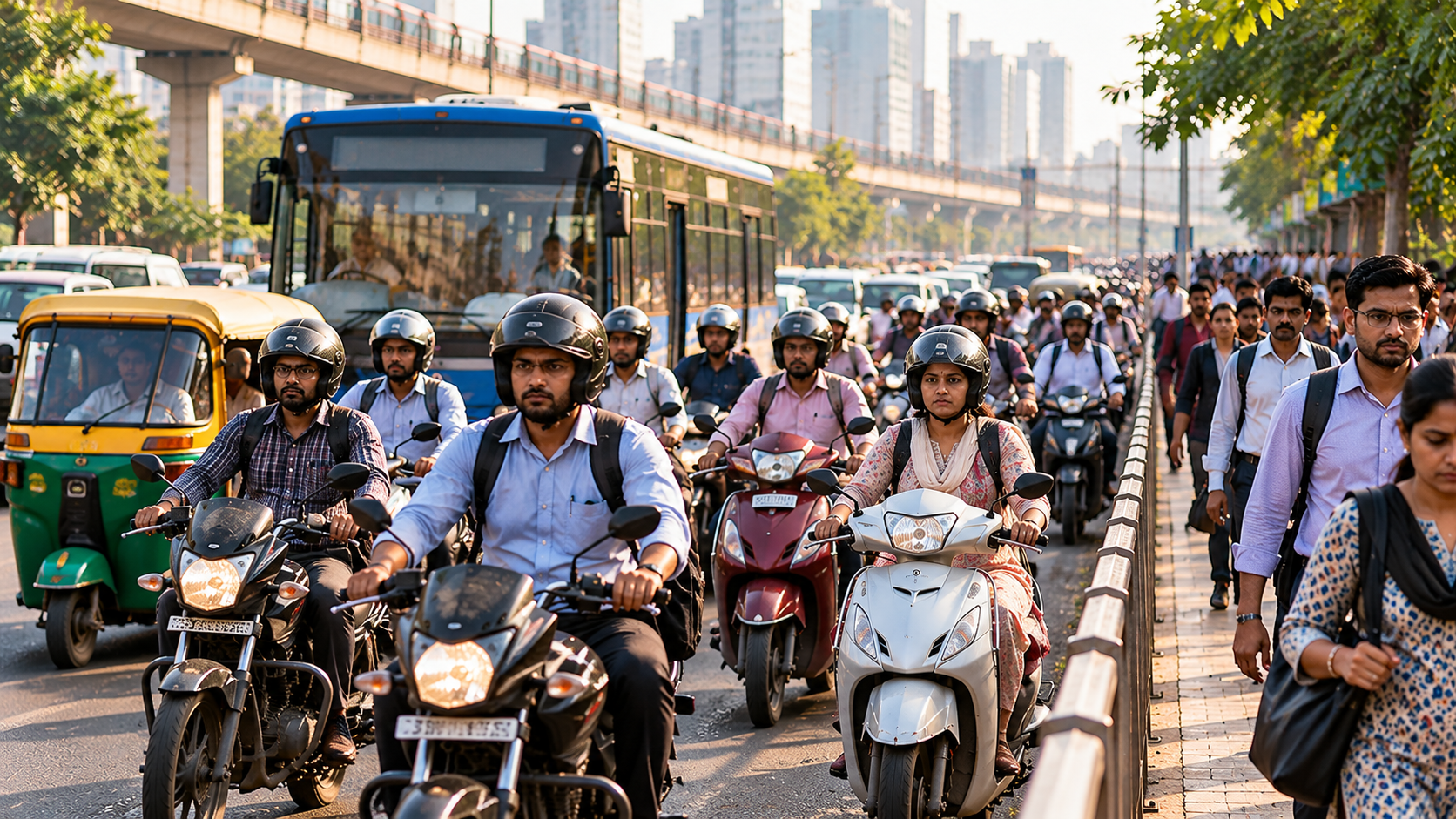
Around 30% of workers use two-wheelers for daily travel, while walking remains another major commuting option.
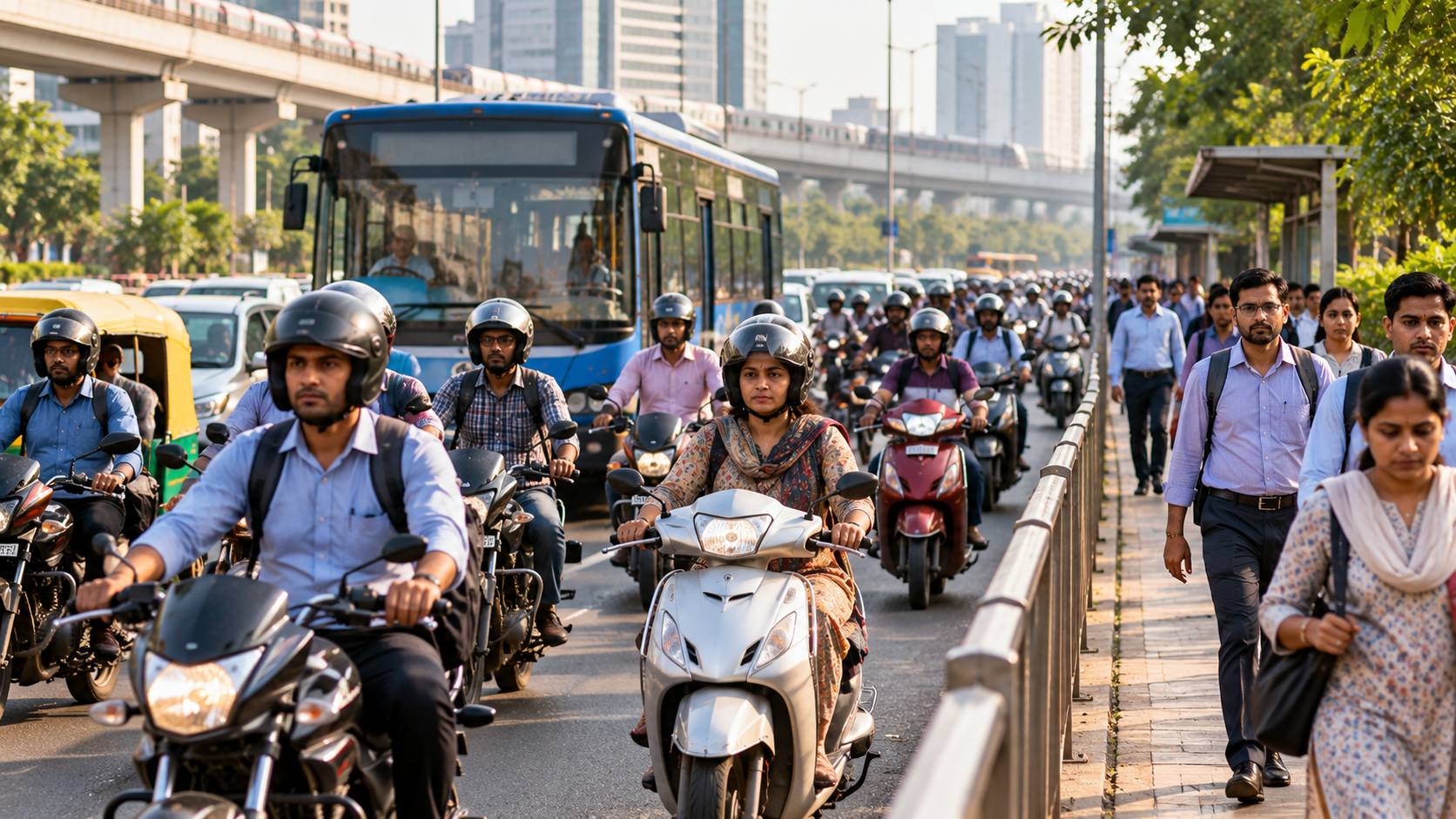
Two-wheelers remain one of the most widely used modes of commuting among workers in India, with around 30% relying on motorcycles and scooters for their daily journeys to work, according to data from the Ministry of Statistics and Programme Implementation (MoSPI).
The findings highlight the continued dependence on personal mobility for India’s workforce, particularly as workers seek convenient and relatively affordable ways to travel between their homes and workplaces.
Walking is also a significant mode of commuting. Around 28.3% of workers walk to work, making it the second-most preferred mode after two-wheelers.
Public transport has a considerably smaller share of daily commuting. Less than 10% of workers use public transport for their regular journeys, pointing to the continued importance of personal vehicles and non-motorised transport in India’s commuting patterns.
The survey also shows a clear difference between urban and rural workers in terms of commuting costs. Average monthly expenditure on commuting to the workplace stood at around ₹785 per worker.
Urban workers spent substantially more, with average monthly commuting expenses estimated at about ₹1,044, compared with around ₹612 for rural workers.
The higher cost for urban workers reflects greater travel distances and increased dependence on motorised transportation. Rural workers, meanwhile, are more likely to rely on walking or relatively low-cost modes of travel.
The data also indicates that a significant share of India’s workforce travels to fixed workplaces, creating sustained demand for affordable and accessible daily transportation.
The continued popularity of two-wheelers reflects their flexibility and relatively lower operating costs compared with cars and other private vehicles. Motorcycles and scooters also allow commuters to navigate congested urban roads more easily.
The commuting patterns highlight the need for efficient public transportation and better urban mobility infrastructure as India’s cities and workforce continue to expand.