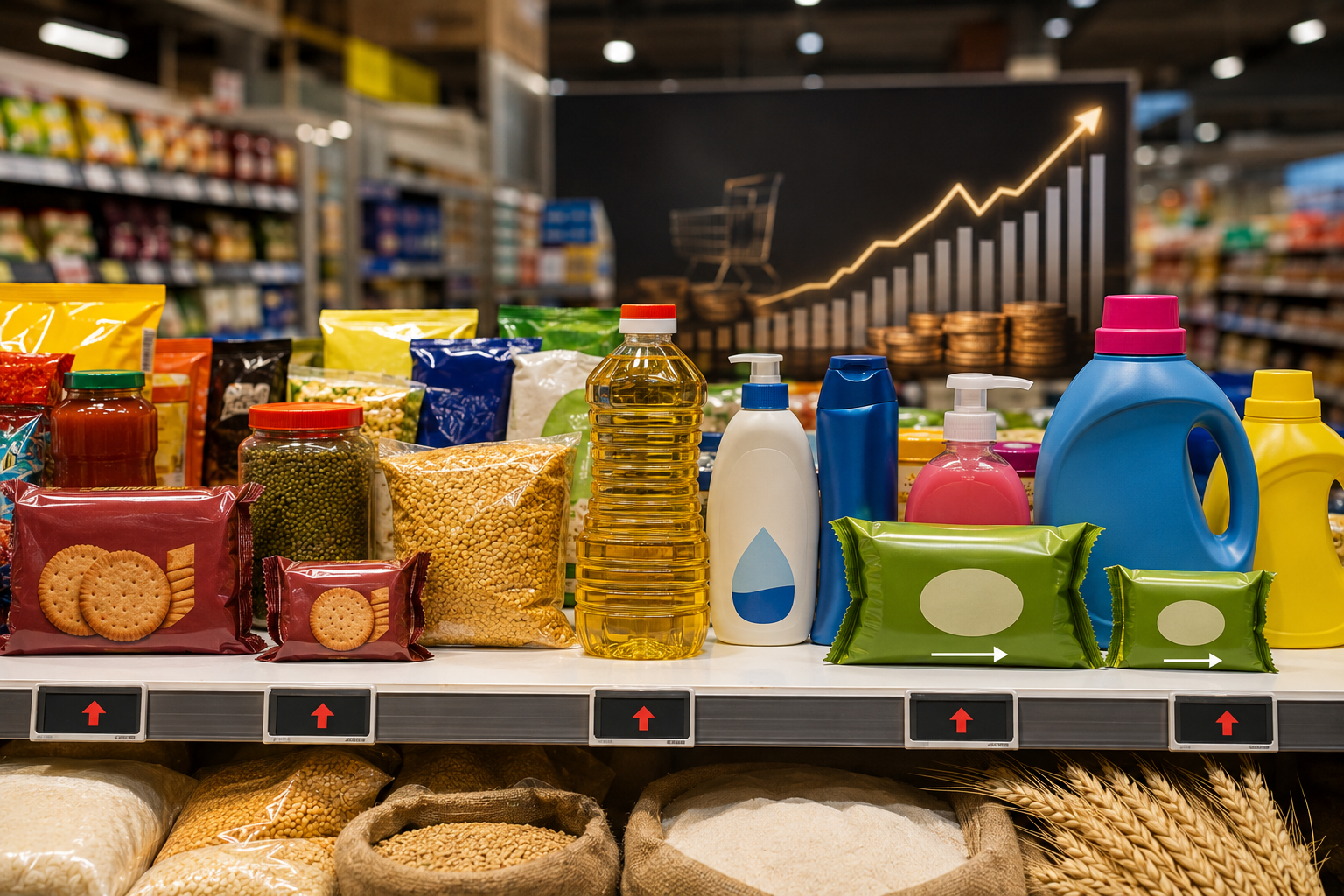
Major FMCG companies are preparing calibrated price increases and shrinkflation measures in the September quarter as higher commodity costs, crude oil volatility and geopolitical uncertainty put pressure on margins.
Key Highlights:
- FMCG companies may raise prices in the September quarter.
- Rising commodity costs are putting pressure on profit margins.
- Companies are using selective price increases and shrinkflation.
- Britannia expects another 1.5–2% pricing impact in Q2.
- Godrej Consumer may take a similar price increase.
- Dabur expects inflation to put pressure on volumes.
- HUL anticipates 2–5% sequential inflation in Q2.
- Tata Consumer may take further pricing action if required.
- Premiumisation and resilient consumption continue to support demand.
- Monsoon, El Niño and geopolitical risks remain key concerns.
Leading FMCG companies are preparing for calibrated price increases in the September quarter as rising commodity costs, geopolitical uncertainties and crude oil volatility put pressure on their margins.
The sector had already implemented average price increases of around 2–5% during the June quarter. Companies are now considering additional selective pricing actions and shrinkflation, where the quantity of a product is reduced while its price remains unchanged or changes only marginally.
The strategy is aimed at protecting margins while companies remain optimistic about consumer demand, premiumisation and overall revenue growth.
Britannia Industries expects to implement another 1.5–2% pricing impact during the second quarter, particularly through shrinkflation in its Rs 5 and Rs 10 biscuit packs. The company said higher sugar and palm oil prices are contributing to the need for additional pricing action.
Britannia Managing Director and CEO Rakshit Hargave said the company’s first-quarter pricing-led growth was primarily driven by shrinkflation and indicated that further action could be seen during the current quarter.
Despite the pricing measures, the company said the demand environment remains strong and expects to preserve its FY27 EBITDA margins at least at FY26 levels if input costs remain elevated.
Godrej Consumer Products Ltd, which implemented an average price increase of around 5% in the June quarter, may also introduce another increase in the current quarter.
However, the company is closely monitoring commodity costs before taking further action. CEO Sudhir Sitapati said the company may implement a similar level of price increase in Q2, while noting that several input costs are linked to crude oil and generally reflect changes in crude prices with a lag of three to four weeks.
With Brent crude currently around USD 80–85 per barrel, Godrej Consumer believes its existing pricing remains broadly adequate and does not anticipate a significant additional increase at present.
Dabur India is also expecting elevated input costs to continue in the near term. The company plans to use calibrated price increases along with productivity improvements and cost efficiencies to protect margins.
Dabur remains confident about achieving double-digit revenue growth in FY27, supported by its brands, product innovation and execution strategy. However, the company acknowledged that inflation is putting pressure on volumes, with price and value growth increasingly outpacing volume growth.
Hindustan Unilever Ltd is also expected to increase prices across multiple categories during the September quarter. The company anticipates sequential inflation of around 2–5% compared with the April-June period.
HUL had already increased prices by around 2–5% in the first quarter and plans to continue taking calibrated pricing action depending on how inflation develops, while attempting to protect volume-led growth.
Tata Consumer Products is similarly keeping the possibility of further price increases open. Managing Director Sunil D’Souza said the company could make additional pricing interventions if necessary, as input costs remain dynamic.
The company is also monitoring geopolitical developments, particularly the situation in West Asia, before taking significant pricing decisions.
Meanwhile, Nestle India has highlighted geopolitical and inflationary pressures as key risks for the FMCG and food and beverage sector. The company expects overall consumption could moderate in the short term and is monitoring the potential impact of the West Asia conflict and El Niño-related risks on the monsoon.
Overall, FMCG companies are attempting to balance higher input costs with consumer demand. While pricing and shrinkflation may help protect margins, sustained inflation could put pressure on volumes and household spending in the coming quarters.