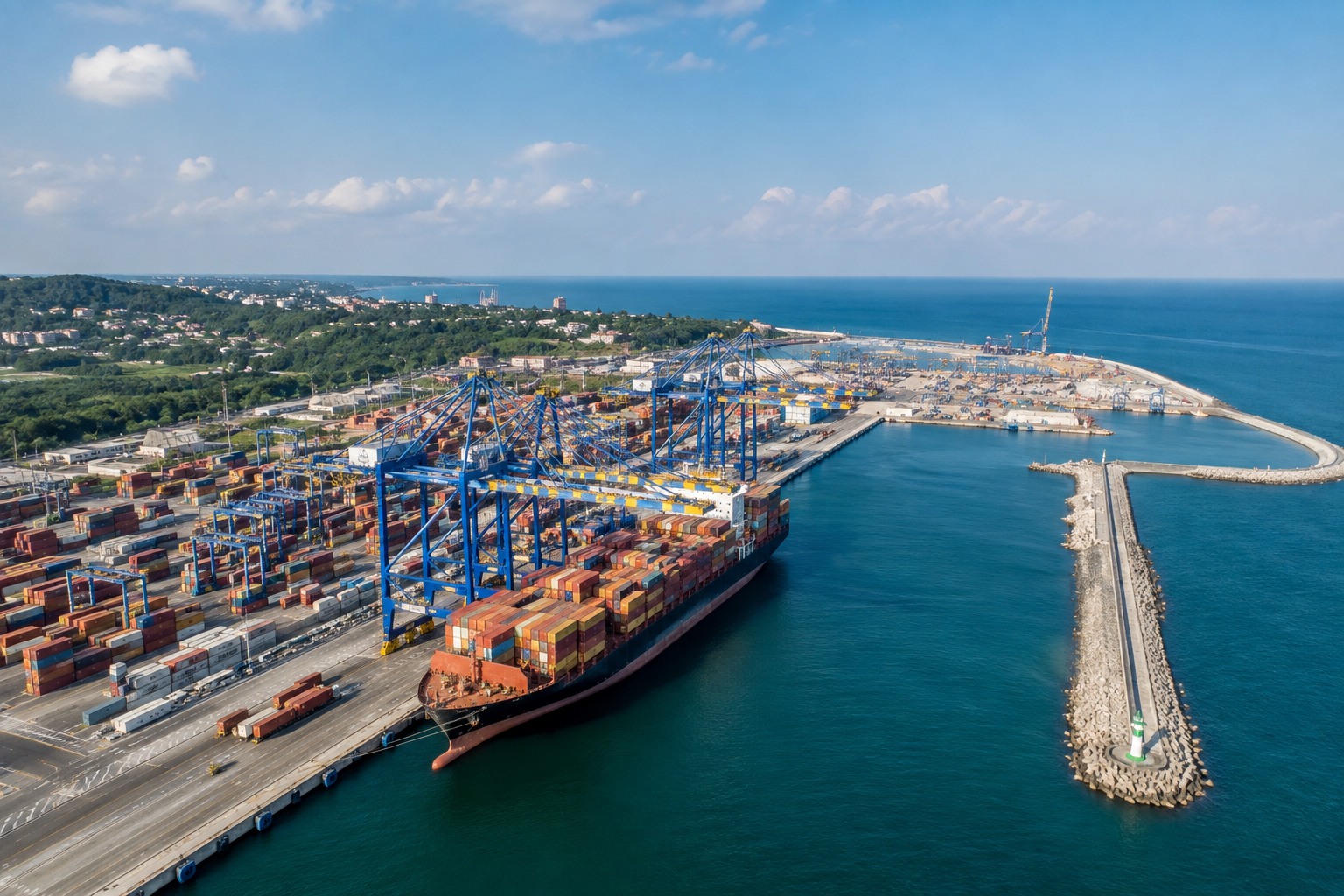
Kerala’s Vizhinjam International Seaport has started full-fledged export-import operations, expanding beyond its role as a transshipment hub.
The development could give South Indian businesses easier access to global shipping routes and reduce dependence on overseas transshipment ports.
Highlights
- Vizhinjam Port has started full-fledged export-import operations.
- The Kerala port will now directly handle Indian exports and imports.
- Businesses in Kerala, Tamil Nadu and Karnataka are expected to benefit.
- Direct global connectivity could reduce dependence on foreign transshipment hubs.
- The move is expected to improve logistics efficiency and supply chains.
- Vizhinjam is strengthening its position as a major gateway for India’s international trade.
Vizhinjam International Seaport in Kerala has started full-fledged export-import, or EXIM, operations, marking an important expansion in the port’s role in India’s maritime trade network. The development allows the port to function not only as a transshipment hub but also as a direct gateway for goods moving between India and international markets.
The move is expected to particularly benefit businesses operating in southern India, including companies in Kerala, Tamil Nadu and Karnataka. Exporters and importers in these states could get easier and more direct access to major international shipping networks through Vizhinjam.
Until now, a significant portion of India-linked container cargo has depended on foreign transshipment hubs before reaching its final destination. Expanding EXIM operations at Vizhinjam could help reduce this dependence by allowing more cargo to be handled directly from an Indian port.
This could also help businesses save time and improve the efficiency of their logistics operations. More direct shipping connections may reduce additional cargo handling and simplify the movement of goods across international supply chains.
Vizhinjam’s location gives it strategic importance for global maritime trade. Its development as both a transshipment and export-import hub could strengthen India’s position in international container shipping and support the country’s efforts to build stronger domestic port infrastructure.
The beginning of EXIM operations is also significant for manufacturers, exporters and importers across South India. Companies that rely on global markets for raw materials or overseas sales could benefit from improved shipping connectivity and potentially faster cargo movement.
With direct international cargo handling now underway, Vizhinjam is expected to play a larger role in India’s growing trade ecosystem. The development could help strengthen domestic supply chains while providing another major gateway for Indian products to reach international markets.
As operations expand further, the port could emerge as an important maritime link between India and key global trading destinations.