India and Chile are looking to conclude negotiations for a Comprehensive Economic Partnership Agreement by the end of 2026. The proposed pact is expected to expand trade, investment and cooperation across several key sectors.
Highlights
- India and Chile have stepped up negotiations for the proposed CEPA.
- Both countries are targeting completion of negotiations by the end of 2026.
- Commerce Secretary Rajesh Agrawal held high-level discussions in Santiago on August 26.
- India has called for a balanced agreement offering commercially meaningful benefits to businesses in both countries.
- Healthcare, pharmaceuticals, energy, minerals, agriculture and engineering have been identified as major areas for cooperation.
- The proposed pact could also strengthen collaboration in technology, talent and resilient supply chains.
India and Chile have accelerated negotiations for a proposed Comprehensive Economic Partnership Agreement (CEPA), with New Delhi aiming to conclude talks by the end of 2026.
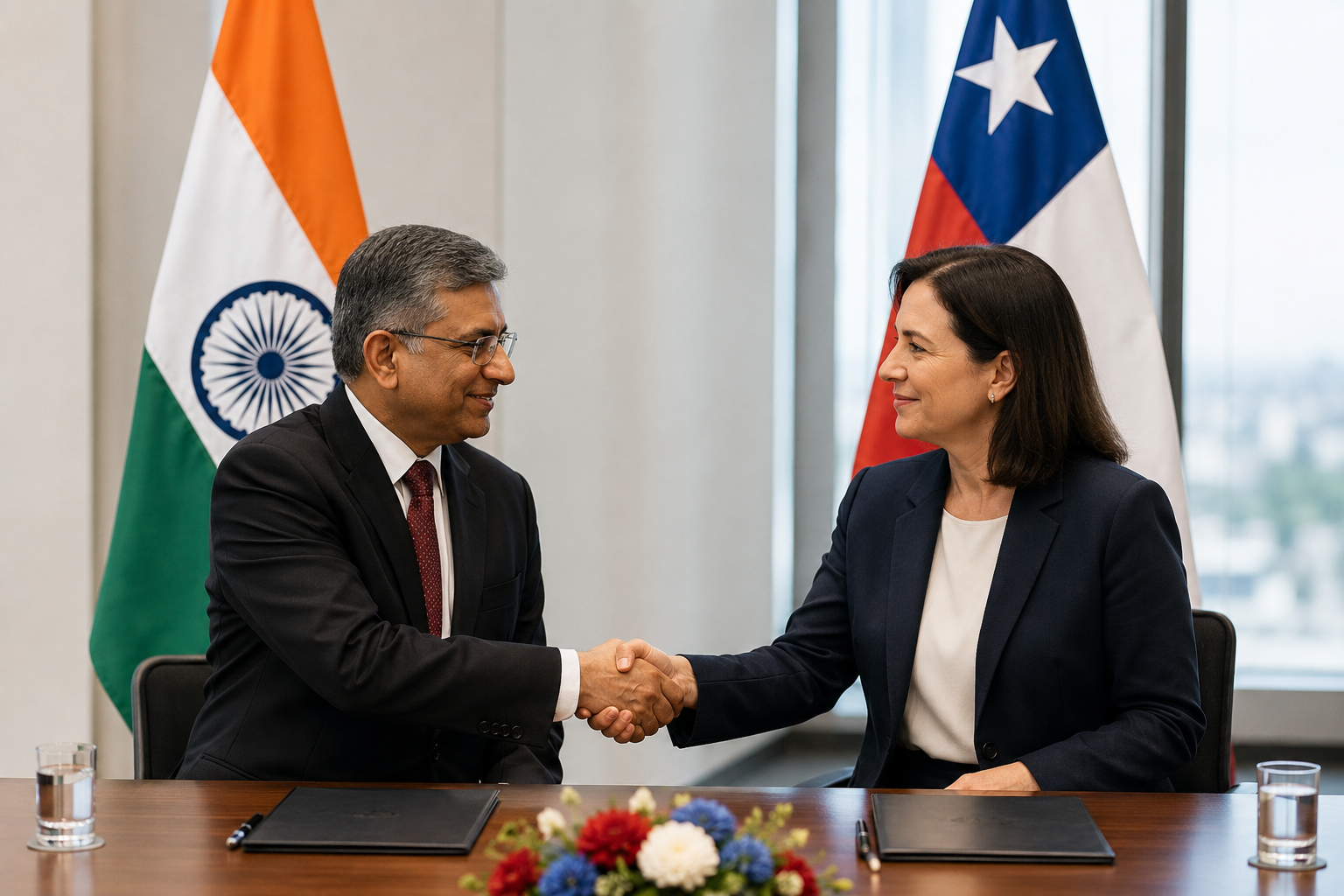
The negotiations were reviewed during a high-level meeting in Santiago on August 26 between Commerce Secretary Rajesh Agrawal and Chile’s Vice-Minister of International Economic Relations Paula Estevez Weinstein.
According to the Ministry of Commerce and Industry, discussions focused on speeding up negotiations and developing a comprehensive framework that could strengthen bilateral trade and economic relations.
India reiterated its commitment to an open, sustained and balanced negotiation process. Both sides also highlighted their shared position within the Global South and their common strategic outlook as important factors that could support deeper economic cooperation.
The two countries agreed to build on the existing momentum in bilateral relations and work towards a CEPA that provides concrete and commercially meaningful benefits to businesses.
India has set an ambitious timeline for completing the negotiations. The government said it remains committed to concluding CEPA talks within 2026 while ensuring that the final framework provides equitable opportunities to businesses from both countries.
During the discussions, Agrawal highlighted several sectors where India and Chile could expand cooperation. These include healthcare, pharmaceuticals, energy, minerals, agriculture, machinery and engineering.
The proposed trade agreement is also expected to create new opportunities for investment and strengthen cooperation in emerging areas such as technology and talent. Building resilient supply chains is another area likely to receive greater attention under the partnership.
Chile is particularly important for India because of its mineral resources, while India’s growing manufacturing, pharmaceutical and technology sectors offer opportunities for deeper bilateral engagement.
A comprehensive agreement could help businesses gain improved market access and strengthen investment flows between the two economies. It could also broaden economic ties beyond traditional merchandise trade by bringing new sectors and areas of cooperation into the bilateral framework.
If negotiations are concluded as planned, the CEPA could mark an important expansion of India-Chile economic relations and provide fresh momentum to trade and investment between the two countries.