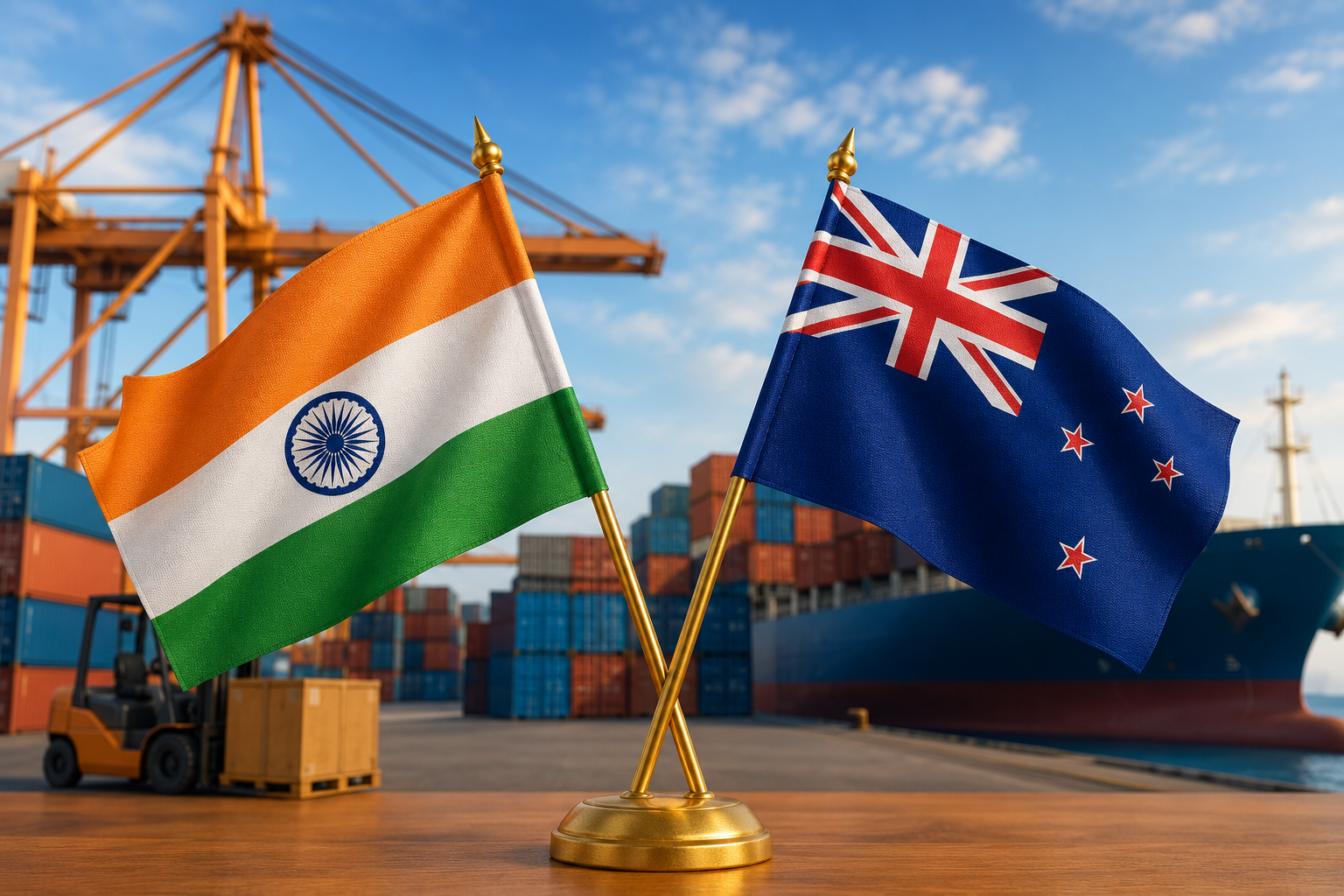
The India-New Zealand Free Trade Agreement is set to come into force next month, giving Indian exports 100% duty-free market access while protecting sensitive agricultural sectors.
Highlights
- The India-New Zealand FTA will come into effect in October 2026, with the exact date to be mutually decided.
- New Zealand has agreed to promote up to $20 billion in investment in India.
- Indian products will get 100% duty-free market access in New Zealand, covering more than 8,200 tariff lines.
The India-New Zealand Free Trade Agreement (FTA) is set to come into effect from October 2026, opening up wider market access for Indian exporters while keeping sensitive agricultural sectors outside the agreement to protect domestic farmers.
The agreement was signed on April 27 at Bharat Mandapam in New Delhi. The exact date for its implementation next month will be decided mutually by the two countries.
One of the major features of the agreement is investment. New Zealand has agreed to promote up to $20 billion in investment in India. The investment is expected to support sectors such as manufacturing, agri-processing and logistics while also creating employment and supporting MSME growth.
Under the FTA, Indian exports will receive 100% duty-free market access in New Zealand, covering more than 8,200 tariff lines.
Indian sectors expected to benefit include textiles, garments, leather, footwear, engineering goods, processed food products, pharmaceuticals, gems and jewellery. Earlier, New Zealand imposed tariffs of up to 10% on some major Indian exports, including ceramics, carpets, automobiles and auto components.
India, meanwhile, will reduce or eliminate duties on around 95% of New Zealand’s export products.
However, sensitive agricultural sectors have been protected. Products including dairy, milk, cream, cheese, curd, spices, sugar and certain other goods have been excluded from the agreement to safeguard the interests of Indian farmers and domestic industries.
New Zealand exporters of wool, wine, coal, sheep meat, forestry and wood products are expected to benefit from the agreement. Horticultural products such as kiwi, apples, avocados and blueberries could also gain.
The agreement additionally includes cooperation in agriculture to help Indian farmers in areas such as kiwi and apple cultivation.
The two countries are looking to significantly expand bilateral commerce after the agreement comes into effect. Their goods and services trade currently stands at around $2.4 billion, with a plan to increase it to approximately $5 billion over the next five years.