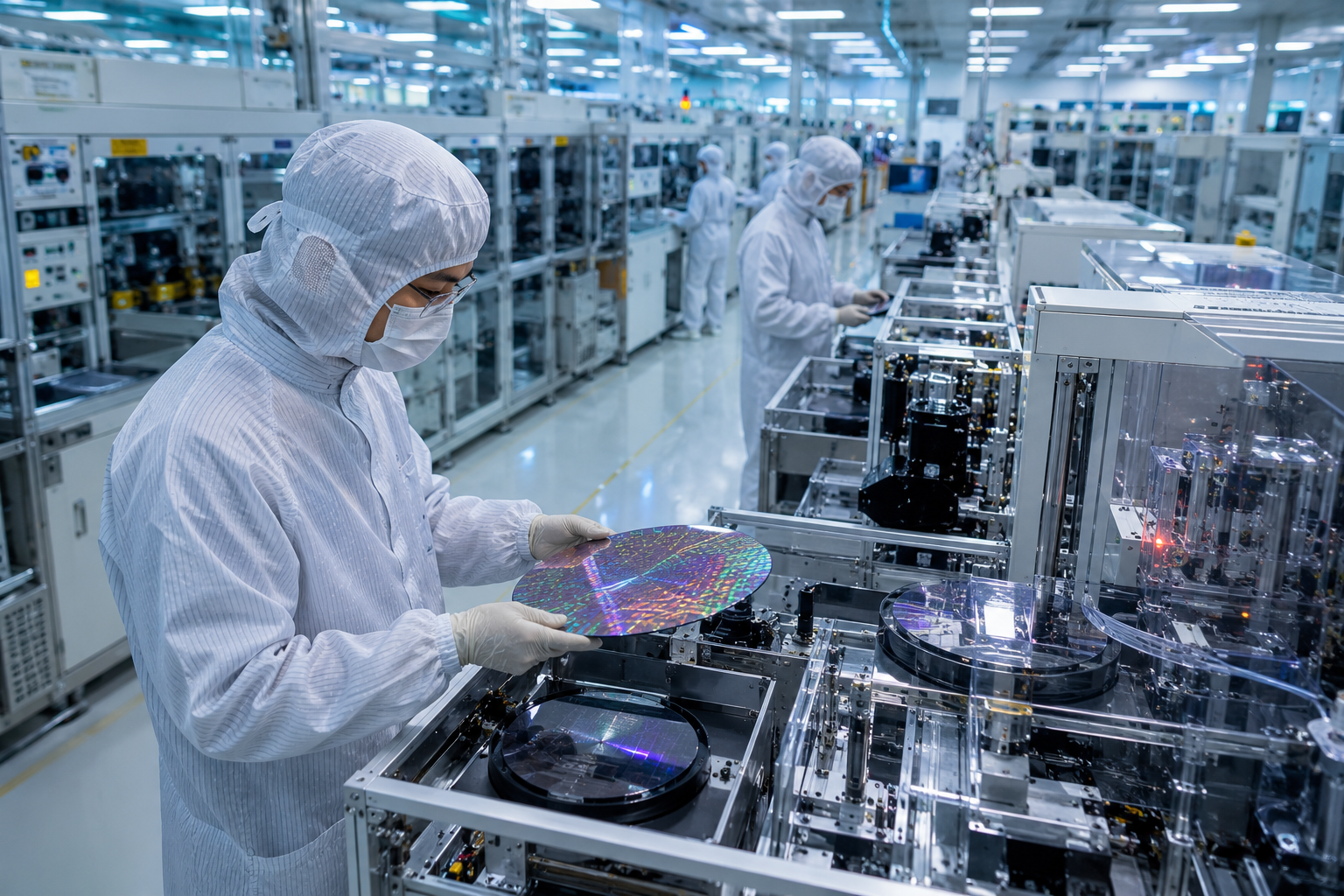
₹1.27 Lakh Crore Boost
Key Highlights
- Union Cabinet approves Semicon 2.0 with a budget of ₹1.27 lakh crore.
- The scheme aims to strengthen India’s semiconductor design and manufacturing ecosystem.
- Focus areas include chip design, fabrication units, ATMP/OSAT, R&D, materials and talent development.
- The scheme will run alongside India’s long-term semiconductor manufacturing strategy.
- Government expects stronger supply chains, technology leadership and economic growth.
New Delhi: The Union Cabinet has approved Semicon 2.0, a new semiconductor incentive programme with a total budget outlay of ₹1,27,500 crore to accelerate the development of India’s semiconductor design and manufacturing ecosystem.
The scheme builds on the progress made under Semicon 1.0 and aims to establish India as a major global semiconductor hub by supporting the complete value chain, from chip design to manufacturing, packaging, research and workforce development.
Semicon 2.0 is based on six major pillars, including strengthening chip design capabilities, promoting semiconductor manufacturing equipment and materials, attracting more fabrication plants, expanding ATMP and OSAT facilities, advancing semiconductor research and developing skilled talent.
The government said more support will be provided for developing semiconductor intellectual property (IP), strategic chip designs and advanced technologies, while also encouraging domestic production of precision manufacturing equipment, chemicals and gases used in chip fabrication.
India also plans to attract additional silicon fabs, compound semiconductor fabs, display fabs and packaging units as global companies increasingly consider the country for semiconductor investments.
The programme will further expand semiconductor education and industry training. Currently, 315 universities are training students in chip design using advanced Electronic Design Automation (EDA) tools, with around 68,000 students already trained.
According to the government, Semicon 1.0 has already approved 12 semiconductor manufacturing projects involving investments of more than ₹1.64 lakh crore, while three companies have started commercial production and another unit is expected to begin operations during 2026.
The government said Semicon 2.0 will strengthen India’s technological capabilities, improve supply chain resilience, boost economic growth and support critical sectors including consumer electronics, telecom, automotive, aerospace and artificial intelligence.