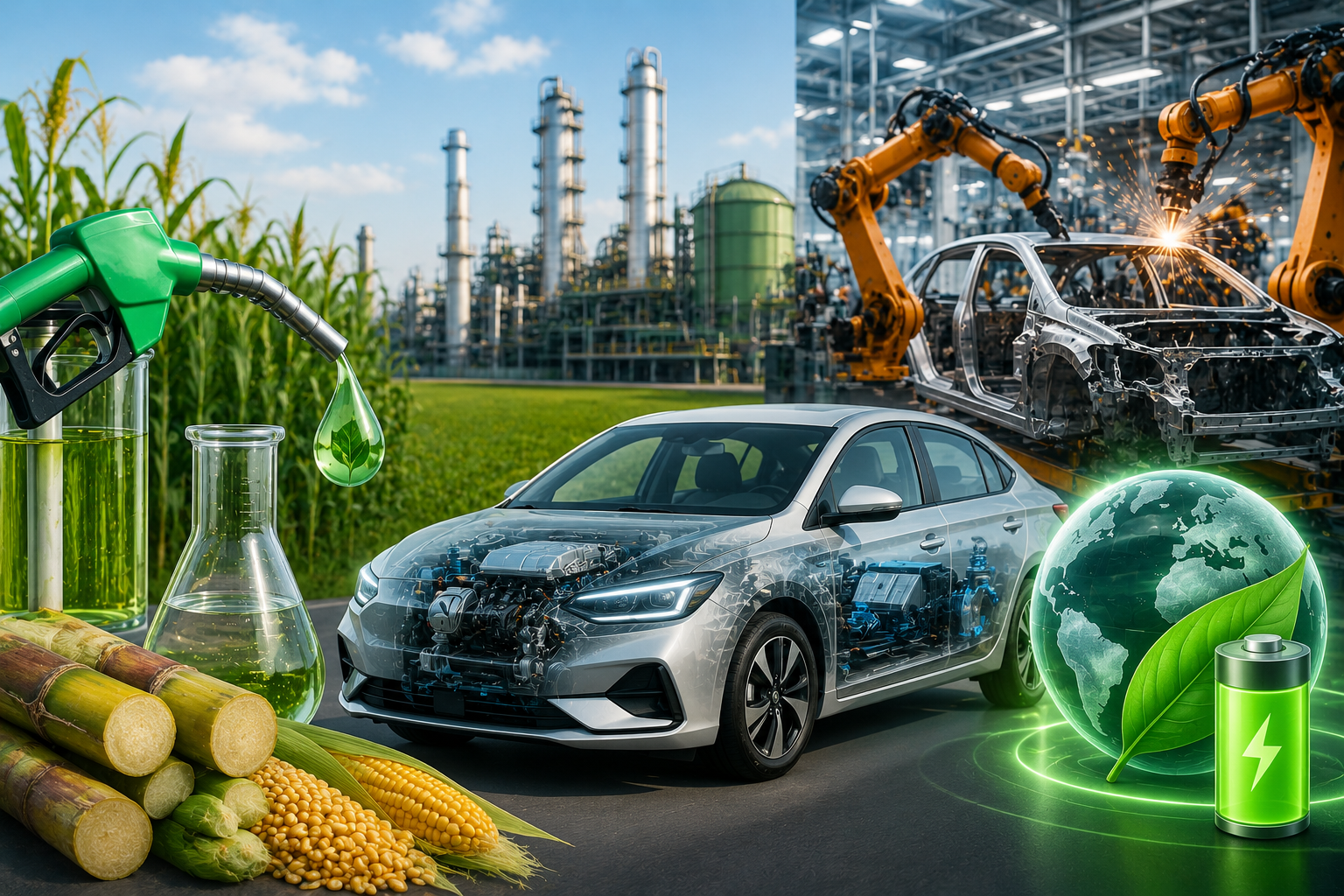
Centre says no phased national policy has been formulated for flex-fuel vehicles using over 20% ethanol.
PLI-Auto scheme continues to boost advanced automotive manufacturing and localisation.
Highlights
- Government says no separate national policy has been formulated to incentivise flex-fuel vehicles using more than 20% ethanol.
- No study has been conducted by the Ministry of Heavy Industries on incentivising flex-fuel and electric vehicles.
- PLI-Auto scheme has attracted ₹44,326 crore in investments till March 31, 2026.
- Incremental sales under the scheme have reached ₹52,414 crore, creating 67,820 jobs.
- Incentives worth ₹2,386.36 crore have been disbursed under the PLI-Auto scheme.
- Eighteen companies have received Domestic Value Addition certificates for 155 Advanced Automotive Technology products.
The Ministry of Heavy Industries (MHI) has clarified that it has not formulated any separate phased national policy to incentivise flex-fuel vehicles operating on fuel blended with more than 20% ethanol. The clarification was provided in a written reply in Parliament.
The ministry also stated that it has not conducted any study regarding incentives for flex-fuel vehicles or electric vehicles. Instead, the government continues to promote advanced automotive manufacturing through existing flagship schemes such as the Production Linked Incentive (PLI) Scheme for Automobile and Auto Components.
According to the ministry, the PLI-Auto scheme has recorded significant progress since its launch. As of March 31, 2026, the scheme has attracted cumulative investments of ₹44,326 crore, generated incremental sales worth ₹52,414 crore, created 67,820 jobs, and disbursed ₹2,386.36 crore as incentives to eligible companies.
To encourage localisation, the scheme requires manufacturers to achieve a minimum 50% Domestic Value Addition (DVA) to qualify for incentives. As of July 28, 2026, 18 applicants had received DVA certificates covering 155 Advanced Automotive Technology (AAT) products and variants.
The government reiterated that its Ethanol Blended Petrol (EBP) Programme follows a balanced approach that prioritises water sustainability, food security and farmers’ interests. Ethanol production is permitted from multiple approved feedstocks, including sugarcane, maize, damaged foodgrains, broken rice, surplus foodgrains and other approved agricultural sources.
To improve sustainability, the Centre is promoting crop diversification towards less water-intensive crops such as maize. An expert committee constituted by the Ministry of Agriculture and Farmers Welfare in 2024 has examined the water requirements of ethanol feedstock crops, and its recommendations are being considered.
The government is also encouraging water-efficient farming through drip irrigation and other conservation measures under the Pradhan Mantri Krishi Sinchayee Yojana. Additionally, molasses-based and grain-based distilleries are required to operate as Zero Liquid Discharge (ZLD) units, enabling recycling and reuse of water while preventing liquid waste discharge.