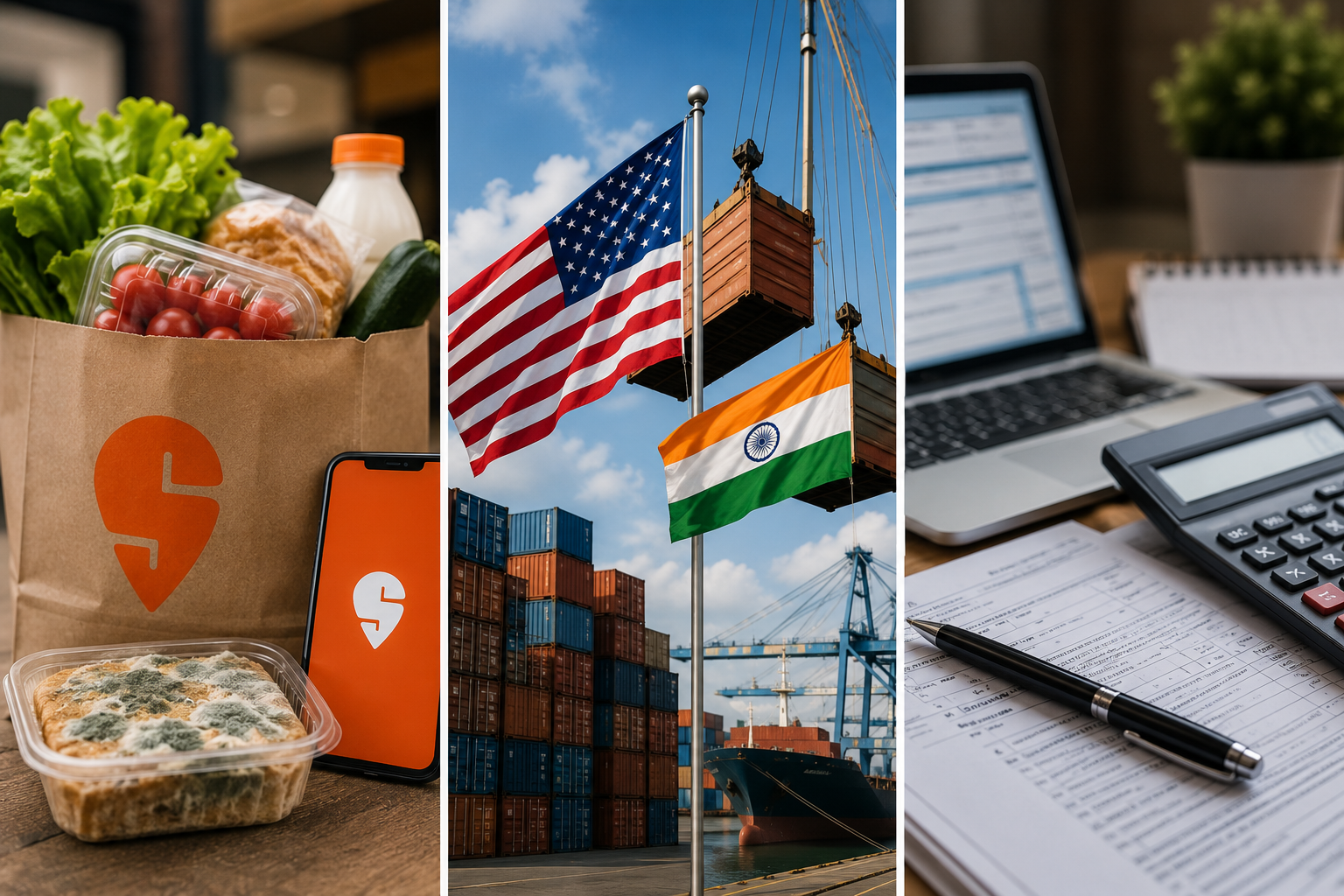
FSSAI cracks down on Swiggy Instamart, India challenges proposed US tariffs, while income tax return filings cross 1.7 crore for AY 2026-27.
Highlights
- FSSAI issues 9 notices to Swiggy Instamart over alleged delivery of expired and unsafe food.
- India asks the US to review the proposed 12.5% tariff and resolve trade issues through bilateral talks.
- APEDA, FICCI and CII oppose the proposed US tariff, citing lack of evidence and higher costs.
- More than 1.7 crore Income Tax Returns have been filed for AY 2026-27.
- Over 10 lakh ITRs were filed in a single day, ahead of the July 31 deadline.
India witnessed several key developments across food safety, international trade and taxation on Saturday, with the Food Safety and Standards Authority of India (FSSAI) taking action against Swiggy Instamart, the government urging the United States to reconsider proposed tariffs, and the Income Tax Department reporting record tax return filings.
The FSSAI said it has issued nine notices to Swiggy Instamart after receiving multiple consumer complaints alleging the delivery of expired, rotten, contaminated and unsafe food products. The regulator directed the quick-commerce platform to submit a detailed explanation and compliance report, warning that legal action could follow if the issues are not addressed.
According to FSSAI, complaints included spoiled infant food, contaminated eggs and milk, damaged packaged food items, incorrect or invalid FSSAI licence numbers, and concerns over seller verification and food safety compliance. The regulator also raised questions about grievance redressal, traceability and monitoring of food business operators listed on the platform.
Meanwhile, India strongly opposed the proposed 12.5 per cent additional tariff suggested by the US Trade Representative (USTR) under its Section 301 investigation into forced labour concerns.
During a public hearing, Commerce Ministry Joint Secretary Brij Mohan Mishra argued that India’s legal framework already treats the elimination of forced labour as a constitutional and international obligation. He said the USTR’s findings lacked sufficient evidence and should not be used to justify countrywide tariffs.
India urged the US to address any trade concerns through bilateral negotiations instead of unilateral tariff measures. Officials also pointed out that the methodology used in the USTR report relied on broad assumptions rather than country-specific evidence.
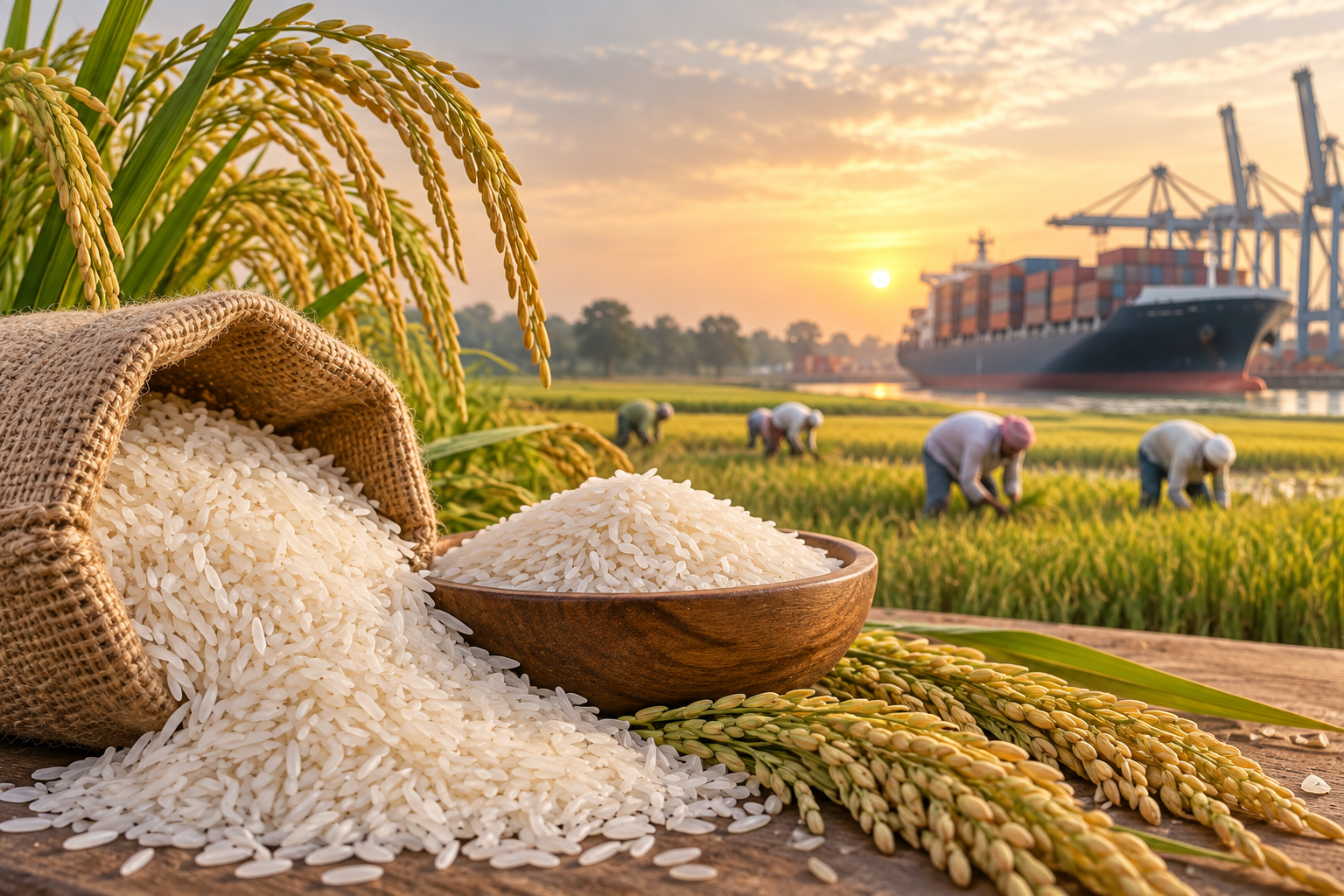
Supporting India’s position, APEDA said imports of rice into India are minimal and mainly cater to niche demand, while safeguards exist to prevent exports of products linked to forced labour. Industry bodies FICCI and CII also called for reconsideration of the proposed tariff, warning that it would increase costs for businesses and consumers in both countries without achieving the intended policy objective.
In taxation, the Income Tax Department announced that more than 1.7 crore Income Tax Returns (ITRs) have already been filed for Assessment Year 2026-27. More than 10 lakh returns were filed on Friday alone, reflecting strong taxpayer participation ahead of the July 31 deadline for filing ITR-1 (Sahaj) and ITR-2.
The department encouraged eligible taxpayers to file their returns early to avoid last-minute delays.