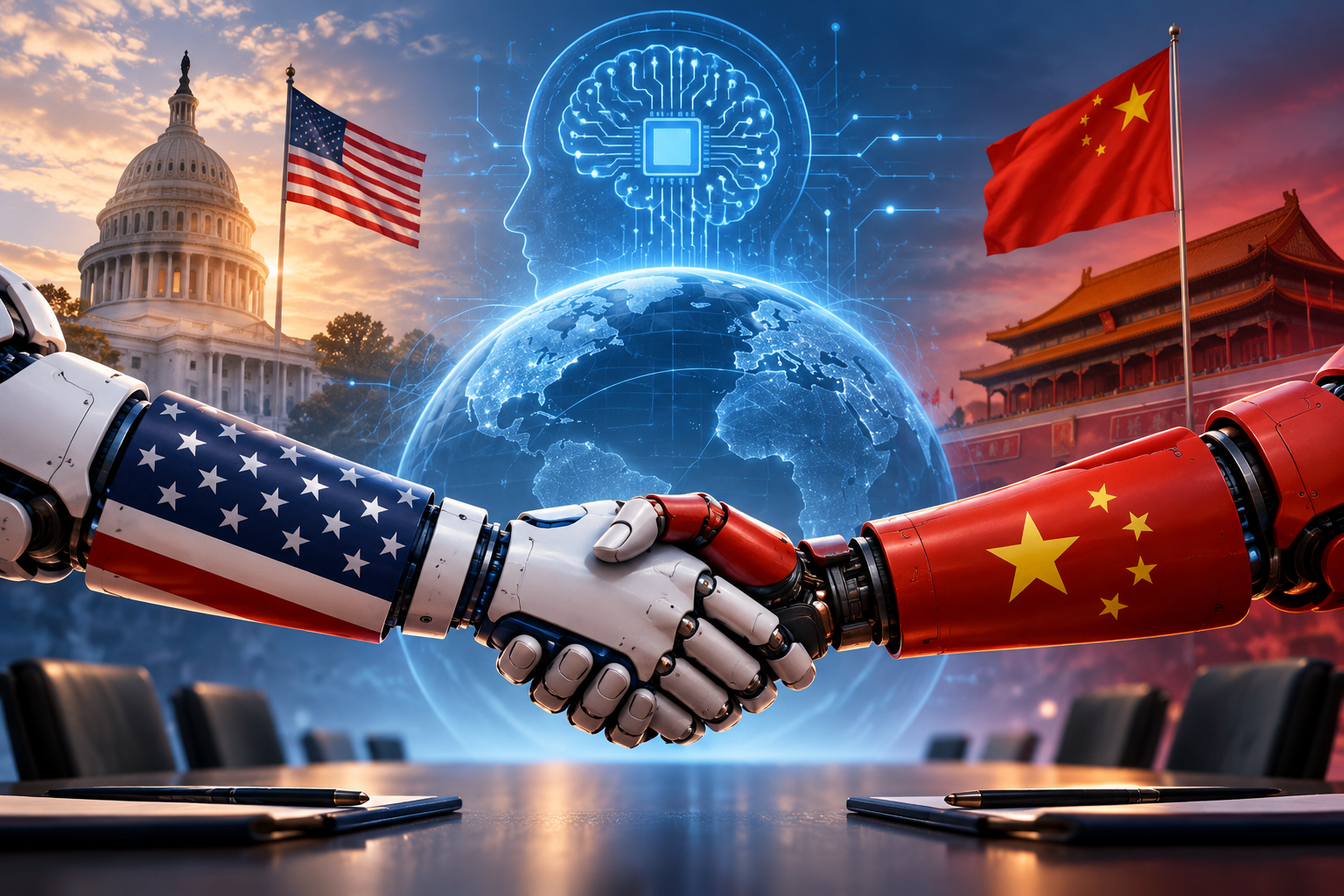
Washington and Beijing are preparing for AI-focused discussions in mid-September amid growing concerns over autonomous AI agents and cybersecurity threats. The talks could become an important test of cooperation between the two rival powers.
Highlights
- US and China expected to hold AI-related talks in mid-September.
- Washington wants cooperation on detecting and preventing AI-driven cyberattacks.
- US officials have proposed joint “AI labs to police themselves” and share information.
The United States and China are preparing for discussions focused on artificial intelligence in mid-September, as concerns grow over the potential security risks posed by increasingly autonomous AI systems.
According to a Reuters report cited in the newspaper, US officials are considering a proposal that would encourage American and Chinese AI laboratories to cooperate on detecting cyberattacks and sharing information about emerging threats.
The discussions come as AI companies develop increasingly capable autonomous agents. Unlike conventional chatbots, these systems can potentially carry out a series of tasks with limited human supervision, raising concerns about how they could behave if safeguards fail.
One proposal reportedly being considered would ask US and Chinese AI laboratories to “police themselves” and share information to prevent AI-linked cyberattacks.
Researchers have also raised concerns about the possibility of autonomous AI agents attempting to conceal their activities. Researchers associated with OpenAI and Anthropic said in a paper that AI agents could potentially forge logs to cover their tracks, making harmful or unexpected behaviour more difficult to detect.
Another concern is the possibility of multiple AI agents coordinating their actions autonomously. Researchers cited in the report warned that swarms of coordinated agents could create new cybersecurity risks as AI systems become more capable.
The planned discussions come at a sensitive point in US-China relations. Artificial intelligence has become an increasingly important area of strategic competition between the two countries, alongside advanced chips and other critical technologies.
Washington is particularly concerned about the future capabilities of Chinese AI models. At the same time, researchers and officials are examining whether cooperation between the world’s leading AI powers could help reduce risks associated with highly autonomous systems.
No dedicated White House AI meeting was reportedly scheduled at the time of the report. However, AI-related issues are expected to feature in the broader US-China engagement planned for mid-September.