Seventh Freedom is a lucrative prospect for Indian ports in a competitive market, but the gains in terms of trade and investment must be juxtaposed with the potential impact on the domestic aviation industry.
• China has recently decided to permit foreign airlines to fly revenue traffic between two countries other than the carrier’s home country for the first time in Hainan province.
• This move is expected to have myriad benefits like increased air traffic, generation of employment in ancillary sectors, lower fares and promotion of trade.
• Opening up the air space is part of a larger master plan to transform the southern island province into a high-level FTP of global influence by the middle of the century.
• India can look to implement a similar legislation to emerge as a key trading hub in a highly competitive Asia Pacific region. But considering the wider ramifications of such an initiative for the domestic aviation industry, this possibility needs to be explored with extreme caution.
Hainan’s FTP: Driving the winds of change
China has recently decided to permit foreign airlines the right to fly revenue traffic between two countries other than the carrier’s home country for the first time in Hainan province. The experiment has been done to transform the tourist hotspot into a free trade port and to boost Hainan’s international route network. This relaxation of airspace control and restrictions on air routes and traffic rights in the southern Chinese island province of Hainan will allow the country to experiment with the seventh freedom of air, which is a relatively rare liberty worldwide. On every route enjoying the Seventh Freedom, the maximum number of passenger and cargo flights will be seven per week.
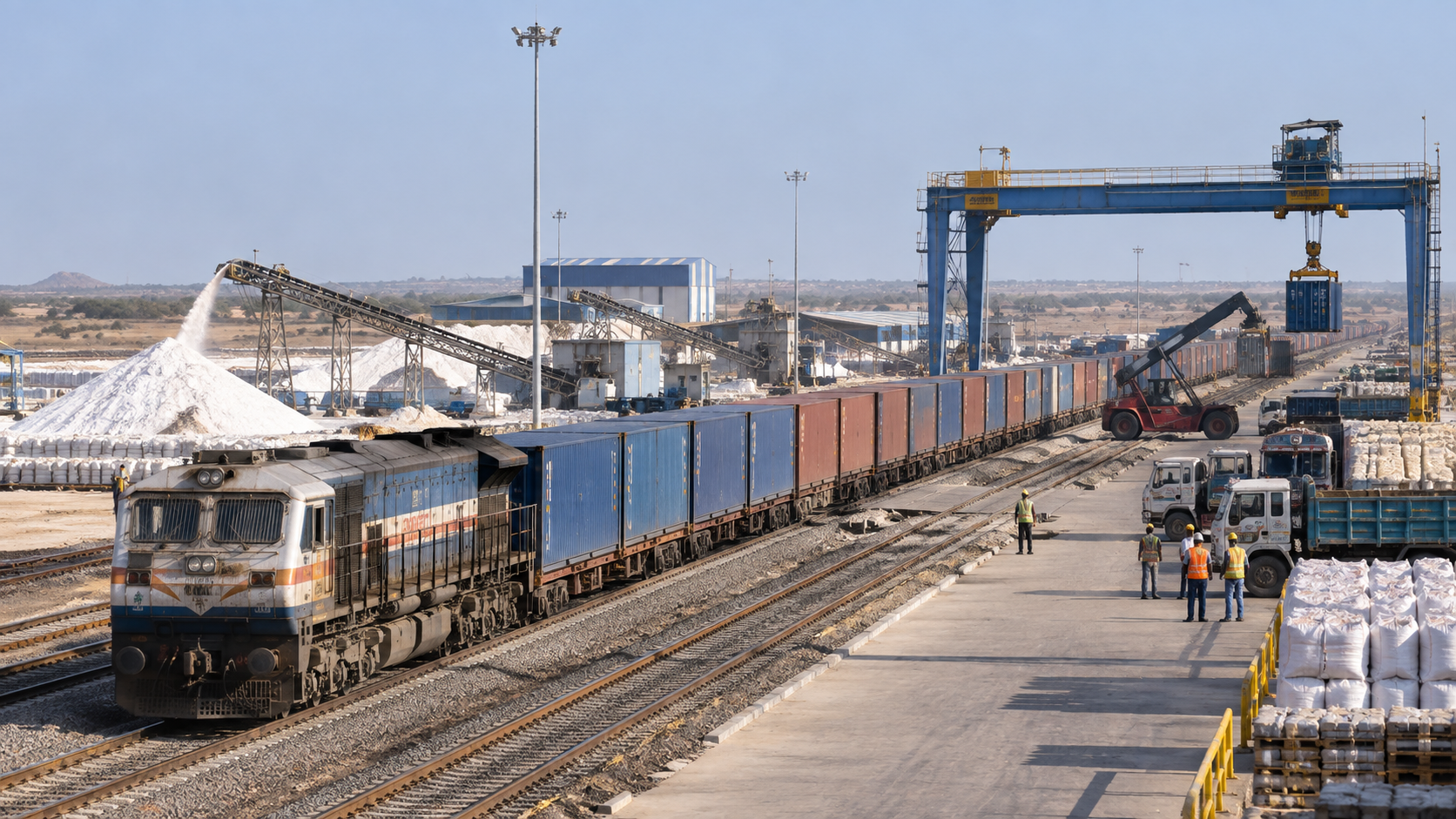
India has 12 major and 205 notified minor and intermediate ports. Around 95% of India’s trading by volume and 70% by value is done through maritime transport. The ambitious Sagarmala programme undertaken by the Government of India envisages an increase in port capacity from 2,400+ MMTPA presently to 3,300+ MMTPA by 2025. The programme includes port operational efficiency improvement, capacity expansion of existing ports and new port development.
India’s unique locational advantages with proximity to Eastern Europe, Middle East and the Asia Pacific region and huge marine coastline of around 8,000 km, it is natural to deliberate on the huge potential for building world class ports of the likes of Singapore, Shanghai and Busan. Can freedom of the air be a relevant option for India in this regard? To examine the possibilities, let us first understand the concept in greater detail.
The nine freedoms of air:
Flying across countries is a complex process, for the liberty to fly across different geographies is not automatically granted to an airline as a right. This is owing to the fact that every state retains complete and exclusive sovereignty over the airspace above its territory.
These concessions date back to Chicago Convention (1944) that established the framework for all future bilateral and multilateral agreements for the use of international air spaces. The accord mandates that no scheduled international flights can fly over or inside a State without the authorization of the state. It led to the formation of the International Civil Aviation Organisation (1944) that came up with a string of statutes called ‘Freedoms of Air’:
First Freedom of the Air: This allows airlines from Country A to fly through Country B’s airspace without landing. For example, an IndiGo aircraft flying from Delhi to Dubai that flies over Pakistan and Iran.
Second Freedom of the Air: This right allows airlines from Country A to land in Country B for purposes of refueling, maintenance, etc. as long it doesn’t involve deplaning or enplaning of passengers. For example, an Air India flight between Delhi and San Francisco last year was diverted to Japan for an emergency landing.
Third Freedom of the Air: This allows airlines from Country A to bring passengers originating in Country A to Country B. For example, the rights granted by India for British Airways and Virgin Atlantic to bring British passengers to India and similarly, for the UK to have Jet Airways and Air India to transport Indian passengers to the UK.
Fourth Freedom of the Air: This allows airlines from Country A to bring passengers originating in Country B to Country A. For example, the rights granted by India to British Airways and Virgin Atlantic to ferry passengers originating from India and similarly, for UK to allow Jet Airways and Air India to pick up passengers from the UK.
Fifth Freedom of the Air: This allows airlines from Country A to bring passengers between Country B and Country C as long as the flight originates in Country A. For example, Air New Zealand, based in New Zealand, is allowed to fly passengers between Los Angeles in USA and London in UK because the flight originates in Auckland (New Zealand).
Sixth Freedom of the Air: This allows airlines from Country A to carry passengers between Countries B and C via Country A. For example, British Airways would be allowed to carry passengers between India and the US via its UK home.
Seventh Freedom of the Air: This is similar to the Fifth Freedom, but it allows an airline from Country A to carry passengers between Countries B and C without having it be an extension of a flight from Country A. For example, Germany’s Lufthansa can operate flights between London and Paris, with no ongoing service to Germany.
Eighth Freedom of the Air: This is called “consecutive cabotage,” and it allows an airline from Country A to carry passengers between two points in Country B as long as the flight originates in Country A or a third Country C. Air Canada could fly between Chicago and Los Angeles, both in the US, if the flight started in Canada or any other place outside the US.
Ninth Freedom of the Air: This one is usually referred to as “cabotage,” and it allows an airline from Country A to carry passengers within Country B without restriction. For example, the EU has been pushing the US to allow cabotage. This would allow EU airlines, like Lufthansa for example, the fly regular domestic routes in the US. As you can imagine, this won’t be happening soon.
It needs to be noted that only the first five “freedoms” have been officially recognized by the 192 members of ICAO. Also, all freedoms beyond the First and the Second have to be negotiated by bilateral agreements.
The silver lining
Economic Impacts of Air Service Liberalization Report (2015) estimates that liberalization of air services provides substantial benefits in terms of increased air traffic and lower fares through increased competitive pressure in the market. It notes that the removal of regulatory restrictions in the air service industry between two nations will typically increase traffic by roughly 16%. This will consequently have a positive impact on stimulating passenger traffic.
This growth in traffic at airports is bound to ensure a rise in the direct jobs generated, according to the Aviation Benefits Beyond Borders Report (2018). A common rule-of-thumb calculation is for every million passengers an airport handles, around a thousand jobs are created on-airport. In a country like India, which has 464 airports and airstrips, embracing the seventh freedom could, therefore, create ample employment opportunities at these airports. Moreover, it can act as a catalyst for the growth of ancillary sectors like tourism and hospitality. It is estimated that aviation-enabled tourism generates around 36.7 million jobs globally. These figures could rise significantly if the current restrictions on freedoms of air are lifted.
Further, liberalising air transport is likely to promote international trade by helping countries contribute to the global economy as they enjoy greater access to intercontinental markets. Connectivity contributes to improved productivity by enabling globalisation of production, encouraging investment and innovation, and improving business operations and efficiency. It also eases the back & forth movement of goods and allows companies to attract high-quality employees. This is significant since in 2018, global airlines registered 262,333 million Freight and Mail Tonne-Kilometers and 8.32 million Revenue Passenger-Kilometers, according to World Air Transport Statistics (2019). A similar effect is likely in the Indian context, which recorded passenger traffic of 316.51 million during April 2018-Feb 2019; and freight traffic of 3.6 MMT.
Pralok Gupta, Associate Professor, Centre for WTO Studies, IIFT, states:
“Offering the seventh freedom of air will be beneficial for Indian exporters since they will have more choice of carriers. There will be improvement in the time taken for shipping from one particular port to another. This will create efficiencies in business processes.”
Proceed with caution!
However, due to the potential fallout of such a policy decision on the aviation sector, industry experts beg to differ. Liberalisation of air space will lead to the entry of multiple new airlines, which could be followed by a period during which many airlines go bankrupt in the face of stiff competition. Indian carriers could lose out to their international counterparts who are likely to be competitively priced owing to the better facilities, hospitality experience and deeper pockets.
Satyendra Pandey, Partner at the advisory firm AT-TV (& former Head of Strategy at GoAir) notes:
“Granting of 7th freedom rights is detrimental to India and its aviation sector. Effectively, it will allow foreign airlines to prosper and take advantage of India’s market strength at the cost of India’s aviation sector including output, jobs and skill development”.
This kind of dilemma is not just exclusive to India, as Pran Dasan, Director Commercial Operations South East Asia, Fly Dubai, states:
“The issue with seventh freedom is that it talks about a third country’s carrier operating standalone services between Country A & Country B. For this to happen, you need to be at either of the two extreme ends of the spectrum – either you are a highly mature economy that doesn’t mind that a third country’s carrier will take your passenger or you are extremely poor nation, which has absolutely no means to transport its passengers.
Therefore, it is very rare. China has just announced it; not implemented it. So, China is saying that it will allow Air India to transport passengers from Hainan to New York. US & China will never let that happen because airlines operate on razor thin margins.”
Another practical challenge in the adoption of this model is the lack of world class infrastructure at Indian ports. There are so many procedural requirements & consequent delays that the transition of these ports to world class standards will entail a lot of costs. They still need to reduce human interface and become automated. It requires investment and planning.
To sum up, offering freedoms of air is a double-edged sword. While it has the potential to bolster a country’s trade and commerce, it might have devastating impacts on its aviation sector. The best way to evaluate the success of this model would be to follow the strategy adopted by China and to apply it on a selected port for some time to weigh its pros and cons. Another thing that needs to be taken into account is that when this model is adopted, it needs to be ensured in a manner so that all the stakeholders involved are equally benefited from it. There should be reciprocal gains while negotiating this agreement to ensure that India’s domestic industry is not sabotaged by another country’s carriers.