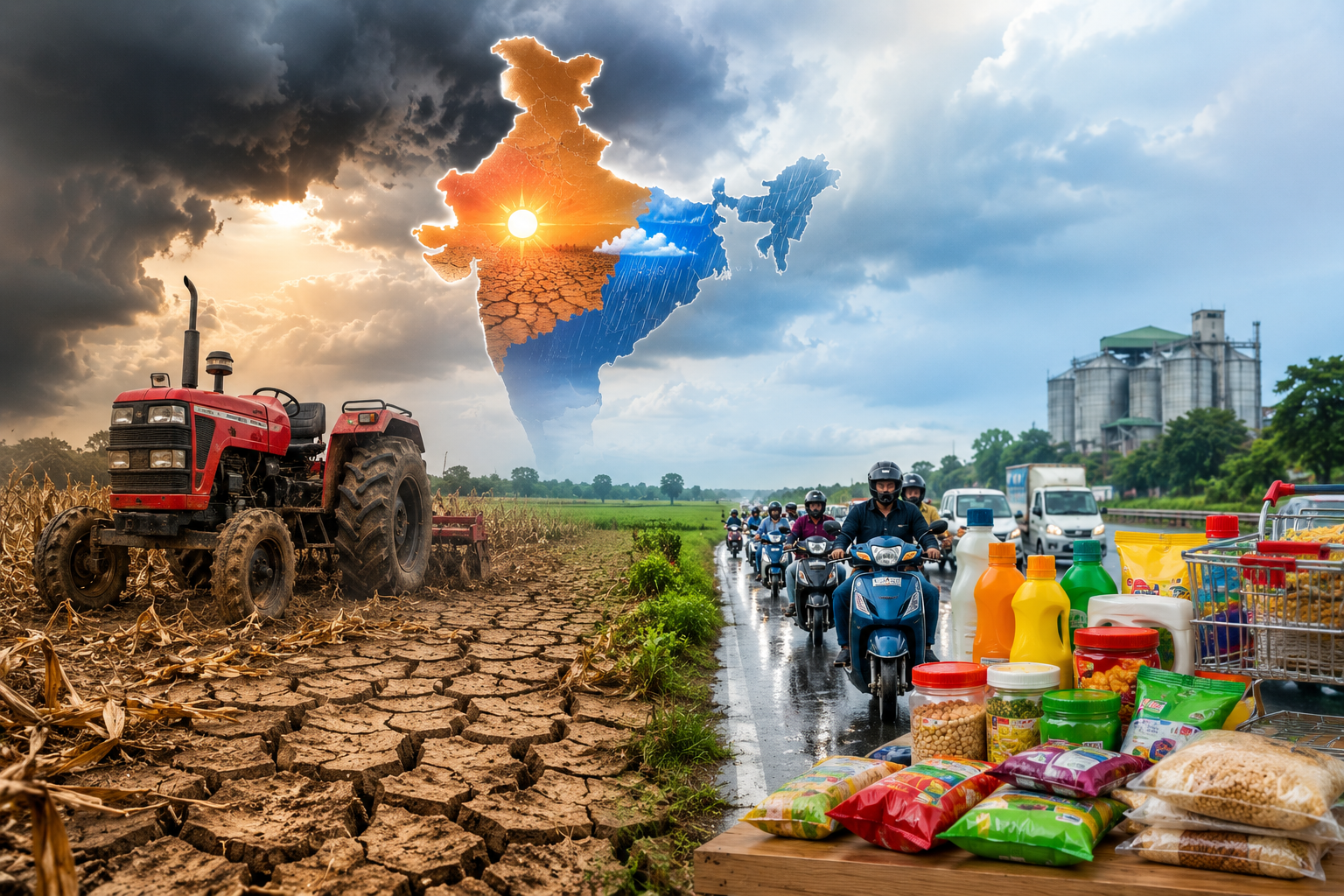
A 25-year JM Financial study shows that El Niño years usually weaken rainfall, farm output and tractor demand in India. However, two-wheeler sales, FMCG volumes and consumer credit often remain comparatively resilient.
Highlights
- Tractor sales growth averaged just 3.5% during El Niño years.
- Tractor demand grew 10.7% during La Niña periods.
- El Niño years saw rainfall deficit of around 10.65%.
- Kharif sowing declined 1% and food production fell 4%.
- Food inflation increased by an average of 60 basis points.
- Two-wheeler sales and FMCG demand showed surprising resilience.
El Niño conditions have historically affected India’s agriculture, rural economy and inflation, according to a 25-year study conducted by JM Financial.
The study examined 13 major economic and agricultural indicators, including rainfall, kharif sowing, food production, inflation, tractor sales, two-wheeler sales, agricultural gross value added, reservoir levels, power demand and credit growth.
The findings suggest that El Niño years generally bring weaker monsoon rainfall, lower agricultural activity and higher food prices.
According to the study, India recorded an average cumulative rainfall deficit of 10.65% during El Niño periods. Kharif sowing area declined by around 1%, while food production fell nearly 4% year-on-year.
Lower agricultural output also pushed food inflation higher. The study found that food inflation increased by an average of 60 basis points during El Niño periods compared with La Niña years.
Tractor sales were among the most severely affected indicators. Tractor demand grew only 3.5% year-on-year during El Niño years, compared with 10.7% growth during La Niña periods, which are usually associated with stronger rainfall.
Tractor sales are closely linked to farm income, crop output and rural confidence. Therefore, poor rainfall and weak agricultural production directly affect farmers’ ability to purchase new tractors and other farm equipment.
The study also found that agricultural gross value added remained largely flat during El Niño years. Growth in agricultural GVA was around 350 basis points lower compared with La Niña periods.
Credit growth among micro, small and medium enterprises also weakened during El Niño conditions, highlighting the vulnerability of smaller businesses to weather-related disruptions.
However, not every sector performed poorly. Two-wheeler sales increased by an average of 12.1% during El Niño years, nearly double the growth recorded during La Niña periods.
FMCG companies also reported stronger volume growth during El Niño years compared with La Niña periods, although the strongest growth was seen during neutral weather conditions.
Consumer loans and gold loans supported overall credit growth during such periods. Higher temperatures also led to increased peak electricity demand as households and businesses used more cooling appliances.
The report noted that July is the most critical month of India’s southwest monsoon because it contributes nearly one-third of the season’s total rainfall. It is also important for kharif sowing, reservoir replenishment and groundwater recharge.
After a large rainfall deficit in June, India would require significantly above-normal rainfall in July to fully recover the cumulative shortfall