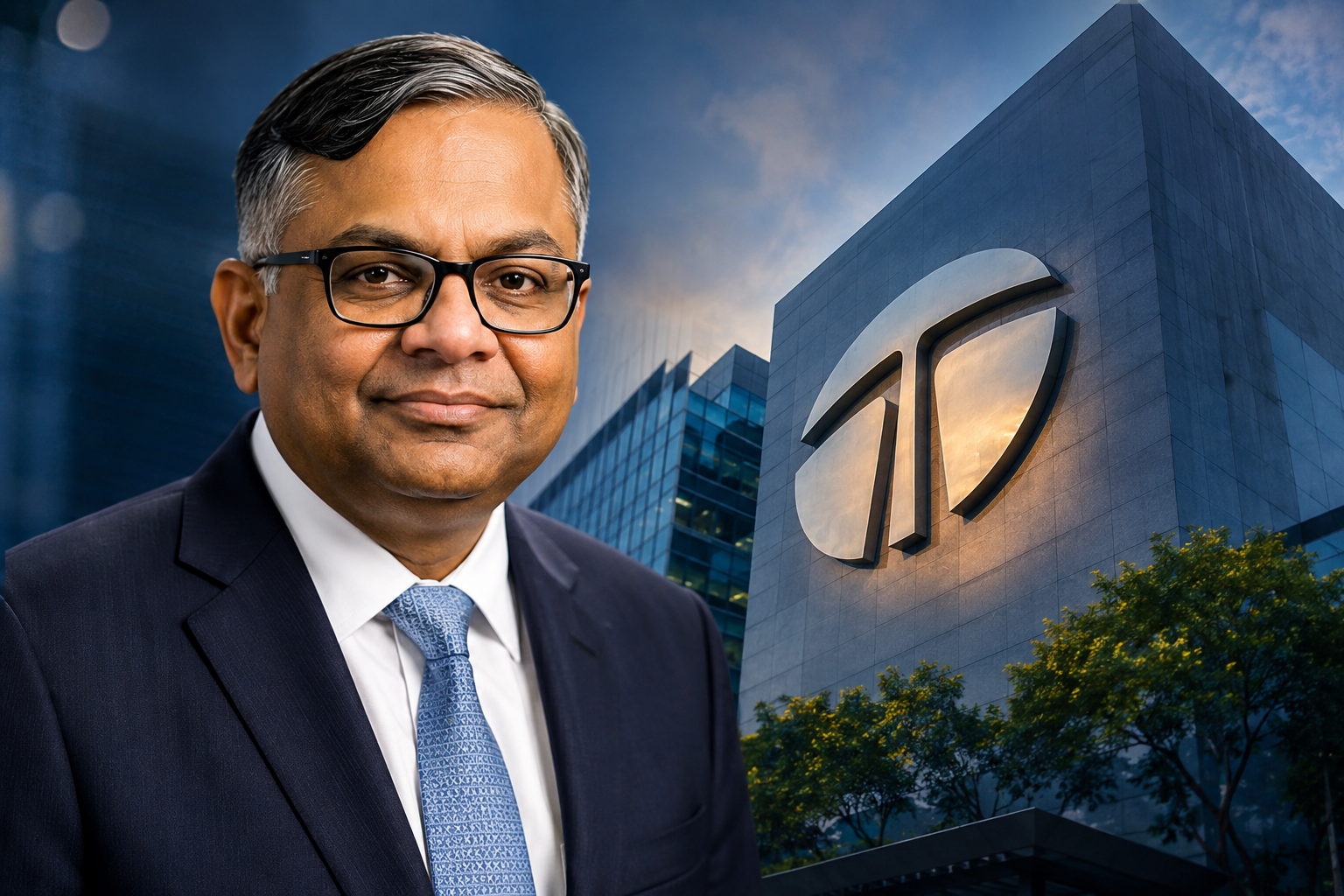
N Chandrasekaran rose from joining TCS in 1987 to becoming the first non-Parsi professional to lead Tata Sons.
His tenure saw major expansion into aviation, electronics, semiconductors and digital businesses, alongside significant challenges.
Highlights
- N Chandrasekaran, popularly known as ‘Chandra’, joined Tata Group through TCS in 1987.
- He became TCS CEO in 2009 and Tata Sons chairman in 2017.
- He was the first non-Parsi professional to lead the Tata conglomerate.
- Under his leadership, Tata expanded aggressively into aviation, semiconductors, electronics and digital commerce.
- Tata Group revenues crossed $180 billion in FY2024-25.
- Chandrasekaran said he would not seek another term after his current tenure ends on February 20, 2027.
New Delhi, Aug 12: Natarajan Chandrasekaran, widely known as “Chandra”, rose from the ranks of Tata Consultancy Services to become chairman of Tata Sons and one of the most prominent corporate leaders in India.
Born into a South Indian agricultural family, Chandrasekaran holds a master’s degree in computer applications. He joined Tata Consultancy Services in 1987 and steadily climbed the corporate ladder, becoming TCS CEO in 2009.
His biggest responsibility came in 2017. Chandrasekaran was named Tata Sons chairman in January and took charge in February following the removal of Cyrus Mistry in 2016. His appointment made him the first non-Parsi professional to lead the conglomerate.
Under Chandrasekaran, Tata Group expanded significantly. Group revenues nearly doubled and profit roughly tripled between 2017 and 2026. Aggregate revenues crossed $180 billion in FY2024-25.
Chandrasekaran also pushed the conglomerate beyond its traditional strongholds of technology, automobiles and steel. Tata made major investments in aviation, electronics, semiconductors, batteries and digital commerce.
One of the biggest moves was the acquisition of Air India from the government in 2022. The group subsequently consolidated its airline businesses. Tata Digital also expanded through businesses including BigBasket, Tata 1mg and Tata Neu, while Tata Electronics moved deeper into electronics and semiconductor manufacturing.
However, the expansion brought challenges. Tata Digital reported a loss of nearly ₹5,000 crore in FY26, while Air India reported a loss of ₹22,238 crore. The Air India crash in Ahmedabad in June 2025 also became what Chandrasekaran described as the “most heartbreaking” crisis of his career.
His final period as chairman was marked by tensions surrounding his reappointment and differences involving Tata Trusts Chairman Noel Tata over strategy, capital deployment, governance and the future of Tata Sons.
After months without a resolution, Chandrasekaran announced that he would not seek another term when his tenure ends on February 20, 2027.
His successor will inherit a much larger Tata Group, but will also face the challenge of improving returns from its newer businesses while maintaining the strength of established companies such as TCS, Tata Motors and Titan.