Electric Seaplanes Could Transform Regional Connectivity
Key Highlights
- SkyHop Aviation has signed an initial agreement with Norway-based NOEMI Aerospace.
- The partnership will explore electric seaplane operations in India and South Asia.
- SkyHop plans to evaluate up to 10 NOEMI aircraft by FY2030.
- The potential fleet expansion is subject to commercial, technical and regulatory evaluation.
- SkyHop is targeting a fleet of up to 40 aircraft by FY2030.
- Electric and hybrid seaplanes could account for around 20–25% of that fleet.
- The companies will explore manufacturing and assembly of electric and hybrid seaplanes in India.
- SkyHop’s initial operations will focus on connecting Lakshadweep islands with each other and the mainland.
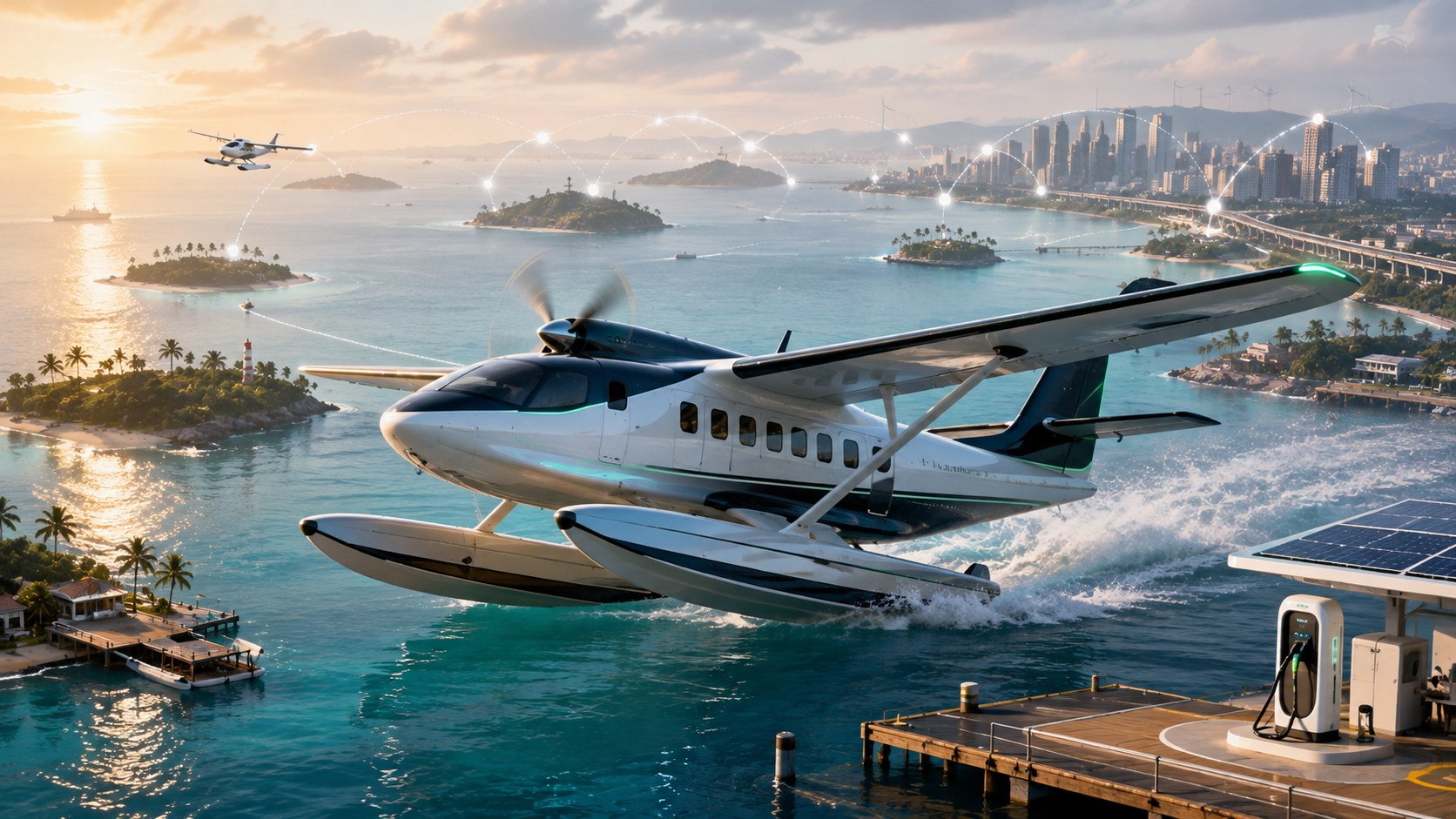
Mumbai, August 17: Indian seaplane operator SkyHop Aviation has signed an initial agreement with Norwegian aviation company NOEMI Aerospace to explore the deployment of electric seaplanes in India and the wider South Asian region.
The partnership is aimed at evaluating the technical, operational, commercial and regulatory feasibility of electric seaplane operations as India looks to expand regional air connectivity.
The proposed collaboration could also open opportunities for domestic manufacturing and assembly of electric and hybrid seaplanes.
Up To 10 Aircraft Planned
Under the agreement, SkyHop will evaluate the introduction of NOEMI’s electric seaplane into its fleet.
The company plans to potentially induct up to 10 NOEMI aircraft by FY2030 through purchases, leases or a combination of both.
The proposed aircraft acquisition remains subject to commercial evaluation and the execution of definitive agreements.
SkyHop may also consider an additional option for up to five aircraft beyond FY2030, depending on the successful induction and operational performance of the initial fleet.
Fleet Target Reaches 40 Aircraft
The electric seaplane initiative forms part of SkyHop’s broader fleet-development strategy.
The company is targeting a fleet of up to 40 aircraft by FY2030.
Subject to operational suitability and regulatory approvals, SkyHop expects electric and hybrid seaplanes to account for around 20–25% of its overall fleet.
The strategy reflects the company’s plans to combine conventional aircraft with emerging low-emission technologies for regional routes.
India Manufacturing Opportunity
The partnership will also explore the possibility of manufacturing and assembling electric and hybrid seaplanes in India.
Domestic production could help develop an ecosystem around emerging electric aviation technologies while potentially reducing dependence on imported aircraft over the longer term.
For NOEMI Aerospace, collaboration with an Indian operator could provide an opportunity to evaluate the suitability of its aircraft for one of the world’s potentially significant regional aviation markets.
Lakshadweep In Focus
SkyHop’s first phase of operations is expected to focus on Lakshadweep.
The company plans to connect the islands with each other and with mainland India, using a 19-seat Twin Otter seaplane for its initial operations.
Seaplanes can operate from water-based locations, potentially allowing them to connect destinations where conventional airport infrastructure is difficult or expensive to develop.
This could make the technology particularly relevant for India’s islands, coastal areas and regions with suitable rivers and lakes.
Electric Aviation Gains Attention
The proposed partnership comes as aviation companies around the world explore electric and hybrid aircraft as potential solutions for short regional routes.
Electric and hybrid aircraft could offer lower emissions and potentially lower operating costs on suitable short-distance routes, although their commercial deployment will depend on factors such as battery technology, aircraft performance, infrastructure and regulatory approvals.
For India, the technology could eventually complement broader efforts to improve regional air connectivity.
Wider South Asian Opportunity
SkyHop and NOEMI will also explore opportunities beyond India across the wider South Asian region.
India’s extensive coastline, islands, rivers and lakes provide a potentially large operating environment for seaplane services.
The companies believe electric and hybrid aircraft could play a role in connecting smaller regional destinations where conventional airport infrastructure is difficult or impractical to establish.
The agreement therefore represents an early step towards assessing whether electric seaplanes can become a commercially viable component of India’s next generation of regional aviation.