Alto, S-Presso Drive Revival in Small-Car Demand
Key Highlights
- Entry-level car sales more than doubled to 58,109 units during April-July FY27.
- Sales stood at 28,193 units during the corresponding period last fiscal.
- Maruti Suzuki Alto and S-Presso were the biggest contributors to the segment.
- Alto and S-Presso together sold 56,391 units during April-July.
- Renault Kwid sales declined 7 per cent to 1,718 units.
- Overall mini-segment sales fell about 12 per cent in FY26.
- Maruti Suzuki says GST reductions have helped revive the small-car segment.
- The company expects the small-car category to grow faster than the passenger vehicle market.
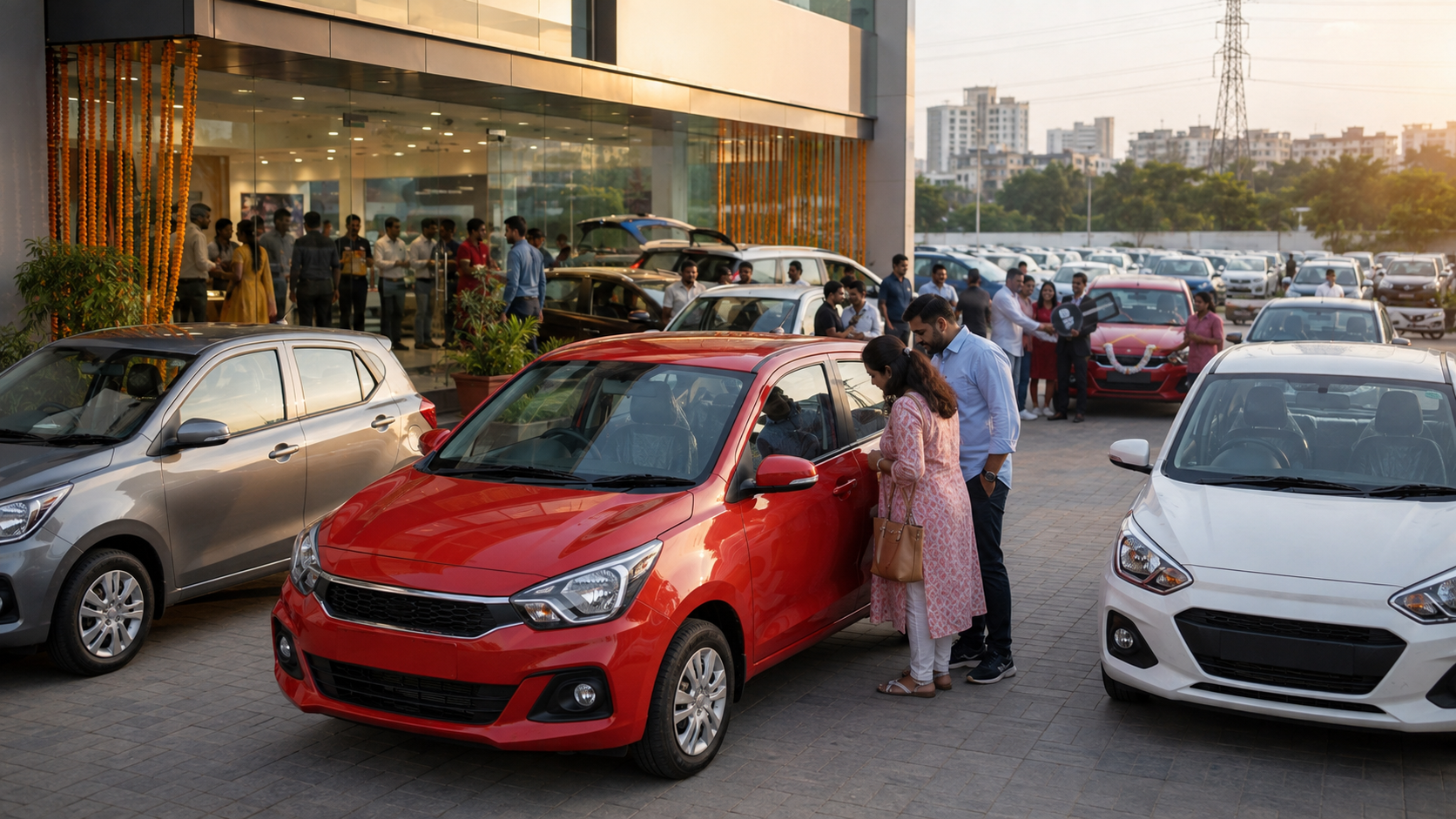
New Delhi, August 18: India’s entry-level passenger car segment is showing signs of a strong revival, with sales more than doubling during the first four months of the current financial year as demand for affordable small cars improves.
Entry-level car sales increased to 58,109 units during April-July FY27, compared with 28,193 units in the corresponding period of the previous financial year.
The growth was driven primarily by three models — Maruti Suzuki’s Alto and S-Presso and Renault’s Kwid — as small cars continued to attract buyers seeking affordable first family vehicles.
Alto and S-Presso lead sales
According to data collected from the Society of Indian Automobile Manufacturers’ latest monthly report, Maruti Suzuki’s Alto and S-Presso accounted for the overwhelming majority of entry-level car sales.
The two models together recorded sales of 56,391 units during April-July, more than double the 26,344 units sold during the same period last year.
Maruti Suzuki Chairman RC Bhargava has highlighted the improving outlook for small cars, with the company expecting the segment to grow significantly faster than the broader passenger vehicle market.
The revival is particularly significant because Maruti Suzuki discontinued the 800cc versions of the Alto and Renault Kwid around three years ago following challenges in complying with BS-VI norms. The 1000cc variants remain available.
Renault Kwid sales decline
While Maruti Suzuki’s entry-level models recorded strong growth, Renault Kwid moved in the opposite direction.
Kwid sales declined around 7 per cent to 1,718 units during April-July FY27, compared with 1,849 units during the corresponding period of FY26.
The figures underline Maruti Suzuki’s dominant position in the country’s entry-level passenger vehicle segment.
Small-car segment recovering after FY26 decline
The latest growth follows a challenging period for India’s mini-car market.
During FY26, mini-segment sales stood at 1,17,584 units, representing a decline of around 12 per cent from 1,33,397 units in FY25.
The recent acceleration therefore signals a notable reversal in demand for affordable passenger vehicles.
Maruti Suzuki believes small cars remain important for Indian consumers because they provide an accessible route into personal vehicle ownership, particularly for first-time buyers and families.
GST reduction supports demand
The revival has also been supported by changes in the Goods and Services Tax structure.
According to Maruti Suzuki Managing Director and CEO Hisashi Takeuchi, the implementation of new GST rates in September 2025 contributed to stronger retail sales during the second half of the previous financial year.
Maruti’s retail sales grew 17 per cent during that period.
The company ended March with around 1.9 lakh pending bookings due to inadequate manufacturing capacity for models experiencing strong demand, according to Bhargava.
Momentum continued into the current financial year, with Maruti’s sales rising 38 per cent in the first quarter while the overall industry grew around 28 per cent.
Small cars remain important for mobility
Industry executives believe affordable cars continue to play an important role in expanding personal mobility in India.
Small cars have historically provided millions of Indian families with their first opportunity to own a passenger vehicle while expanding access to safer and more comfortable transportation.
Maruti Suzuki is also refocusing on the segment with its new manufacturing plant at Kharkhoda helping support production.
Despite uncertainties including inflation and fuel prices, industry executives see significant potential for continued demand as affordability and accessibility remain important considerations for Indian consumers.