E2W Sales Hit New High, Surpass 2025 Record
Key Highlights
- India’s electric two-wheeler registrations have already surpassed the full-year 2025 record.
- E2W registrations reached nearly 1.35 million units between January and August 2026.
- The figure is higher than the 1.34 million units registered during the whole of 2025.
- Lower battery costs are helping narrow the price gap between electric and petrol two-wheelers.
- Delhi’s EV policy and other state-level incentives are supporting electric mobility adoption.
- TVS Motor remains the largest E2W seller, followed by Bajaj Auto, Ather Energy and Hero MotoCorp.
- Industry players expect E2W sales to cross 2 million units in 2026.
India’s electric two-wheeler market has reached a new milestone, with registrations in the first eight months of 2026 already surpassing the full-year record set in 2025. The sharp increase highlights growing consumer acceptance of electric mobility as battery costs decline, manufacturers expand their product portfolios and government incentives continue to support EV adoption.
According to Vahan data cited in the newspaper report, electric two-wheeler registrations between January and August 2026 reached around 1.35 million units. This has already exceeded the 1.34 million units recorded during the entire calendar year 2025.
The latest performance represents a significant increase from previous years. E2W registrations stood at about 661,653 units in 2022, rising to 901,857 units in 2023 and 1.21 million units in 2024 before reaching the 1.34-million-unit mark in 2025.
The market has continued to gain momentum despite concerns over petrol prices and the broader economic environment. Industry executives cited in the report said the growth is increasingly being driven by underlying economics rather than subsidies alone.
Lower battery costs have played an important role in narrowing the price difference between electric and conventional petrol-powered two-wheelers. At the same time, established manufacturers have expanded their electric offerings, giving consumers a wider selection across different price points and product categories.
State-level policies are also contributing to the growth. Delhi’s recently approved EV policy, for instance, provides financial and other incentives aimed at making electric vehicles more affordable. Such measures are expected to support demand in major urban markets while encouraging manufacturers to introduce additional models.
The strong registration numbers are also reflected in the performance of individual manufacturers. TVS Motor registered about 353,637 E2Ws between January and August, making it the largest player in the segment during the period. Bajaj Auto followed with approximately 302,181 units, while Ather Energy recorded around 227,184 units. Hero MotoCorp registered roughly 146,097 units, and Ola Electric recorded about 93,025 units.
The industry is also witnessing increased competition as legacy automakers and newer EV-focused companies introduce products and strengthen their distribution and service networks. More financing options and improving consumer confidence are expected to further support adoption.
Industry executives believe the pace of growth could remain strong through the rest of 2026. The newspaper report notes that monthly E2W sales have averaged around 168,377 units so far this year, compared with approximately 111,861 units in 2025. Based on the current run rate, annual registrations could cross the 2-million-unit mark.
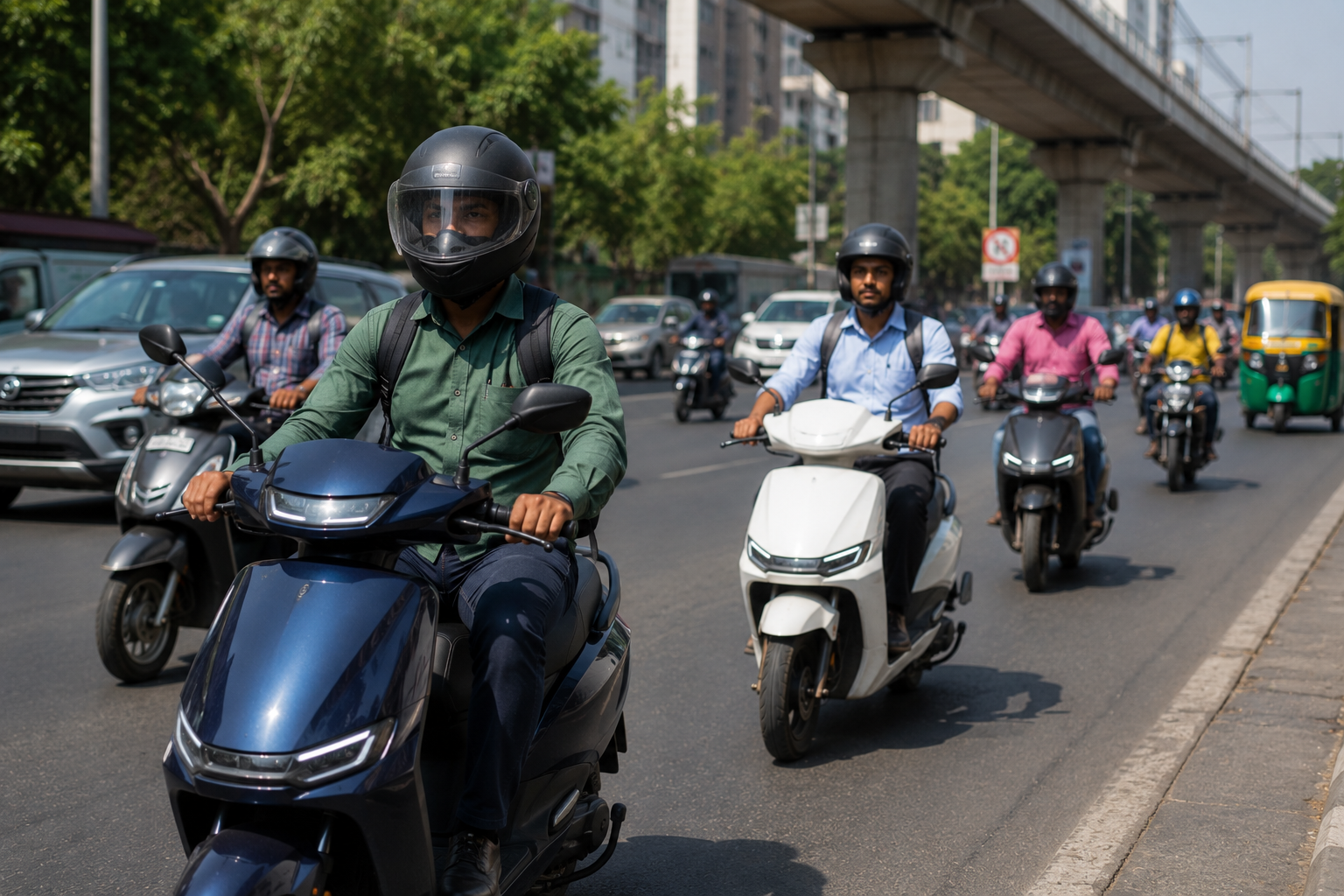
The market’s growth comes as manufacturers continue to invest in technology, production capacity and new models. Companies are also responding to changing consumer preferences, with electric scooters becoming increasingly visible in urban markets.
Meanwhile, petrol prices remain an important factor influencing purchasing decisions. The continued cost advantage of electric vehicles, combined with lower operating and maintenance expenses, could encourage more consumers to shift away from conventional two-wheelers.
The transition is also being supported by a broader push toward electrification across India’s transportation sector. Government policies, charging infrastructure, battery technology and private-sector investment will remain important factors in determining how quickly electric mobility expands.
With the 2025 annual registration record already surpassed by August, India’s E2W market appears on track for another year of substantial growth. If the current momentum continues, 2026 could become a landmark year for electric two-wheelers and further strengthen their position in India’s rapidly evolving automobile market.