Summit Seeks Consensus Amid Tensions
Key Highlights
- BRICS leaders are working towards consensus on a joint declaration.
- Iran-UAE differences over the West Asia conflict remain a key challenge.
- India is focusing on food, energy and supply-chain security.
- Trade, investment, connectivity and technology cooperation are major agenda items.
- BRICS represents around 49.5% of the global population and 40% of global GDP.
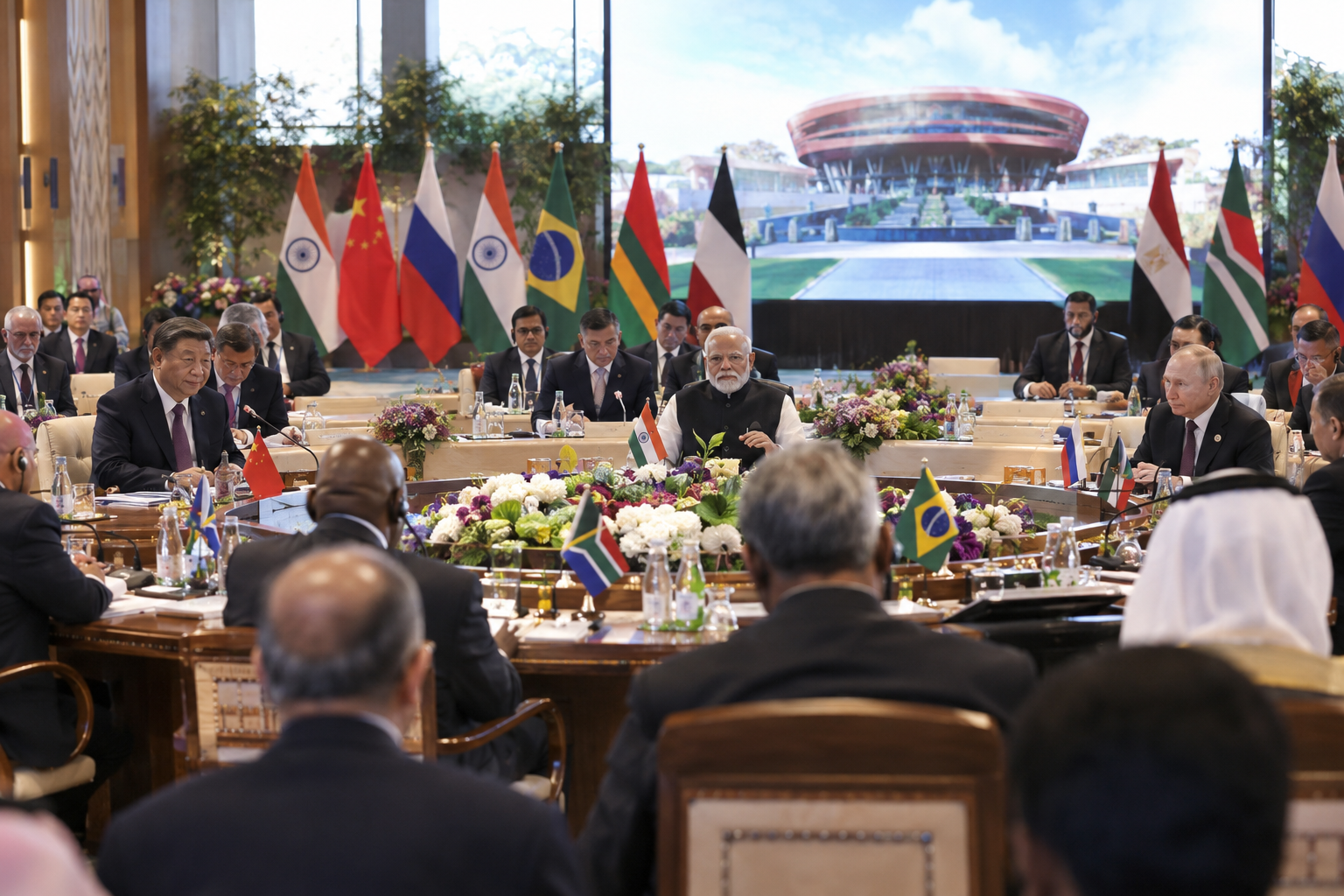
The two-day BRICS Summit in New Delhi is witnessing intense diplomatic consultations as member countries work towards consensus on a joint declaration amid geopolitical differences.
Diplomatic sources said negotiations could continue until the last moment, particularly due to differing positions between Iran and the UAE over the West Asia conflict. As BRICS follows a consensus-based approach, any member can potentially block the final declaration.
As the chair of BRICS in 2026, India is seeking to position the grouping as a complementary engine for economic growth while addressing the concerns of developing countries affected by geopolitical tensions.
India has placed the Global South at the centre of its BRICS agenda, with emphasis on food, energy and supply-chain security. Cooperation in trade, investment, connectivity and emerging technologies is also expected to receive significant attention.
The expanded BRICS grouping now has 11 members and represents around 49.5% of the world’s population, 40% of global GDP and 26% of global trade.
India’s presidency is guided by the theme “Building for Resilience, Innovation, Cooperation and Sustainability”. The summit is expected to conclude with the release of the New Delhi Declaration.