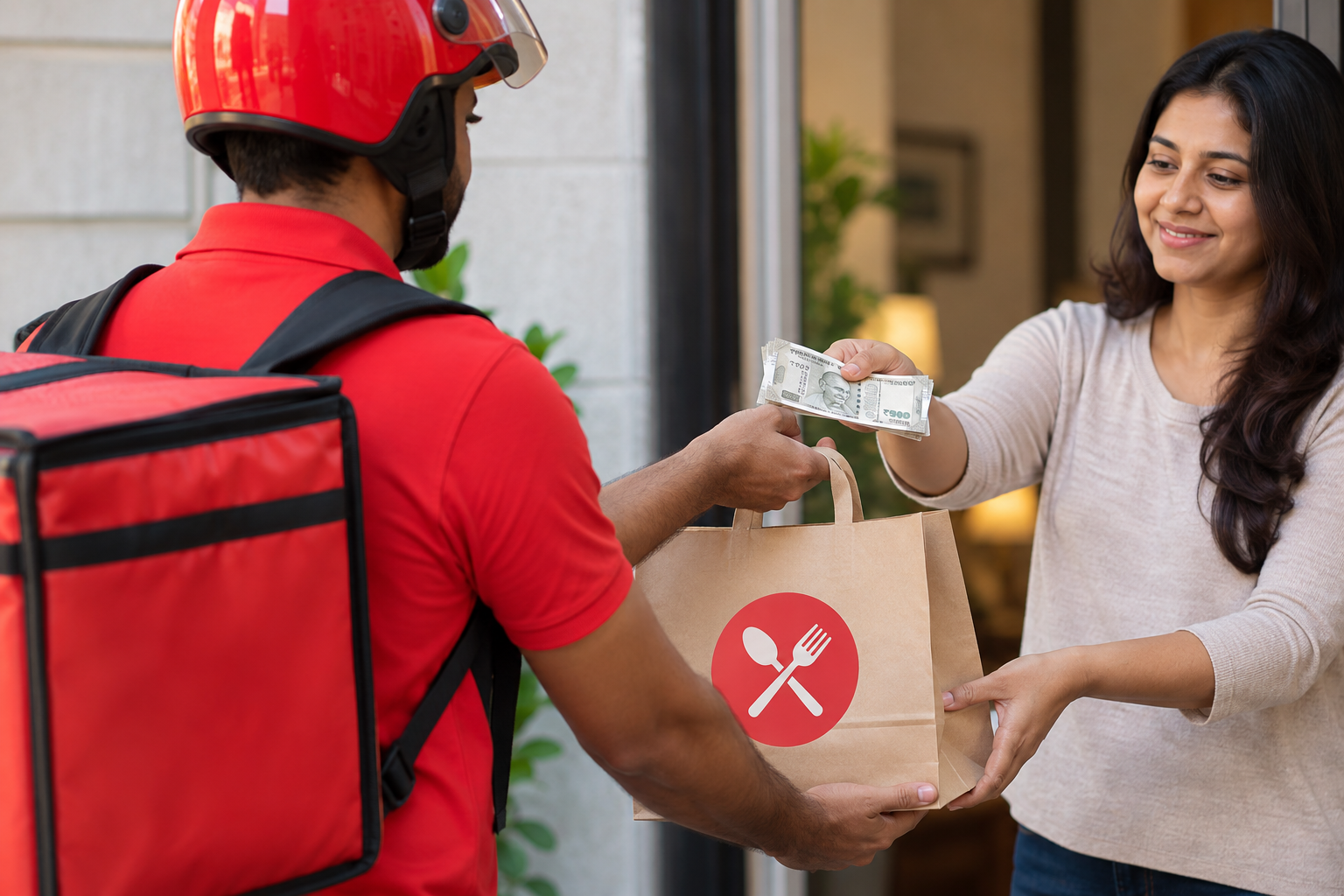
Zomato has introduced an additional pay-on-delivery fee for customers choosing cash payment for food orders.
The charge is separate from the platform fee, restaurant packaging costs and GST.
Highlights
- Zomato has introduced an extra fee for cash-on-delivery orders.
- The pay-on-delivery fee is generally shown as Rs 5.
- In some cases, users have reportedly seen charges of Rs 6, Rs 7 and even Rs 20.
- Customers paying online can avoid the additional fee.
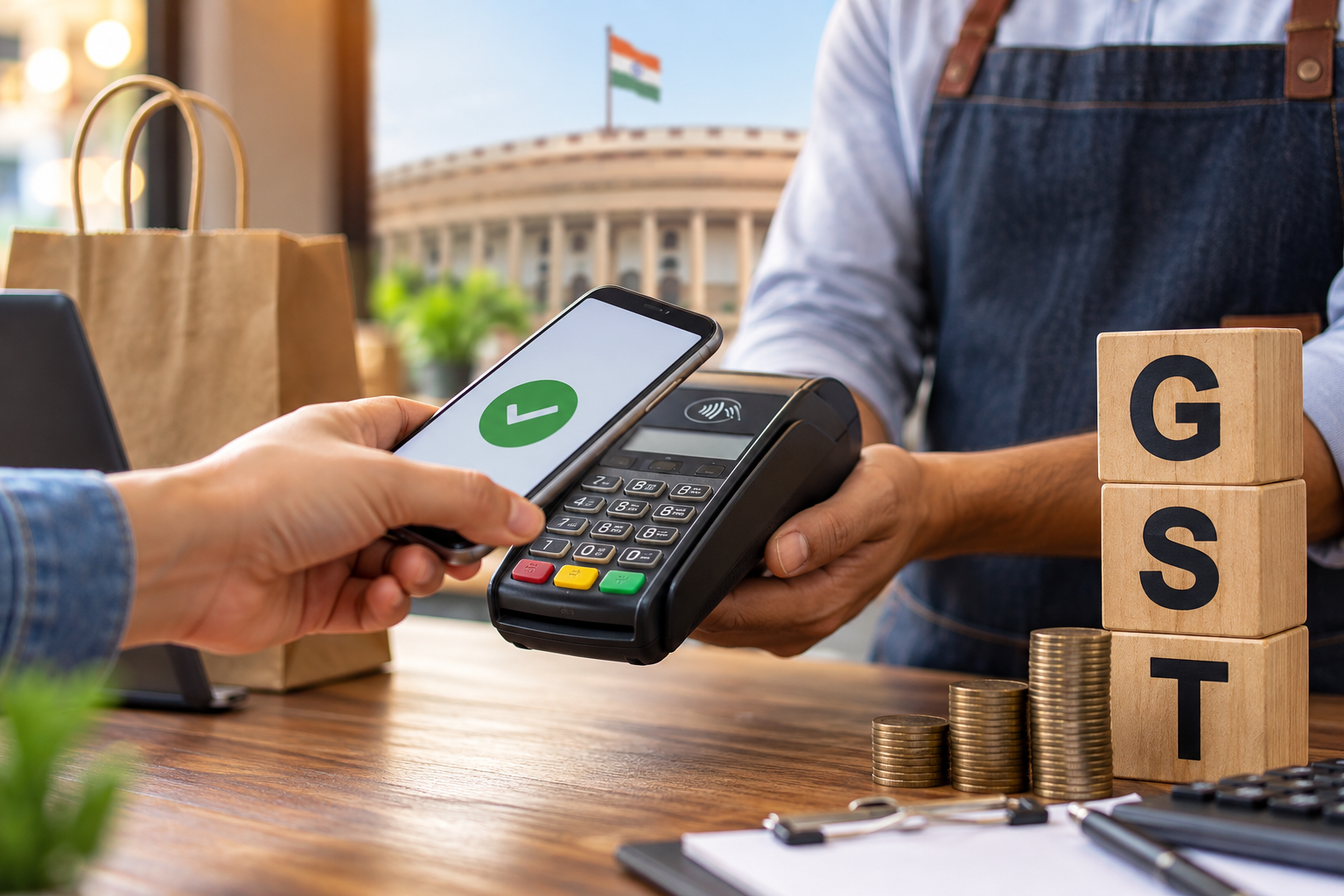
Zomato has introduced a new pay-on-delivery fee for customers who choose to pay in cash while ordering food through its platform. The additional charge is being shown separately on the order bill and does not apply to customers making digital payments.
The Eternal-owned food-delivery platform is charging around Rs 5 on some cash-on-delivery orders. However, the amount may not be uniform across all users or orders.
According to screenshots cited in reports, some customers have seen pay-on-delivery charges of Rs 6, Rs 7 and as high as Rs 20. In certain cases, the app also informs users that they can avoid the additional charge by switching to an online payment method.
The new fee is separate from other charges already added to Zomato orders. Customers may still have to pay the platform fee, restaurant packaging charges and applicable GST irrespective of whether they choose cash or online payment.
Why the New Fee Matters
While a Rs 5 charge may appear small for an individual order, Zomato processes millions of food-delivery orders every day.
Based on a daily order volume of around 2.3 million to 2.5 million, a hypothetical Rs 5 charge on every order could translate into Rs 1.15 crore to Rs 1.25 crore per day. On an annualised basis, this could amount to roughly Rs 420 crore to Rs 456 crore.
However, this remains only a theoretical upper-end estimate because the new fee applies specifically to pay-on-delivery transactions, while cash orders represent only a portion of Zomato’s overall order volume.
Food Delivery Competition Heats Up
The move also comes at a time when competition in India’s food-delivery market is increasing.
New and existing players are expanding their presence, including Rapido’s food-delivery offering and Flipkart’s pilot initiatives in the sector. Startups are also attracting fresh investor interest, adding further pressure on established platforms to improve monetisation and maintain margins.
Zomato’s latest charge indicates how food-delivery companies are exploring additional revenue streams beyond commissions and standard platform fees.
At present, rival Swiggy has not introduced a comparable cash-payment fee.