All person-to-person UPI transactions will remain free irrespective of transaction value, while approximately 96% of merchant transactions will remain unaffected under the new MDR framework.
India’s Unified Payments Interface will continue to remain free for all person-to-person transactions regardless of the amount transferred. The new merchant discount rate framework, which takes effect from October 15, 2026, will apply only to specified person-to-merchant transactions.
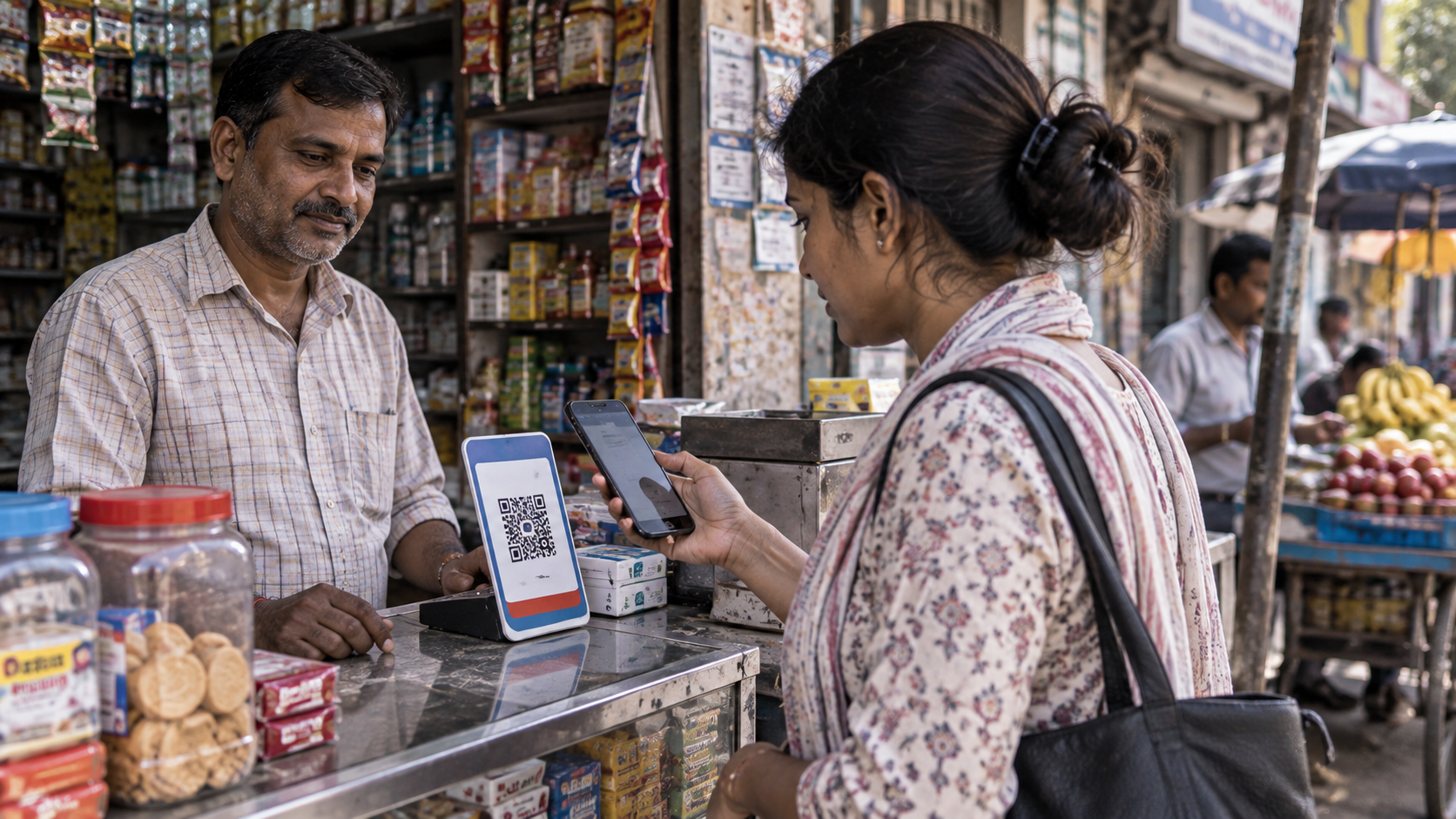
Merchant payments of up to ₹2,000 will continue to attract zero MDR. Small merchants, including street vendors and neighbourhood businesses receiving up to ₹1 lakh a month through UPI QR codes under the Person-to-Person-Merchant category, will also retain zero-MDR treatment.
For specified merchant transactions above ₹2,000, an MDR of 0.4% will apply. The charge will be capped at ₹300 for transactions of ₹75,000 and above.
Separate rates have been provided for selected categories. Merchant payments above ₹2,000 in sectors including railways, telecommunications, insurance, fuel and agricultural inputs will attract a flat MDR of ₹5 per transaction.
Transactions relating to mutual funds, securities, stockbrokers and dealers will carry an MDR of 0.02%, capped at ₹300 per transaction.
MDR is not a tax or a charge collected by the government or NPCI. It is a charge within the merchant payment ecosystem that is distributed among participating banks, payment service providers and UPI application providers to support the operation and expansion of the payment network.
Customers making UPI payments will not be required to pay the MDR. Banks have been advised to ensure merchants do not pass the charge on to customers, while UPI application providers will not be permitted to impose platform fees or hidden charges under the framework.
All person-to-person UPI transactions will remain outside the MDR mechanism. According to data cited in the framework, these transactions account for about 70% of total UPI transaction value.
There will also be no monthly quotas or tiered caps on free UPI usage for individuals. Existing daily transaction limits prescribed by banks and NPCI will continue as security and risk-management measures rather than charging thresholds.
The framework also provides for a dedicated fund to support UPI adoption among small merchants. An amount equivalent to 5% of total MDR collections will be allocated to the fund to support wider acceptance and continued use of digital payments among small businesses.
Introduced under the Payment and Settlement Systems Act, 2007, following deliberations by the UPI Steering Committee, the framework establishes a revenue mechanism for specified merchant transactions while retaining zero-cost access for individuals and small merchants. It also follows the Standing Committee on Finance’s 32nd Report, which highlighted the need for a viable revenue model to sustain and expand India’s digital payments infrastructure.