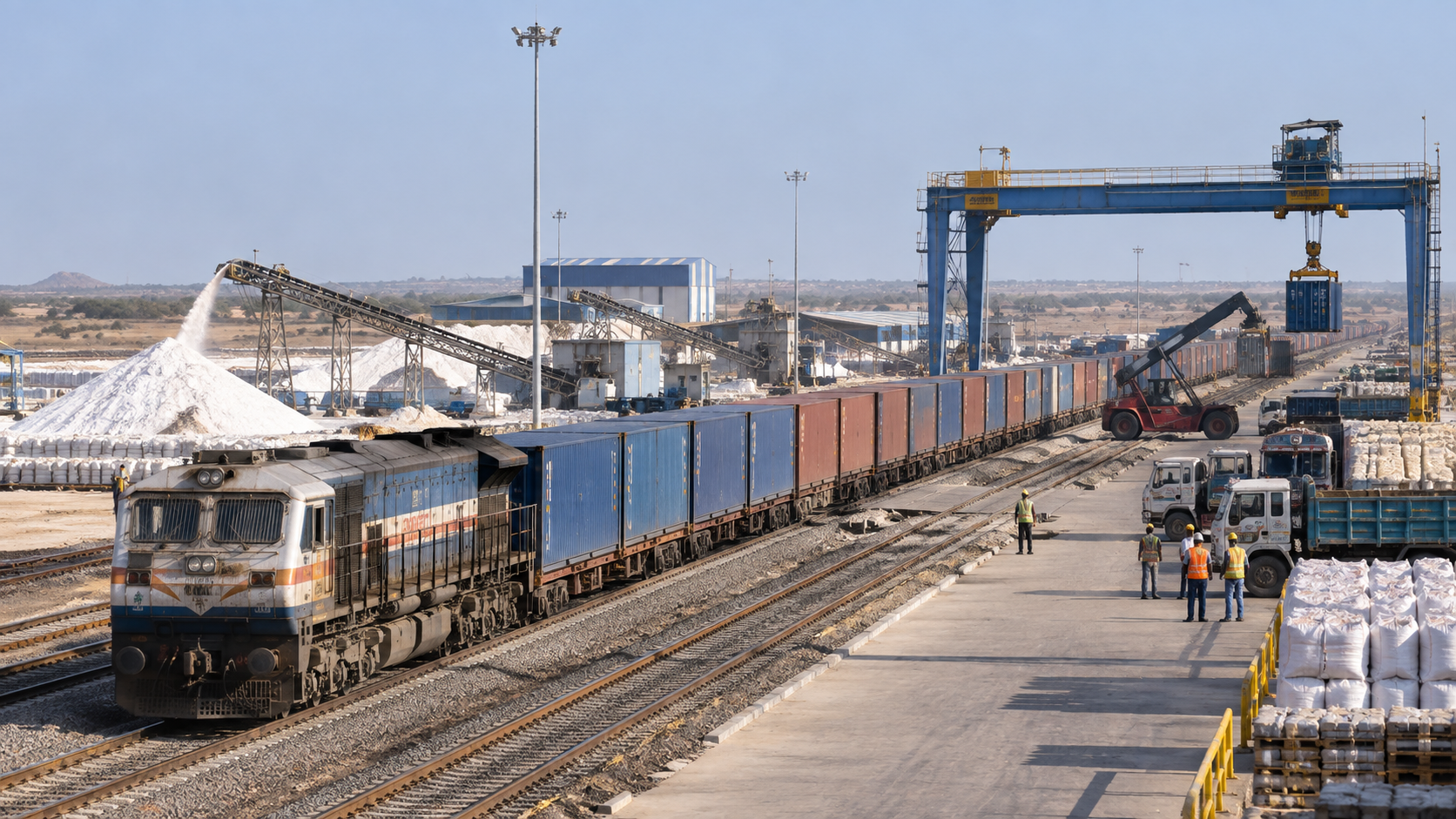

Understanding complex trade dynamics with the Gravity Model

Gravity model analysis by Centre for Advanced Trade Research (CATR) shows that global trade is transcending neighbourhood economics, but developing countries like India still struggle with distance barriers.

• With data increasingly available for developing as well as developed countries, the gravity model has come to be the starting point for a wide variety of research questions with a policy component.
• The name “gravity” comes from the fact that the non-linear form of equation 1a resembles Newton’s law of gravity: exports are directly proportional to the exporting and importing countries’ economic “mass” (GDP), and inversely proportional to the distance between them (not the square of the distance between them, as in physics).
• According to gravity results of world, interestingly, the distance variable is significant and non-negative. This means that with advancement of technology, reduction in freight cost, distance is not looked at hinderance, though the intensity of explaining trade flow is low. There is clear evidence that global trade is expanding beyond neighbourhood economics.
• In case of India, distance remained negative, signalling restricted trade flows, which are reflecting higher trade cost. Being developing economies, India does not possess in air cargo. This reduces trade competitiveness due to higher transportation cost.

Global Trade

The gravity model is the workhorse of applied international trade literature. It has been used in literally thousands of research papers and published articles covering all areas of trade. It is of particular interest to policy researchers, because it makes it possible to estimate the trade impacts of various trade-related policies, from traditional tariffs to new “behind-the-border” measures.

The gravity model was introduced first by Walter Isard in 1954. In its traditional form, the model is used to estimate the trade flow between two units based on their economic size and distance. Jan Timbergen in 1969 received the first ever Nobel prize in economics for his empirical paper on gravity model. With data increasingly available for developing, as well as developed countries, the gravity model has come to be the starting point for a wide variety of research hypotheses with a policy component. It has been  used by economists to analyse the determinants of bilateral trade flows such as common borders, common languages, common legal systems, common currencies and common colonial legacies. It has also been deployed to test the effectiveness of trade agreements and organizations such as NAFTA and WTO.

Although first put forward as an intuitive explanation of bilateral trade flows, the gravity model has more recently acquired a range of micro-founded theoretical bases. These approaches are important to policy researchers because they affect the data, specification, and econometric technique used to estimate the gravity model. Use of a theoretically-grounded gravity model can lead to substantially different results and interpretations from those obtained via a “naive” formulation, and high-quality policy research and advice increasingly needs to be based on a rigorously established methodology.

In its most basic form, the gravity model can be written as follows:

Where log of trade indicates bilateral trade flows, GDP is each country’s gross domestic product, represents trade costs between the two countries, distance is the geographical distance between them as an observable proxy for trade costs and is a random error term. The Z term is the vector of all exogenous variables such as dummy variables. “a” is the regression constant, and the b terms are coefficients to be estimated.

The name “gravity” emanates from the fact that the non-linear form of equation 1a resembles Newton’s law of gravity: exports are directly proportional to the exporting and importing countries’ economic “mass” (GDP), and inversely proportional to the distance between them (not the square of the distance between them, as in physics). In other words, gravity says that we expect larger country pairs to trade more, but we expect countries that are further apart to trade less, probably because transport costs between them are higher.

CEPII database is being used to analyse the gravity model results. To understand the interdependence of various variables on trade, we will compare the results of world and India. First of all, gravity model used to analyse world trade flow is as follows:

Trade flow = a + b1_gdp/cap(i) + b2_gdp/cap(j) + b3_distance + b4_Z + error
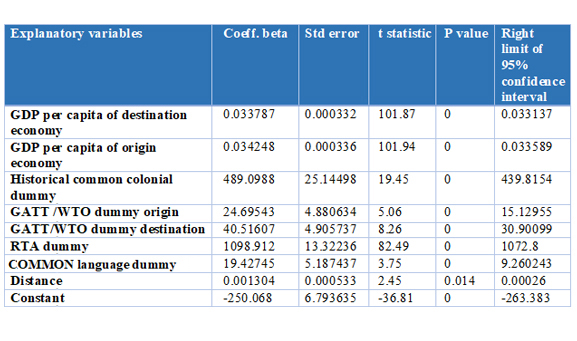
Source: CATR analysis using CEPII database. All explanatory variables are significant at 1% level of significance, except distance, which is significant at 5% level of significance.

Total number of observations is 945,389 consisting of data pertaining to more than 150 countries from 1948 to 2016. According to the world gravity results, regional trade agreement dummy (RTA) explains the maximum trade flows followed by historical common colonial dummy. This variable implies whether both trading partners have been ruled by common country and takes the value 1. Interestingly, the distance variable is significant and non-negative.

This means that with advancement of technology, reduction in freight cost, distance is not looked at hinderance, though the intensity of explaining trade flow is low. There is clear evidence that global trade is expanding beyond neighbourhood economics.

Now, lets analyse Indian gravity results using same trade model.
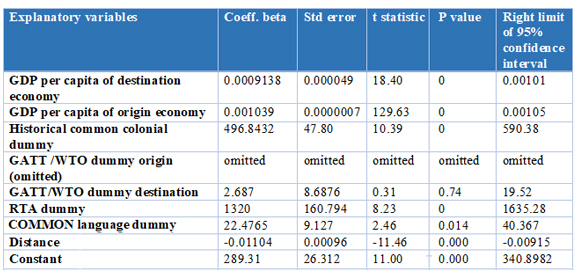
Source: CATR analysis using CEPII database.

In this model 7,738 number of observations were there with most of the explanatory variables retaining significance. But, in this case, distance remained negative as expected, signalling restricted trade flow which is reflecting higher trade cost. Being a developing economy, India does not possess sufficient air cargo. This reduces trade competitiveness due to higher transportation costs.

Similar to results of the world gravity model, in the case of India also, RTA dummy is explaining maximum trade from India. With the gravity model results it is clear that developing countries exhibits different results which reflects heterogeneity. It seems the negative impact of distance is plummeting in world trade due to technical advancement, but developing countries are still unable to leverage the benefits of this technical advancement. This also juxtaposes the clash of interests between developed and developing countries at WTO forum.

Previous Post
Next Post

Most Recent Posts

  • All Post
  • 8th Pay Commission
  • Aadhar
  • Aditya Birla Capital
  • Advertising Standards
  • Affordable Housing
  • Agriculture
  • Agriculture & Food
  • AI in Healthcare
  • AI Technology
  • Airlines
  • alcohol industry
  • Android
  • APEDA
  • Apple
  • Artificial Intelligence
  • Ashwini Vaishnaw
  • Asset Management
  • Atmanirbhar Bharat
  • Audio Devices
  • Audio Products
  • Auto Industry
  • Automobile
  • Automobiles
  • Automotive
  • Automotive Industry
  • Aviation
  • Bain Healthcare Report 2026
  • Bank
  • Banking
  • Banking Technology
  • Battery Industry
  • Beverage Industry
  • Beverages
  • Bihar
  • biotechnology
  • Bitcoin
  • BMW Group India
  • Brand Insight
  • BRICS
  • Bullion Market
  • Business
  • Business & Economy
  • Business & Trade
  • Business Leadership Post COVID-19
  • Business News
  • Business Terminology
  • Business Utilities
  • Buyback
  • Capital Goods
  • Capital Markets
  • CarsBusiness
  • CBIC
  • CCI
  • Child Investment
  • China
  • China technology news
  • Citizen Services
  • Clean Energy
  • Clean Technology
  • Cloud Computing
  • coal
  • Commerce
  • Commerce and Industry
  • Commercial Real Estate
  • Commercial Vehicles
  • Commodities
  • Communications
  • Companies
  • Competition Law
  • Compliance
  • Computer Accessories
  • connected cars
  • Consumer Affairs
  • Consumer Electronics
  • Consumer Finance
  • Consumer Goods
  • Consumer Health
  • Consumer Markets
  • Consumer News
  • Consumer Protection,
  • Consumer Rights
  • Consumer Spending
  • Consumer Trends
  • Content Creation
  • Copper
  • Corporate
  • corporate affairs
  • Corporate Earnings
  • Corporate Governance
  • Corporate News
  • Corporate Social Responsibility
  • Cost of Living
  • Country
  • CRED
  • Credit Cards
  • CREDIT RATING
  • Crude Oil
  • Cryptocurrency
  • CSR
  • Culture
  • Currency
  • Customs Duty
  • Cyber Security
  • Cybersecurity
  • Dairy Industry
  • Data & Analytics
  • Defence
  • Delhi Government
  • Delhi-NCR
  • Demographics
  • Derivatives
  • DGCA
  • DGFT
  • DigiLocker
  • Digital Assets
  • Digital Economy
  • Digital Health India
  • Digital Identity
  • Digital India
  • Digital Infrastructure
  • Digital passport for robots
  • Digital Payments
  • Digital Platforms
  • digital services
  • Diplomacy
  • Dixon Technologies
  • DPIIT
  • E Commerce
  • E-commerce
  • E-Governance
  • Ease of Doing Business
  • Economic Growth
  • Economy
  • Edible Oil Industry
  • Editor Choice
  • EdTech
  • Education
  • Electric Mobility
  • Electric Vehicles
  • Electronics
  • Employment
  • ENERGY
  • Engineering
  • Entertainment
  • Environment
  • EPFO
  • Ethanol Economy
  • EV Industry
  • EV Technology
  • Exports
  • EXTER
  • Farmers
  • Fashion
  • FINANCE
  • Finance Ministry,
  • Financial Marketing
  • Financial Markets
  • Financial News
  • Financial Planning
  • Financial Results
  • Financial Services
  • Fintech
  • FnTech
  • Food & Beverage
  • Food & Beverages
  • Food Exports
  • Food Industry
  • Food Manufacturing
  • Food Processing
  • Food Regulations
  • food safety
  • Foreign Exchange
  • Foreign Investment
  • Foreign Policy
  • Foreign Trade
  • Forex Reserves
  • fssai
  • FTA
  • Fuel
  • Fuel Prices
  • Future Energy
  • Gadgets
  • Gadgets & Apps
  • Gaming
  • GDP
  • Generative AI Healthcare
  • Geopolitics
  • GI Products
  • Global Brand Alliance
  • Global Economy
  • Global Markets
  • Global Politics
  • Global Tech
  • Global Trade Policy
  • Global Trends\
  • Gold
  • Gold Market
  • Gold Prices
  • Gols & Silver
  • Government
  • Government & Policy
  • Government Affairs
  • Government Bonds
  • Government Data
  • Government Initiatives
  • Government Policy
  • Government Policy & Regulation
  • Government Scheme
  • Government Schemes
  • Government Services
  • Green Energy
  • Green Mobility
  • GroupGlobal
  • GST
  • GST Council
  • GST Counsil
  • Hair Care
  • Hardware
  • Hatchback Segment
  • Health Supplements,
  • Horticulture
  • Housing
  • HSBC
  • Human Resources
  • humanoid robot market
  • Hyundai
  • IBT Infographics
  • iinvestment
  • Imports & Exports
  • Income Tax
  • India
  • India Auto Market
  • India Business News
  • India Inc
  • India News
  • India Retail
  • India-Canada Relations
  • India-China
  • India-Japan Relations
  • India-Russia Relations
  • India-South Korea Relations
  • India-US Relations
  • Indian Economy
  • Indian Navy
  • Industrial Pollution
  • Inflation
  • Infra
  • Infrastructure
  • Innovation
  • Instagram
  • Insurance
  • international
  • International Affairs
  • International Cooperation
  • International Relations
  • International Trade
  • Internet & Connectivity
  • Internet Policy
  • Internet Regulation
  • Interview
  • Investing
  • Investment News
  • Investments
  • iPhone News
  • IPO
  • IT Industry
  • Jewellery
  • Jio Platforms
  • JioBlackRock
  • Jobs & Careers
  • Joint Ventures
  • Kim Kardashian
  • Labour
  • Latest
  • Launches
  • Leadership
  • Leaderspeak
  • Lending
  • Lifestyle
  • Lifestyle Tech
  • List
  • Loans & Credit
  • Local News
  • Logistics
  • LPG
  • Luxury Cars
  • Machinery
  • Macroeconomics
  • Macroeconomy
  • maharashtra
  • Maharashtra News
  • Make in India
  • Makhana
  • Manufacturing
  • Market Outlook
  • Markets
  • Maruti Suzuki
  • Mergers & Acquisitions
  • Meta
  • Microsoft
  • Middle East
  • Mobile Apps
  • Mobile Industry
  • Mobile Launch
  • Mobility
  • Monetary Policy
  • Monsoon
  • MoSPI
  • MSME
  • Mutual Funds
  • Nano Tech
  • National
  • National news
  • NEET 2026
  • NewsElectric
  • NewsTata
  • NPCI
  • NPS Vatsalya
  • Office Market
  • Oil & Gas
  • Oil and Gas
  • Others
  • OTT
  • Packaged Drinking Water
  • Packaged Foods
  • Packaging Industry
  • Packaging Innovation
  • Passenger Vehicles
  • Paytm
  • Pension & Retirement
  • Pensions
  • Personal Care
  • Personal Finance
  • Perspectives
  • Petroleum
  • PFRDA
  • Pharmaceuticals
  • PM Modi
  • PMAY-G
  • PMAY-U
  • PMAY,
  • PMI
  • policy
  • Population
  • PORTS
  • Positive News
  • PPF
  • Precious Metals
  • Pricing
  • Product Labeling
  • Product Labelling
  • Product Launch
  • Property Market
  • PSU
  • PSU Banks
  • Public Health
  • Public Policy
  • Public Safety
  • Public Sector
  • Public Services
  • Public Welfare
  • Quarterly Results
  • Railways
  • Rajasthan
  • Raksha Bandhan
  • Raksha Bandhan Gifts
  • Rare Earths
  • RBI
  • Real Estate & Realty Sector
  • Recycling
  • Regulation
  • Regulatory Action
  • Regulatory Affairs
  • Regulatory Updates
  • REIT
  • Reliance Industries
  • Renewable Energy
  • RERA
  • Research
  • Retail
  • Retirement Planning
  • Road Infrastructure
  • Robotics & Automation
  • robotics standards
  • Rupee
  • Rural Development
  • Rural Housing
  • SAIL
  • Salaries
  • Samsung
  • Savings
  • Science & Technology
  • Sebi
  • Security
  • Semiconductor
  • Services Sector,
  • SHIPPING
  • Silver Prices
  • Skill Development
  • Skills Development
  • Small Business
  • Smart Devices
  • Smart Home
  • Smart Mobility
  • Smartphones
  • Social Impact
  • Social Media
  • Society
  • Software Development
  • Solar Energy
  • Space Technology
  • Startups
  • Statistics
  • Steel Industry
  • Stock Market
  • stocks
  • streaming
  • Sugar Industry
  • Sukanya Samriddhi Yojana
  • Sustainability
  • SUV
  • Tamil Nadu Pollution Board
  • Tariffs
  • Tariffs & Duties
  • Tata Group
  • Tata Motors
  • Tata Sons
  • Tax Planning
  • Taxation
  • Tech
  • Tech Branding
  • Technology
  • Telecom & Technology
  • Telecom Industry
  • Top Story
  • Tourism
  • Trade
  • Trade Agreement
  • Trade Basket
  • Trade Partner
  • Trade Policy,
  • Transportation
  • Travel
  • Trending
  • Two-Wheelers
  • UIDAI
  • UPI
  • Urban Development
  • US-Iran Conflict Economic Impact
  • US–India Relations
  • Uttar Pradesh
  • VehiclesLuxury
  • vivo
  • Wastewater Management
  • Water Quality,
  • Wealth Management
  • Wearables
  • Wellness
  • WhatsApp
  • Wheat
  • Workplace
  • World
  • World News
  • Worldview
  • Yamaha
  • zLead Slider
    •   Back
    • Healthcare
    • Auto
    • Fmcg
    • Hospitality
    •   Back
    • Cash Crop
    • Organic
    • New Era Agri
    • Processed Food
    •   Back
    • Construction
    • Power
    • Mining
    • Telecom
    •   Back
    • ENERGY
    •   Back
    • Export/Import
    • Trade Deal
    • Trade Fair
    •   Back
    • Policies
    • Industry
    • Finance
    •   Back
    • Others technology
    • Mobile phone
    • Gadgets
    •   Back
    • Manufacturing
    • Services
    • Startup

India Business & Trade is a national media platform decoding the ideas, decisions and shifts shaping India’s growth story—across plicy, business, global commerce and a rapidly evolving marketplace.

Reach Us

India Business & Trade
M-62, Saket, New Delhi-110064, India

Subscribe To Newsletter

Stay ahead in the dynamic world of trade and commerce with India Business & Trade’s weekly newsletter.

Copyright © 2026 India Business & Trade. All Rights Reserved


Fatal error: Uncaught TypeError: Unsupported operand types: string * int in /var/www/sites/indiabusinesstrade.in/wp-content/plugins/royal-elementor-addons/admin/includes/wpr-templates-modal-popups.php:192 Stack trace: #0 /var/www/sites/indiabusinesstrade.in/wp-content/plugins/royal-elementor-addons/admin/includes/wpr-templates-modal-popups.php(128): WprAddons\Admin\Includes\WPR_Templates_Modal_Popups::get_template_settings() #1 /var/www/sites/indiabusinesstrade.in/wp-content/plugins/royal-elementor-addons/admin/includes/wpr-templates-modal-popups.php(106): WprAddons\Admin\Includes\WPR_Templates_Modal_Popups::render_popup_content() #2 /var/www/sites/indiabusinesstrade.in/wp-content/plugins/royal-elementor-addons/admin/includes/wpr-templates-modal-popups.php(64): WprAddons\Admin\Includes\WPR_Templates_Modal_Popups::display_popups_by_location() #3 /var/www/sites/indiabusinesstrade.in/wp-includes/class-wp-hook.php(341): WprAddons\Admin\Includes\WPR_Templates_Modal_Popups->render_popups() #4 /var/www/sites/indiabusinesstrade.in/wp-includes/class-wp-hook.php(365): WP_Hook->apply_filters() #5 /var/www/sites/indiabusinesstrade.in/wp-includes/plugin.php(522): WP_Hook->do_action() #6 /var/www/sites/indiabusinesstrade.in/wp-includes/general-template.php(3224): do_action() #7 /var/www/sites/indiabusinesstrade.in/wp-content/plugins/royal-elementor-addons/admin/templates/wpr-canvas.php(64): wp_footer() #8 /var/www/sites/indiabusinesstrade.in/wp-includes/template-loader.php(132): include('...') #9 /var/www/sites/indiabusinesstrade.in/wp-blog-header.php(19): require_once('...') #10 /var/www/sites/indiabusinesstrade.in/index.php(17): require('...') #11 {main} thrown in /var/www/sites/indiabusinesstrade.in/wp-content/plugins/royal-elementor-addons/admin/includes/wpr-templates-modal-popups.php on line 192