• Estimated to be to the tune of around US$ 38.1 billion as of 2020, toy industry in India not as significant as some of the other major toy markets in the world.
• However, there are quite a few factors that can work to India’s advantage such as a young demographic dividend and favourable government initiatives.
• Despite this the industry faces hurdles vis-a-vis the dominance of Chinese toys in the domestic market, the impact of COVID-19 & imposition of quality standards.
• Focusing on design and innovation, especially with an emphasis on synergising fun and learning, holds the key for India. But this will be incomplete without enhancing scale and speed of execution in manufacturing, with the support of world class infrastructure.
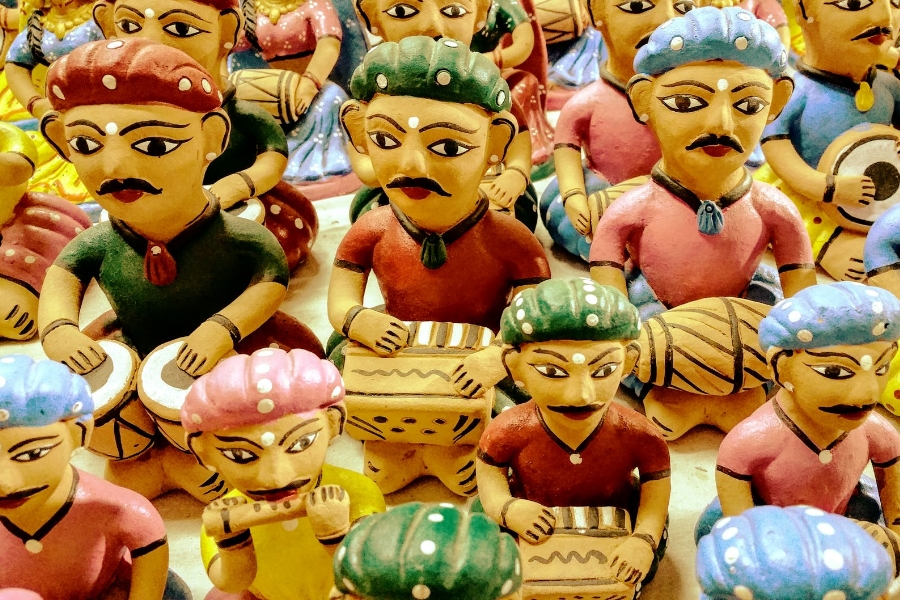
Image credit: Moneycontrol
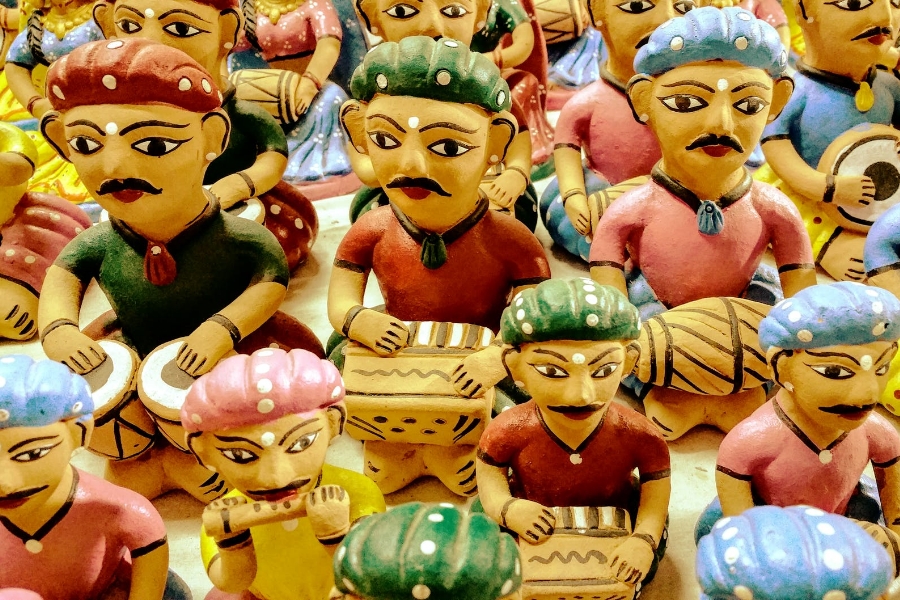
The roots of the Indian toy industry can be traced back to one of the world’s first civilizations – the Indus Valley Civilization. The level of craftsmanship of the people in those days was reflected in the dexterity with which terracotta toys for children were intricately crafted. This labour-intensive industry has witnessed a lot of changes over time in terms of toy categories, innovations, eye-catching design and other aspects.
Estimated to be to the tune of around US$ 38.1 billion as of 2020, according to Statista, this market is expected to grow at a compounded annual growth rate (CAGR) of 9.6% till 2023. Exuding confidence in the domestic toy industry, Prime Minister Narendra Modi has encouraged start-ups to work towards making India a global hub for toy production. Given the manner in which the Indian toy industry has been impacted by the influx of cheap imports, this sector does indeed require urgent policy attention.
Growth drivers for the Indian toy industry
Contrary to what those reports would have you believe, India is not a really major importer of toys, at least as far as value is concerned. The top importers of toys, games & sports requisites… (HS Code 95) for 2019 are US (US$ 34.1 billion), Germany (US$ 8 billion), Japan (US$ 6.1 billion), United Kingdom (US$ 6.1 billion), Netherlands (US$ 5.5 billion), France (US$ 5.3 billion) and Canada (US$ 4.2 billion). India imported just around US$ 606.5 million during the year. In terms of exports China is a clear leader (US$ 62.7 billion), followed by United States of America (US$ 6.4 billion), Germany (US$ 5.5 billion), Netherlands (US$ 5.4 billion), Czech Republic (US$ 3.3 billion), Japan (US$ 3.3 billion) and Vietnam (US$ 2.9 billion) are the top exporters of toys in the world.
| Top importers of toys in the world | Value imported in 2019 (US$ billion) |
| United States of America | 34.12 |
| Germany | 8.09 |
| Japan | 6.14 |
| United Kingdom | 6.10 |
| Netherlands | 5.5 |
| France | 5.34 |
| Canada | 4.2 |
| Hong Kong, China | 4.2 |
| Spain | 3.2 |
| Poland | 3.2 |
Source: ITC Trade Map (HS Code 95)
| Top exporters of toys in the world | Value exported in 2019 (US$ billion) |
| China | 62.8 |
| United States of America | 6.4 |
| Germany | 5.5 |
| Netherlands | 5.5 |
| Hong Kong, China | 5.5 |
| Czech Republic | 3.4 |
| Japan | 3.3 |
| Viet Nam | 2.9 |
| Poland | 2.7 |
| Taipei, Chinese | 2.4 |
Source: ITC Trade Map (HS Code 95)
However, there are quite a few factors that can work to India’s advantage and help the country’s toy industry establish its presence on the world map. On the demand side, India has a rich demographic dividend. According to Census 2011, the population of children (0-6 years) in the country is 158.7 million and that of adolescents is 236.5 million. Therefore, India’s domestic market presents an excellent opportunity for the country’s indigenous toy manufacturers.
In addition to this huge consumer base, the industry is also being driven by the pester-power or ‘nag factor’ in kids, that is, the tendency of children to unrelentingly request for advertised items. What makes parents budge is their guilt factor due to the inability to devote quality time to their kids as double income households in the country rise. This rise in dual career households has enhanced the disposable income & purchasing power of these couples, who end up giving in to the demands of their kids.
The diversity of products offered by the industry has also fuelled consumption. The portfolio of toys in India comprises of three broad categories of products:
(a) Global best toy brands – Constituting about 15-20% to India’s market size, these innovative & high-priced toys include sound, light, artificial intelligence, augmented reality, and other electronic and robotic features.
(b) Indian-made brands – Comprising 15-20% of the market, these are simpler and cheaper toys with very simple functionality.
(c) Unbranded cheap imports – They make up for 60-70% of the Indian toy market. These toys are imported mainly from China. They form the bulk of the unorganised wholesale toy market.
On the supply side, India has a large pool of unskilled labour, which can be employed by these factories. Further, the Government of India is planning to link clusters and artisans to producers’ companies. Karnataka has already announced a Rs 5,000-crore toy cluster in Koppal. Similarly, the Uttar Pradesh government is planning to set up units at the upcoming toy manufacturing hub in Greater Noida. According to reports, 92 domestic toy manufacturers have already applied for the same.
Further, the Department for Promotion of Industry and Internal Trade (DPIIT) has reached out to large manufacturers as it seeks to lure investment in the country’s toy industry. Also in the pipeline is a national toy fair for children. Further, the government is planning to establish networks of toy labs like the Atal Tinkering Lab. This is being done to provide support for physical toys for children to learn, play and also to keep a check the quality of these toys. This is a significant move because as per a survey by the Quality Council of India (QCI), 67% of imported toys have failed testing.
Tarnished by the dragon effect
One of the major issues that plagues the country’s toy industry is its reliance (90%) on China (world’s largest manufacturer and exporter of toys) & Taiwan. As pointed out above, most of these imported toys fail to meet the quality standards set by Indian government. For example, 45% of imported soft toys have failed on the admissible levels of phosphate, while 75% of imported samples failed on mechanical properties. These toys do not comply with quality or safety guidelines and thus turn out to be much cheaper for the Indian consumer, whose purchase decision is heavily influenced by price. Needless to add, this can prove expensive for the health and well being of their children in the long run.
| Top toy exporters to India | Value imported in 2019 (US$ thousand) |
| China | 255,738 |
| Hong Kong, China | 14,760 |
| Sri Lanka | 6,212 |
| Malaysia | 4,199 |
| Singapore | 3,115 |
| United Kingdom | 2,288 |
| Indonesia | 2,085 |
| Thailand | 1,999 |
| Viet Nam | 1,705 |
| Germany | 1,150 |
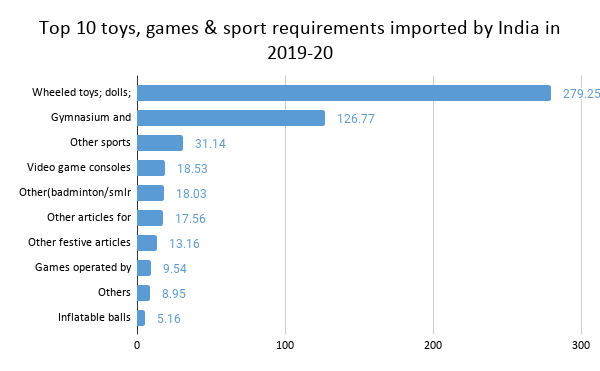
Source: Department of Commerce. All figures are in US$ million
Another challenge is that India does not have a culture, which encourage children to play games, a view reinforced by industry insiders. Unlike some countries, toys are considered non-essential in India, and top quality premium brands are mainly sold through speciality channels and departmental retail chains. Moreover, a number of Indian toy stores don’t have toys that increase a child’s imagination. Added to this is the fact that a lot of children are glued to their TV or mobile screens, and therefore, their attention span for toys that force them to think has gone down.
Toy manufacturer, Samit Khanna, Universal Sales, explains:
“India does not have the necessary ecosystem to manufacture quality toys. We lack the technology to produce good toys. Moreover, the cost of acquiring land in metropolitan cities like Delhi for setting up production plants is quite high. Also, the high cost of labour increases the cost of production.”
In addition to these challenges, the onset of COVID-19 into the country and the consequent lockdown of malls and other shops (except for the essential ones) wounded the performance of the sector. Besides this, the industry is also concerned about the government’s order to ensure compliance with the Toys (Quality Control) Order from September 1. Going forward, all toys and materials designed or intended for use in play by children below 14 years of age shall be certified by BIS. The absence of such certification entails criminal liability, including imprisonment and substantial fines. Toy manufacturers have also been complaining about delays in securing certification from BIS in the backdrop of the disruption caused by the pandemic, and are requesting for an extension in the timelines.
Time to play a new growth story
If India wants to be a global toy production hub, it should build its image as a trustworthy destination for quality manufacturing can offer more and accelerated dividends rather than curbing imports of toys. Setting up of more SEZs, holistic reforms like relaxed labour laws that encourage the local manufacturers, decentralization of FDI approvals, superior infrastructure and connectivity and focus on technology & quality will be critical to create an enabling environment.
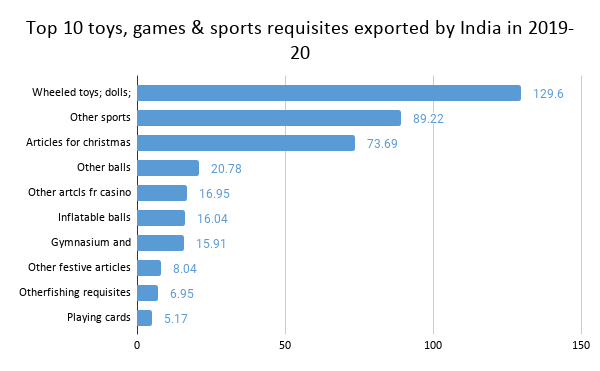
Source: Department of Commerce. (All figures are in US$ million)
Mukesh Jagwani, CEO & Managing Director, WinMagic Toys Pvt Ltd. opines:
Focusing on design, innovation and acquiring global licenses for popular entertainment properties are the most important lessons that Indian makers and brand owners can borrow from the global toy industry. On the manufacturing side, speed of execution, large scale of production and infrastructure to make highly detailed and feature-filled toys at the right pricing are some of the best practices that Indian factories can learn from China.
At the same time, focus must be on developing good quality raw materials for the industry to promote self-reliance & reduce production cost. Offering skills training to the manpower of this sector is critical so that production can happen seamlessly.
Last, but not the least, the country should focus on product diversification and move towards developing high quality products that encourage thinking and learning in kids. Toys and games can play a significant role in bridging the gap between day-to-day studies and practical hands-on learning – which is also a focus of the New Education Policy 2020. Some innovative companies have come up to develop such toys and games for kids, an instance of which is STEM toys startup Smartivity. It offers STEM learning activity boxes for kids that expose them to real-world applications of fundamental scientific principles. A supportive ecosystem for such companies can push India towards self reliance in the sector, and even push for a higher share in exports.