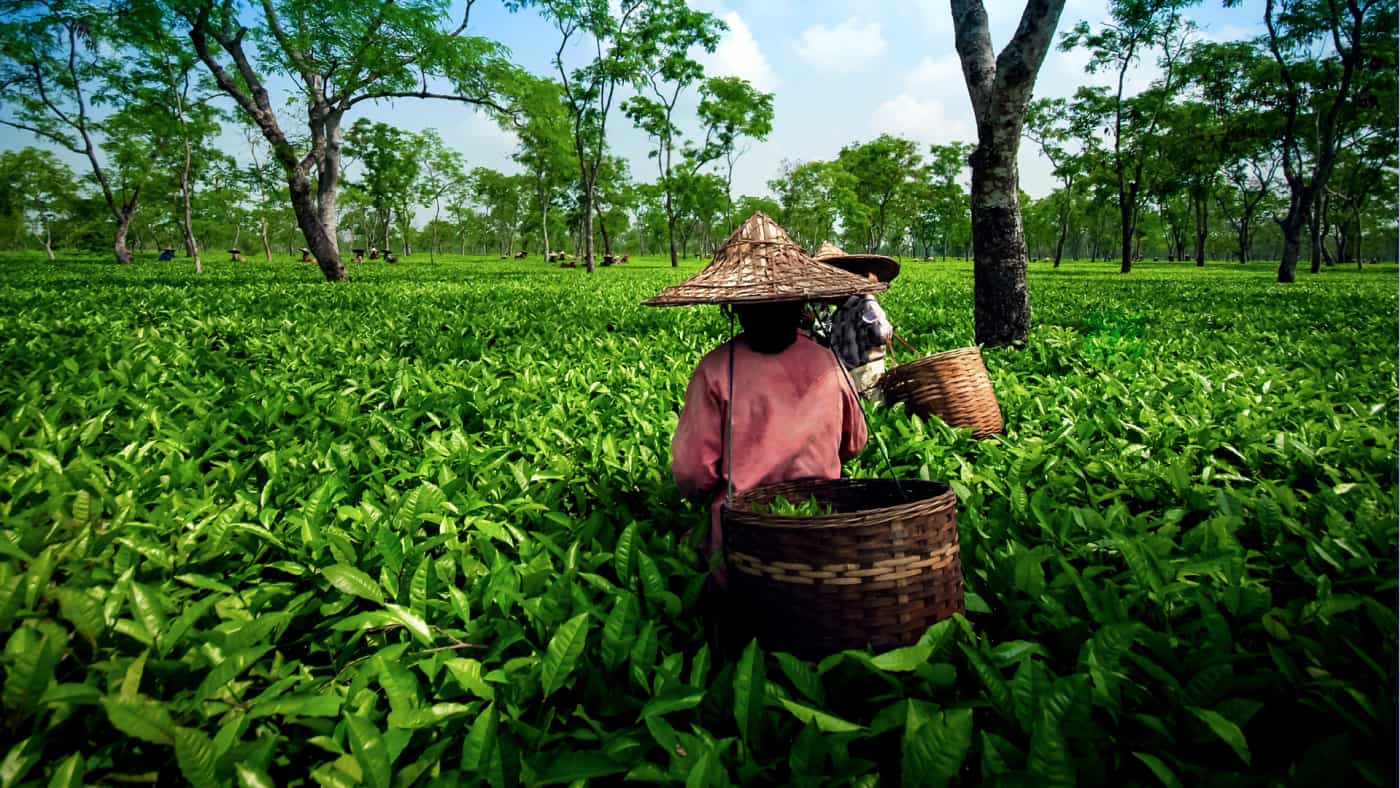
Arbitrary withdrawal of Codex standards is harming tea trade

Even as exporters struggle with varying international standards for agricultural crops Sujit Patra, Secretary, India Tea Association, explains how the lack of internal harmonisation of standards in the tea is affecting the industry.

In his view, until sufficient data is generated, and we come to a consensus on the standards for MRLs based on India’s domestic situation, the levels should be aligned to CODEX standards.
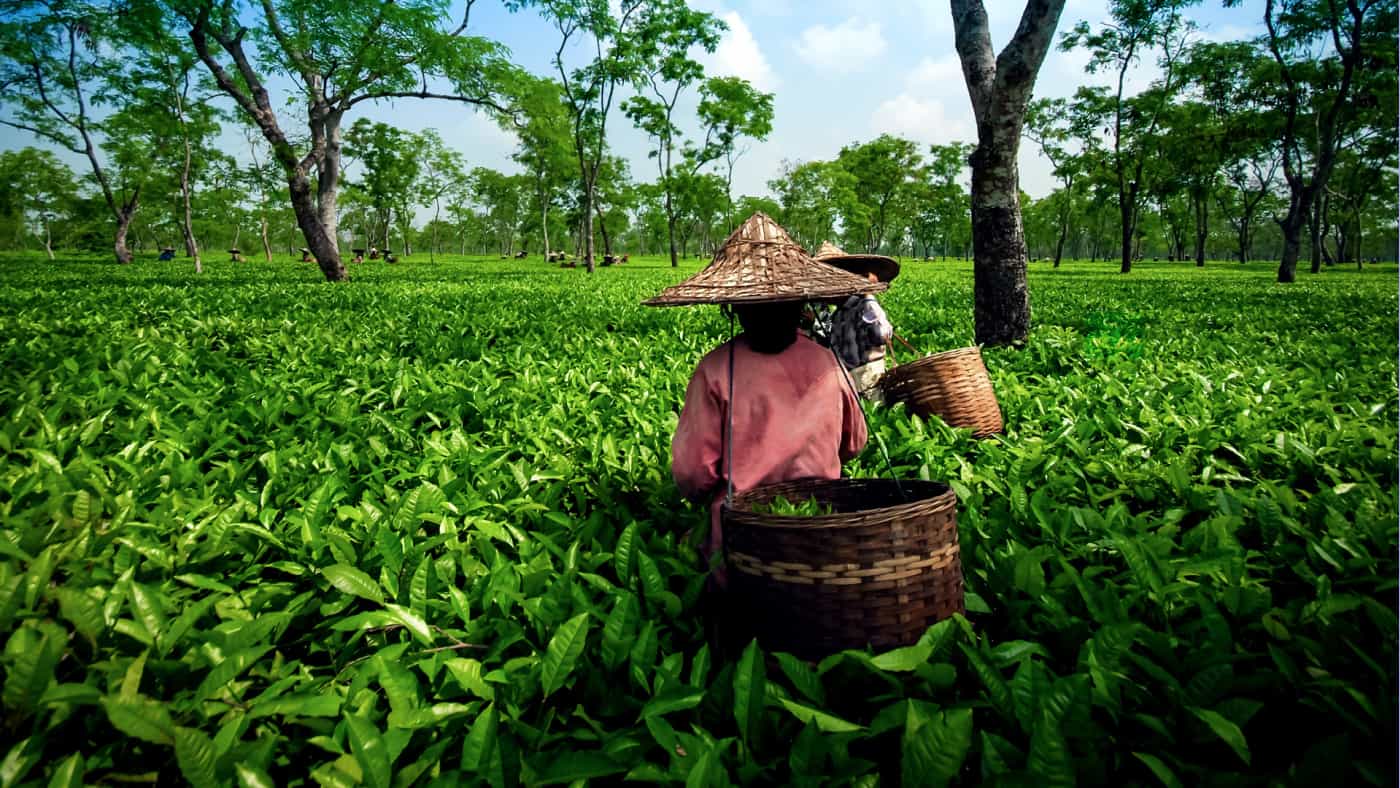
Source: https://bit.ly/3bG7iFv

IBT: What are the major applications of pesticides in tea cultivation, and what standards are being followed by the Indian tea industry?

Sujit Patra: Tea is an agricultural commodity that comes from leaves of tea plants (Camellia Sinensis). Since India is a tropical country, there are a lot of pests at the field level itself that affect tea plants. Once the plant is infected, quality and quantity of tea produced are reduced. Therefore, planters are forced to apply chemicals at additional cost to protect crop. 

Just as in the case of human body, if one applies the same medicines, it becomes resistant to the medicine after some time. Similarly, the same chemicals cannot be used on the plants for a long time. New and improved chemicals keep coming in and tea growers have to rotate the chemicals constantly. Planters buy and use prescribed chemicals only as mandated by regulatory bodies like Tea Board and FSSAI. One cannot randomly use any chemical available in the market. There are protocols specified by FSSAI.

Internationally there is a quality standard called Codex followed by many countries. But some countries have their own standards. When there is any disagreement, those countries follow Codex standards for import contents. Erstwhile PFA & thereafter FSSAI initially borrowed the Codex MRL and followed it in India. Codex MRLs are fixed by the Codex Committee on Pesticide Residues (CCPR) after rigorous scrutiny of Bio-efficacy residue data of many countries including India. Indian scientists are very much part of the Codex exercise. 

IBT: The government decided that India should have its own standards. What are the implications of this for the industry?

Sujit Patra: FSAAI under the Health Ministry has rightly taken the decision that India should have its own quality standards. But for that, one needs to generate the required data to fix MRLs. The exercise is time consuming and costly and it takes at least two years’ time. Residue data is required for one season at four agro-climatic zones and bio efficacy data for two seasons at three agro-climatic zones. So, there is a certain protocol. CIB&RC under the Agriculture Ministry checks field trial and residue data. If it is found suitable in the Indian climate, they approve the usage. Then it goes to FSSAI for fixing MRL.

IBT: What is Tea Board’s role here?

Sujit Patra: Tea Board came up with a PPC (Plant Protection Code) in 2014 specifying which chemicals can be used for Tea. PPC is an ongoing process, but there no MRL is specified. A PPC Committee involving experts from the Tea Board, TRIs, Health Ministry, Tea Industry, etc. is working on the subject.

IBT: Present status?

Sujit Patra: Earlier, there were only few chemicals with MRL under FSSAI. So, industry took this up with the FSSAI and told that FSSAI needs to harmonise its list with the PPC and fix realistic MRLs, so that producers can follow the rules judiciously and trade also does not face any problem. 

IBT: How has that effort progressed so far?

Sujit Patra: FSSAI fixed levels for whatever data was available for some chemicals and implemented Codex MRLs for other chemicals.

Again for some chemicals, where there was no MRL, it was fixed at the detection level (LoD) which is 0.01 PPM. Adhering to this level is next to impossible for any agriculture produce. 

Tea industry representatives had a meeting with the FSSAI in 2018 and requested for realistic standards. FSSAI logically asked for scientific bio-efficacy & residue data for consideration. Tea Board engaged Tea Research Associations (TRA and UPASI-TRI) for generation of data for certain important chemicals. Data was submitted to CIB&RC and FSSAI. Various committees of FSSAI deliberated on the data and agreed to new MRLs in 2018. Tea Board and industry requested FSSAI for an immediate Notification to avoid any confusion, as those chemicals are extremely important to the plantation sector for protection of crops from pests.

After some time FSSAI released a new Draft Regulation “Food Safety and Standards (Contaminants, Toxins and Residues) Amendment Regulations, 2020” in August 2020 and sought comments. Tea Board, TRIs and tea Associations submitted their comments accordingly. While going through the Notification, it is observed that –

  • Proposed MRLs for some pesticides are fixed at realistic levels as per data submitted by TRIs in the past.
  • Codex MRLs, which were adopted vide FSSAI Notification of Dec 2018, have been withdrawn for a number of pesticides, which are very crucial for tea cultivation and very low MRLs were tagged instead.
  • Default MRLs (LoD) were assigned for all other pesticides, which are practically non-achievable.

IBT: What is the rationale behind setting MRLs lower than CODEX in your view?

Sujit Patra: It is learnt that apprehensions have been raised by certain ill-informed quarters that adoption of Codex MRLs, which are higher than the default or unrealistically low MRLs, may lead to encouragement of more use of such pesticides. However, Tea Board and industry scientists find the apprehensions as totally baseless and unfounded. Adoption of Codex MRLs does not lead to any change in the prescribed GAP (good agricultural practices – dose or rate of application), so more use of such costly pesticides at an additional cost is ruled out. 

Such unscientific apprehensions can’t be the sole reason for withdrawal of Codex MRLs which were adopted in full appreciation to the need of growers and keeping in mind the interests of Indian tea’s domestic and export markets as well as millions of tea drinkers.

Codex MRLs have been adopted by many other leading tea growing countries, which make over 2/3rd of total world tea production.

Earlier, FSSAI adopted Codex MRLs in order to ensure smooth tea trade in the domestic as well as global market. Codex MRLS were fixed after due risk assessment at realistic levels where Indian scientists presented field data along with other countries. As a result of this, Indian tea growers were able to conform to the regulations, ensure food safety, cater to huge domestic demand and continue exports to over 100 countries including EU, USA, Japan, etc. A sizeable quantity of Indian tea is exported to EU, USA, Japan, Russia, etc where stringent quality standards are maintained and Indian exporters are exporting tea year after year with full confidence of buyers & their consumers.

IBT: Under PPC, which is under the Tea Board, there are 45-odd chemicals but under FSSAI, there are around 34 chemicals. What norms does the industry eventually follow?

Sujit Patra: There is another problem. Under PPC, there are 45-odd chemicals but under FSSAI there are around 34 chemicals. It is mandatory to test the product twice or thrice in a year to check that no other chemical is applied to plants/fields and MRLs are within the set limits. But there are no guidelines for which chemicals need to be tested. So, there is no synchronization between PPC and FSSAI. It is therefore needed to go for multi-chemical tests.

Under FSSAI, they are saying that it is the rule to test your products twice or thrice in a year. PPC also says that you have to test your product, but there is no specification on what test we will be doing. Presently, there is no synchronization with PPC and FSSAI. 

Multi-chemical tests involve huge money and there are only a few laboratories in India which can do multi-residual testing. It is to see whether there any other chemicals are being used apart from permitted chemicals. Under Codex and EU there are over 400 chemicals which are permitted for plantation crop. So, one needs to test whether any non-prescribed chemical has been applied.

Question is why one needs to do multi-chemical tests? Regulatory bodies need to specify which chemicals need to be tested. Moreover, MRLs should be realistic as per our environment and intent. It is imperative to harmonise PPC & FSSAI chemicals, because one needs to know what to test and what to see from that results. 

Unless that is harmonised, the system is generating business for laboratories at the cost of the tea industry. One basic Test costs Rs 15,000-30,000 per sample. There are thousands of gardens, lakhs of small tea growers and large no. of bought leaf factories in India. So, huge money would be required for testing. Do we have so many FSSAI accredited laboratories in India?

IBT: In your view, what should be India’s approach to setting of MRL standards?

Sujit Patra: While the industry and Tea Board are working on spreading awareness of quality standards, our concern is that for some chemicals standards are very unrealistic as far as Indian conditions are concerned. Tea industry has requested FSSAI to bring back the Codex MRL, then allow the industry two or three years time for generating the required data for specific chemicals. Thereafter FSSAI should decide on MRLs. At least this will allow the trade to continue without any hindrance to exports and domestic market. 

If we can show the outside world that we are very strong on quality control with clearly defined MRLs, it strikes confidence in the buyer’s mind. Indian tea industry does not want any violation in rule. It wants to follow the rules, but that should be clear and simplified.

The consequences of the arbitrary withdrawal of realistic Codex MRLs would certainly reverse the efforts of tea growers to increase their income for sustainability in response to the call of the Hon’ble Prime Minister for doubling farmers’ incomes as well as would have severe adverse impact on domestic trade and exports. Total domestic consumption of tea is over 1,100 million kg and exports over 250 million kg. Withdrawal of Codex MRLs will jeopardize this entire domestic trade and exports, the brunt of which would be felt by millions consumers and a large no. of people associated with the industry.


Sujit Patra 2 TPCI

Sujit Patra is Secretary, Indian Tea Association (ITA), the largest & oldest tea organisation in India. He has been working with the ITA for more than 30 years. Mr Patra is directly involved in multi-functional areas like domestic & overseas tea promotion exercises, market analysis, financial planning, supplies & transportation, general administration, MIS and liaison with various government depts, embassies, etc on all aspects of the tea industry. The views expressed by him are personal and not that of his organisation.

Previous Post
Next Post

Most Recent Posts

  • All Post
  • 8th Pay Commission
  • Aadhar
  • Aditya Birla Capital
  • Advertising Standards
  • Affordable Housing
  • Agriculture
  • Agriculture & Food
  • AI in Healthcare
  • AI Technology
  • Airlines
  • alcohol industry
  • Android
  • APEDA
  • Apple
  • Artificial Intelligence
  • Ashwini Vaishnaw
  • Asset Management
  • Atmanirbhar Bharat
  • Audio Devices
  • Audio Products
  • Auto Industry
  • Automobile
  • Automobiles
  • Automotive
  • Automotive Industry
  • Aviation
  • Bain Healthcare Report 2026
  • Bank
  • Banking
  • Banking Technology
  • Battery Industry
  • Beverage Industry
  • Beverages
  • Bihar
  • biotechnology
  • Bitcoin
  • BMW Group India
  • Brand Insight
  • BRICS
  • Bullion Market
  • Business
  • Business & Economy
  • Business & Trade
  • Business Leadership Post COVID-19
  • Business News
  • Business Terminology
  • Business Utilities
  • Buyback
  • Capital Goods
  • Capital Markets
  • CarsBusiness
  • CBIC
  • CCI
  • Child Investment
  • China
  • China technology news
  • Citizen Services
  • Clean Energy
  • Clean Technology
  • Cloud Computing
  • coal
  • Commerce
  • Commerce and Industry
  • Commercial Real Estate
  • Commercial Vehicles
  • Commodities
  • Communications
  • Companies
  • Competition Law
  • Compliance
  • Computer Accessories
  • connected cars
  • Consumer Affairs
  • Consumer Electronics
  • Consumer Finance
  • Consumer Goods
  • Consumer Health
  • Consumer Markets
  • Consumer News
  • Consumer Protection,
  • Consumer Rights
  • Consumer Spending
  • Consumer Trends
  • Content Creation
  • Copper
  • Corporate
  • corporate affairs
  • Corporate Earnings
  • Corporate Governance
  • Corporate News
  • Corporate Social Responsibility
  • Cost of Living
  • Country
  • CRED
  • Credit Cards
  • CREDIT RATING
  • Crude Oil
  • Cryptocurrency
  • CSR
  • Culture
  • Currency
  • Customs Duty
  • Cyber Security
  • Cybersecurity
  • Dairy Industry
  • Data & Analytics
  • Defence
  • Delhi Government
  • Delhi-NCR
  • Demographics
  • Derivatives
  • DGCA
  • DGFT
  • DigiLocker
  • Digital Assets
  • Digital Economy
  • Digital Health India
  • Digital Identity
  • Digital India
  • Digital Infrastructure
  • Digital passport for robots
  • Digital Payments
  • Digital Platforms
  • digital services
  • Diplomacy
  • Dixon Technologies
  • DPIIT
  • E Commerce
  • E-commerce
  • E-Governance
  • Ease of Doing Business
  • Economic Growth
  • Economy
  • Edible Oil Industry
  • Editor Choice
  • EdTech
  • Education
  • Electric Mobility
  • Electric Vehicles
  • Electronics
  • Employment
  • ENERGY
  • Engineering
  • Entertainment
  • Environment
  • EPFO
  • Ethanol Economy
  • EV Industry
  • EV Technology
  • Exports
  • EXTER
  • Farmers
  • Fashion
  • FINANCE
  • Finance Ministry,
  • Financial Marketing
  • Financial Markets
  • Financial News
  • Financial Planning
  • Financial Results
  • Financial Services
  • Fintech
  • FnTech
  • Food & Beverage
  • Food & Beverages
  • Food Exports
  • Food Industry
  • Food Manufacturing
  • Food Processing
  • Food Regulations
  • food safety
  • Foreign Exchange
  • Foreign Investment
  • Foreign Policy
  • Foreign Trade
  • Forex Reserves
  • fssai
  • FTA
  • Fuel
  • Fuel Prices
  • Future Energy
  • Gadgets
  • Gadgets & Apps
  • Gaming
  • GDP
  • Generative AI Healthcare
  • Geopolitics
  • GI Products
  • Global Brand Alliance
  • Global Economy
  • Global Markets
  • Global Politics
  • Global Tech
  • Global Trade Policy
  • Global Trends\
  • Gold
  • Gold Market
  • Gold Prices
  • Gols & Silver
  • Government
  • Government & Policy
  • Government Affairs
  • Government Bonds
  • Government Data
  • Government Initiatives
  • Government Policy
  • Government Policy & Regulation
  • Government Scheme
  • Government Schemes
  • Government Services
  • Green Energy
  • Green Mobility
  • GroupGlobal
  • GST
  • GST Council
  • GST Counsil
  • Hair Care
  • Hardware
  • Hatchback Segment
  • Health Supplements,
  • Horticulture
  • Housing
  • HSBC
  • Human Resources
  • humanoid robot market
  • Hyundai
  • IBT Infographics
  • iinvestment
  • Imports & Exports
  • Income Tax
  • India
  • India Auto Market
  • India Business News
  • India Inc
  • India News
  • India Retail
  • India-Canada Relations
  • India-China
  • India-Japan Relations
  • India-Russia Relations
  • India-South Korea Relations
  • India-US Relations
  • Indian Economy
  • Indian Navy
  • Industrial Pollution
  • Inflation
  • Infra
  • Infrastructure
  • Innovation
  • Instagram
  • Insurance
  • international
  • International Affairs
  • International Cooperation
  • International Relations
  • International Trade
  • Internet & Connectivity
  • Internet Policy
  • Internet Regulation
  • Interview
  • Investing
  • Investment News
  • Investments
  • iPhone News
  • IPO
  • IT Industry
  • Jewellery
  • Jio Platforms
  • JioBlackRock
  • Jobs & Careers
  • Joint Ventures
  • Kim Kardashian
  • Labour
  • Latest
  • Launches
  • Leadership
  • Leaderspeak
  • Lending
  • Lifestyle
  • Lifestyle Tech
  • List
  • Loans & Credit
  • Local News
  • Logistics
  • LPG
  • Luxury Cars
  • Machinery
  • Macroeconomics
  • Macroeconomy
  • maharashtra
  • Maharashtra News
  • Make in India
  • Makhana
  • Manufacturing
  • Market Outlook
  • Markets
  • Maruti Suzuki
  • Mergers & Acquisitions
  • Meta
  • Microsoft
  • Middle East
  • Mobile Apps
  • Mobile Industry
  • Mobile Launch
  • Mobility
  • Monetary Policy
  • Monsoon
  • MoSPI
  • MSME
  • Mutual Funds
  • Nano Tech
  • National
  • National news
  • NEET 2026
  • NewsElectric
  • NewsTata
  • NPCI
  • NPS Vatsalya
  • Office Market
  • Oil & Gas
  • Oil and Gas
  • Others
  • OTT
  • Packaged Drinking Water
  • Packaged Foods
  • Packaging Industry
  • Packaging Innovation
  • Passenger Vehicles
  • Paytm
  • Pension & Retirement
  • Pensions
  • Personal Care
  • Personal Finance
  • Perspectives
  • Petroleum
  • PFRDA
  • Pharmaceuticals
  • PM Modi
  • PMAY-G
  • PMAY-U
  • PMAY,
  • PMI
  • policy
  • Population
  • PORTS
  • Positive News
  • PPF
  • Precious Metals
  • Pricing
  • Product Labeling
  • Product Labelling
  • Product Launch
  • Property Market
  • PSU
  • PSU Banks
  • Public Health
  • Public Policy
  • Public Safety
  • Public Sector
  • Public Services
  • Public Welfare
  • Quarterly Results
  • Railways
  • Rajasthan
  • Raksha Bandhan
  • Raksha Bandhan Gifts
  • Rare Earths
  • RBI
  • Real Estate & Realty Sector
  • Recycling
  • Regulation
  • Regulatory Action
  • Regulatory Affairs
  • Regulatory Updates
  • REIT
  • Reliance Industries
  • Renewable Energy
  • RERA
  • Research
  • Retail
  • Retirement Planning
  • Road Infrastructure
  • Robotics & Automation
  • robotics standards
  • Rupee
  • Rural Development
  • Rural Housing
  • SAIL
  • Salaries
  • Samsung
  • Savings
  • Science & Technology
  • Sebi
  • Security
  • Semiconductor
  • Services Sector,
  • SHIPPING
  • Silver Prices
  • Skill Development
  • Skills Development
  • Small Business
  • Smart Devices
  • Smart Home
  • Smart Mobility
  • Smartphones
  • Social Impact
  • Social Media
  • Society
  • Software Development
  • Solar Energy
  • Space Technology
  • Startups
  • Statistics
  • Steel Industry
  • Stock Market
  • stocks
  • streaming
  • Sugar Industry
  • Sukanya Samriddhi Yojana
  • Sustainability
  • SUV
  • Tamil Nadu Pollution Board
  • Tariffs
  • Tariffs & Duties
  • Tata Group
  • Tata Motors
  • Tata Sons
  • Tax Planning
  • Taxation
  • Tech
  • Tech Branding
  • Technology
  • Telecom & Technology
  • Telecom Industry
  • Top Story
  • Tourism
  • Trade
  • Trade Agreement
  • Trade Basket
  • Trade Partner
  • Trade Policy,
  • Transportation
  • Travel
  • Trending
  • Two-Wheelers
  • UIDAI
  • UPI
  • Urban Development
  • US-Iran Conflict Economic Impact
  • US–India Relations
  • Uttar Pradesh
  • VehiclesLuxury
  • vivo
  • Wastewater Management
  • Water Quality,
  • Wealth Management
  • Wearables
  • Wellness
  • WhatsApp
  • Wheat
  • Workplace
  • World
  • World News
  • Worldview
  • Yamaha
  • zLead Slider
    •   Back
    • Healthcare
    • Auto
    • Fmcg
    • Hospitality
    •   Back
    • Cash Crop
    • Organic
    • New Era Agri
    • Processed Food
    •   Back
    • Construction
    • Power
    • Mining
    • Telecom
    •   Back
    • ENERGY
    •   Back
    • Export/Import
    • Trade Deal
    • Trade Fair
    •   Back
    • Policies
    • Industry
    • Finance
    •   Back
    • Others technology
    • Mobile phone
    • Gadgets
    •   Back
    • Manufacturing
    • Services
    • Startup

India Business & Trade is a national media platform decoding the ideas, decisions and shifts shaping India’s growth story—across plicy, business, global commerce and a rapidly evolving marketplace.

Reach Us

India Business & Trade
M-62, Saket, New Delhi-110064, India

Subscribe To Newsletter

Stay ahead in the dynamic world of trade and commerce with India Business & Trade’s weekly newsletter.

Copyright © 2026 India Business & Trade. All Rights Reserved


Fatal error: Uncaught TypeError: Unsupported operand types: string * int in /var/www/sites/indiabusinesstrade.in/wp-content/plugins/royal-elementor-addons/admin/includes/wpr-templates-modal-popups.php:192 Stack trace: #0 /var/www/sites/indiabusinesstrade.in/wp-content/plugins/royal-elementor-addons/admin/includes/wpr-templates-modal-popups.php(128): WprAddons\Admin\Includes\WPR_Templates_Modal_Popups::get_template_settings() #1 /var/www/sites/indiabusinesstrade.in/wp-content/plugins/royal-elementor-addons/admin/includes/wpr-templates-modal-popups.php(106): WprAddons\Admin\Includes\WPR_Templates_Modal_Popups::render_popup_content() #2 /var/www/sites/indiabusinesstrade.in/wp-content/plugins/royal-elementor-addons/admin/includes/wpr-templates-modal-popups.php(64): WprAddons\Admin\Includes\WPR_Templates_Modal_Popups::display_popups_by_location() #3 /var/www/sites/indiabusinesstrade.in/wp-includes/class-wp-hook.php(341): WprAddons\Admin\Includes\WPR_Templates_Modal_Popups->render_popups() #4 /var/www/sites/indiabusinesstrade.in/wp-includes/class-wp-hook.php(365): WP_Hook->apply_filters() #5 /var/www/sites/indiabusinesstrade.in/wp-includes/plugin.php(522): WP_Hook->do_action() #6 /var/www/sites/indiabusinesstrade.in/wp-includes/general-template.php(3224): do_action() #7 /var/www/sites/indiabusinesstrade.in/wp-content/plugins/royal-elementor-addons/admin/templates/wpr-canvas.php(64): wp_footer() #8 /var/www/sites/indiabusinesstrade.in/wp-includes/template-loader.php(132): include('...') #9 /var/www/sites/indiabusinesstrade.in/wp-blog-header.php(19): require_once('...') #10 /var/www/sites/indiabusinesstrade.in/index.php(17): require('...') #11 {main} thrown in /var/www/sites/indiabusinesstrade.in/wp-content/plugins/royal-elementor-addons/admin/includes/wpr-templates-modal-popups.php on line 192