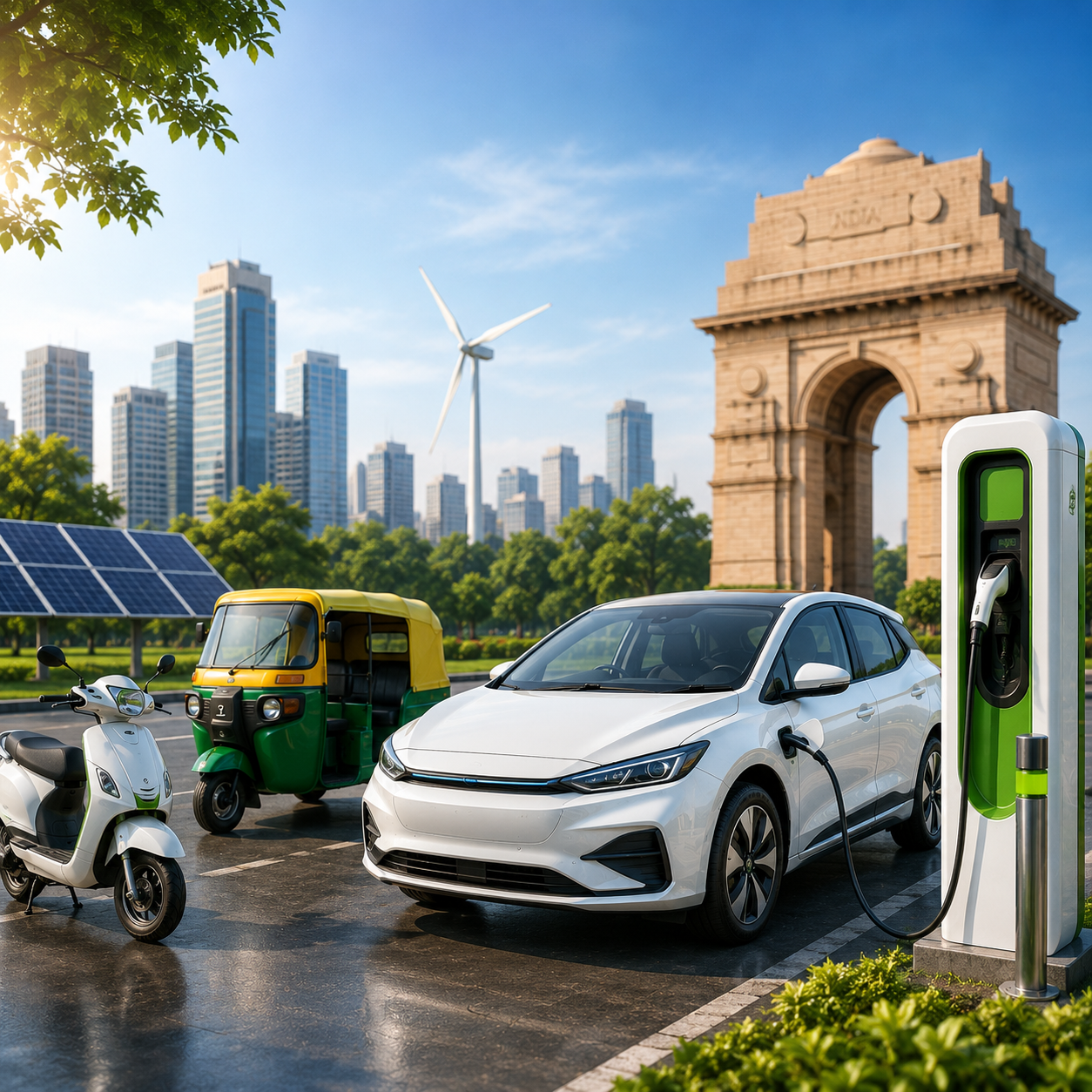
The Delhi government has approved its new Electric Vehicle Policy with a ₹15,000 crore investment plan, subsidies for buyers and an ambitious target of making 95% of new vehicle registrations electric by 2027.
Highlights
- Delhi approves EV Policy 2.0, effective from July 1.
- Government to invest ₹15,000 crore over the next four years.
- EV buyers to get subsidies of up to ₹50,000 in the first year.
- BS-IV four-wheelers eligible for ₹1 lakh scrappage incentive.
- No subsidy announced for hybrid vehicles.
The Delhi government has approved the much-awaited Electric Vehicle (EV) Policy 2.0, marking a significant step towards cleaner transportation in the national capital. The policy, cleared by the Cabinet chaired by Chief Minister Rekha Gupta, is set to come into effect from July 1.
Announcing the decision, the Chief Minister said the government plans to invest ₹15,000 crore over the next four years to strengthen Delhi’s electric mobility ecosystem. The investment will support EV adoption, charging infrastructure and other initiatives aimed at reducing pollution and promoting sustainable transport.
One of the key objectives of the new policy is to ensure that 95% of all new personal vehicle registrations are electric by 2027. The move is part of Delhi’s long-term strategy to cut vehicular emissions and accelerate the transition to clean mobility.
The policy also introduces attractive financial incentives for buyers. During the first year of implementation, purchasers of electric two-wheelers will receive a subsidy of ₹30,000, while buyers of electric three-wheelers will be eligible for a subsidy of ₹50,000. These incentives are expected to make EVs more affordable and encourage faster adoption.
The government has also announced a ₹1 lakh scrappage incentive for owners of BS-IV four-wheelers who replace their old vehicles with cleaner alternatives. The incentive aims to remove older, more polluting vehicles from Delhi’s roads while encouraging consumers to shift towards electric mobility.
According to reports, registration of electric auto-rickshaws under the new policy will begin from January 1, while electric car registrations under the new framework are expected to start from April 2028.
Interestingly, the final policy does not include any subsidy for hybrid vehicles. Earlier draft proposals had suggested a 50% rebate on road tax for hybrid vehicles priced below ₹30 lakh. However, the final version has dropped this proposal, focusing financial support exclusively on fully electric vehicles.
With large-scale investments, buyer incentives and ambitious adoption targets, the Delhi EV Policy 2.0 is expected to play a major role in transforming the city’s transport system while supporting India’s broader clean energy and climate goals.