Minimum Import Price Imposed
Key Highlights
- DGFT introduces minimum import price of US$0.766/kg for S-PVC resin.
- Imports below the threshold will require a DGFT import licence.
- New policy will remain in force for six months.
- India imports around 64% of its S-PVC requirement.
- Domestic PVC manufacturers are expected to benefit from higher prices.
- MSMEs producing pipes, cables and fittings may face higher raw material costs.
- India’s annual PVC import bill could increase by around US$200 million.
The Directorate General of Foreign Trade (DGFT) has imposed a Minimum Import Price (MIP) on Suspension Grade Polyvinyl Chloride (S-PVC) resin, a key raw material widely used in manufacturing PVC pipes, fittings, electrical cables, films, footwear and several industrial products.
Under Notification No. 25/2026-27, imports of S-PVC resin with a CIF value of US$0.766 per kilogram or below have been shifted from the “Free” category to the “Restricted” category. Importers bringing in material below this price will now require a DGFT import licence in addition to paying applicable customs duties. The measure will remain effective for six months.
Imports priced above the prescribed threshold will continue under the free import regime during the notification period. However, the notification has raised legal uncertainty over whether all S-PVC imports could become restricted after six months if no further clarification is issued.
The policy exempts imports made by 100% Export Oriented Units (EOUs), Special Economic Zones (SEZs) and shipments under the Advance Authorisation Scheme, provided the imported material is used for export production.
India remains heavily dependent on imported PVC resin, importing nearly 64% of its annual requirement. The country consumes around 4.7 million metric tonnes (MMT) of PVC annually, while domestic production capacity stands at only about 1.7 MMT. Major domestic manufacturers include Reliance Industries, Chemplast Sanmar, and DCM Shriram.
The notification is expected to affect virtually every major exporting country, including China, Japan, Taiwan, South Korea, the United States, Mexico, Indonesia, Thailand, Singapore and Vietnam, as their average export prices currently remain below the new MIP threshold.
Industry experts believe the measure is unlikely to significantly reduce imports because domestic production cannot meet demand. Instead, the higher import cost is expected to push up domestic PVC resin prices, improving margins for Indian producers while increasing production costs for downstream industries.
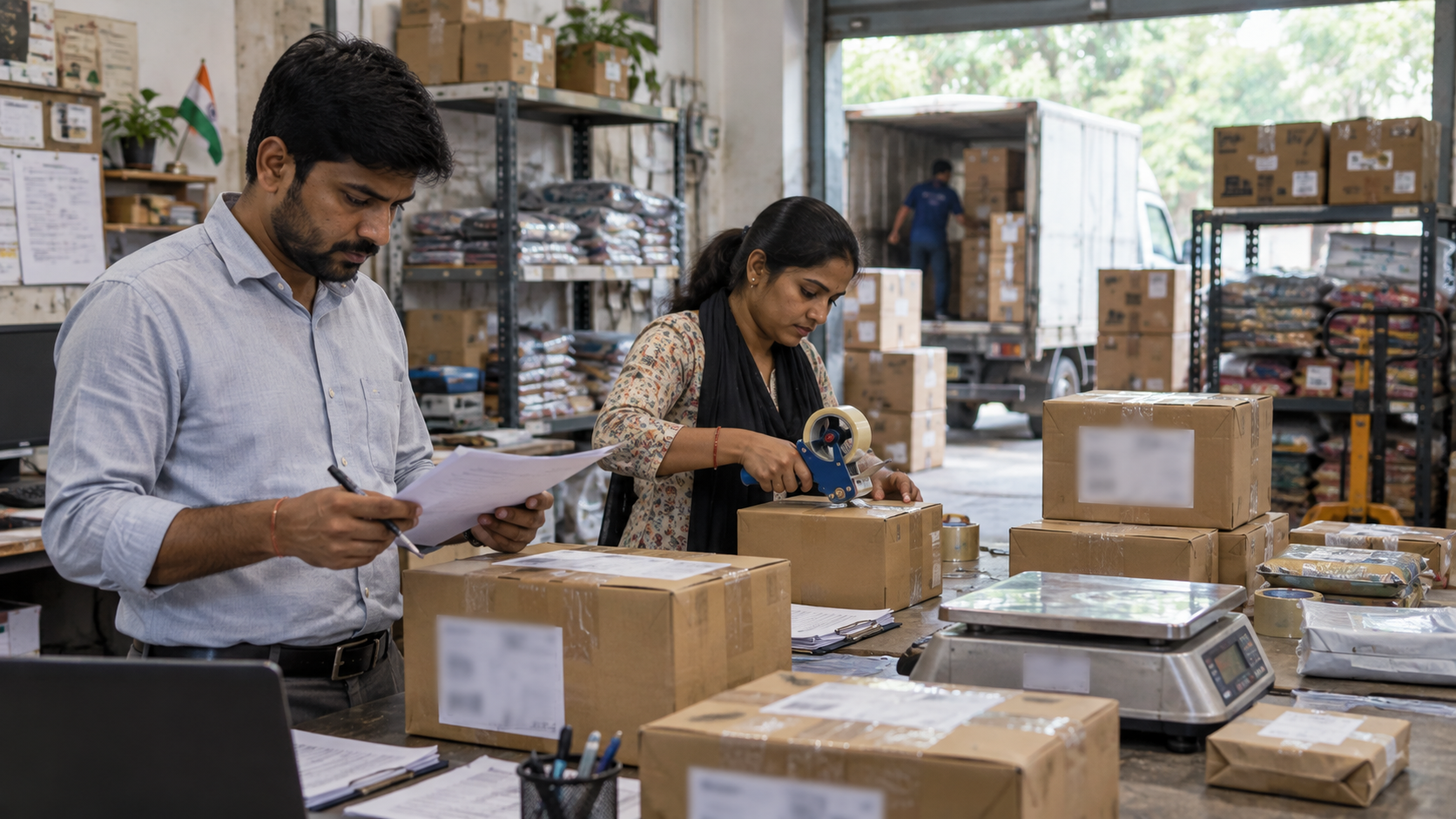
Thousands of MSMEs manufacturing PVC pipes, irrigation equipment, plumbing products, electrical cables, packaging materials, footwear and medical products may experience higher raw material costs. These increased costs could eventually be passed on to consumers, affecting sectors such as agriculture, housing and public infrastructure.
The MIP replaces the anti-dumping duties earlier recommended by the Directorate General of Trade Remedies (DGTR), which were not implemented by the Ministry of Finance due to concerns over their impact on downstream industries.
Looking ahead, India’s dependence on imports could gradually decline as new domestic capacity comes online. Reliance Industries continues expanding its PVC operations, while the Adani Group is developing a 2.0 MMT integrated PVC manufacturing complex at Mundra, with the first phase expected to begin production in FY2027-28.
Analysts estimate that if import volumes remain unchanged and overseas suppliers raise prices to comply with the new MIP, India’s annual S-PVC import bill could increase by approximately US$200 million.