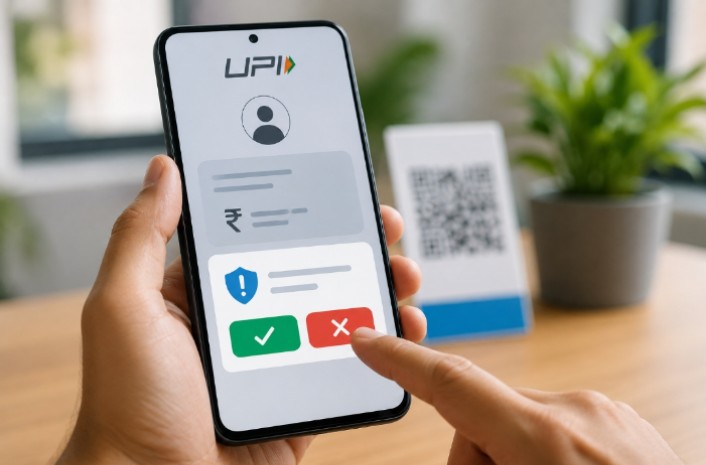
UPI users may soon receive an additional warning before completing transactions identified as suspicious.
The proposed feature will use AI and machine learning to detect unusual payments and reduce digital fraud.
Highlights
- A confirmation alert may appear before users enter their UPI PIN.
- The feature will be activated only for transactions classified as high-risk.
- Users will be asked to confirm whether they really want to send the money.
- AI and machine learning will analyse payment behaviour and transaction patterns.
- Unusual amounts, locations and transaction timings may trigger the warning.
- The proposal has reportedly been submitted to the RBI and NPCI for consideration.
UPI users in India may soon get an additional opportunity to stop a suspicious transaction before money leaves their bank account. Leading banks have reportedly proposed a new security feature that would display a “Yes or No” confirmation alert before users enter their UPI PIN for high-risk payments.
At present, users usually enter the payment amount and are then taken directly to the UPI PIN screen. Fraudsters often take advantage of this quick payment process and pressure victims into approving transactions without carefully checking the receiver’s details.
Under the proposed system, transactions identified as suspicious would trigger a warning message. The user may be asked whether they really want to transfer the stated amount to the selected recipient. Only after confirming “Yes” would the user be allowed to enter the UPI PIN and complete the transaction.
The warning would not appear during every payment, as that could slow down regular UPI transactions. Banks are expected to use artificial intelligence and machine learning tools to identify unusual behaviour.
For example, the system may flag a large payment being made to a new beneficiary, especially if the recipient account has a suspicious history. A transaction may also be treated as risky if a person who usually spends ₹500 or ₹1,000 suddenly attempts to send ₹50,000.
Payments made at unusual hours, such as late at night, could also attract additional checks. Similarly, a transaction initiated from a new city or location that does not match the user’s normal activity may trigger the alert.
The proposed feature is designed to act as a digital speed breaker. It would give users a few extra seconds to verify the recipient’s name, check the amount and reconsider the payment.
Fraudsters currently use several methods, including screen-sharing applications, fake online marketplace deals, lottery scams and misleading claims that users must enter their PIN to receive money. In many cases, victims approve transactions in a hurry without fully understanding that money is being sent from their account.
Banks have reportedly placed the proposal before the Reserve Bank of India and the National Payments Corporation of India. If approved, the feature may later be introduced across Google Pay, PhonePe, Paytm and banking applications.