Safety, Trust Drive Revival Plan
Key Highlights
- Tewolde Gebremariam has taken operational charge as Air India’s incoming CEO and Managing Director.
- Gebremariam has pledged to “Make Air India Great Again” as the airline enters a crucial new phase. (The New Indian Express)
- Safety will be his top priority, with employees encouraged to raise concerns and stop operations when something is not right. (NDTV Profit)
- The new leadership wants to improve operational reliability, punctuality, baggage handling and overall customer experience.
- Tata Sons Chairman N. Chandrasekaran said rebuilding passenger trust must be central to Air India’s transformation. (Outlook Business)
- Gebremariam succeeds Campbell Wilson, who is stepping down after leading Air India through its post-Tata acquisition transformation.
- The leadership change comes as Air India faces significant safety, operational and financial challenges.
News Story
Air India is entering a new phase of its transformation with Tewolde Gebremariam taking operational charge as the airline’s incoming Chief Executive Officer and Managing Director. In his first town hall with employees, Gebremariam set an ambitious tone for his tenure, declaring that the airline would “Make Air India Great Again.” (Hindustan Times)
Gebremariam, 61, was appointed to lead Air India on August 5 following a search conducted by a dedicated board committee. He brings extensive aviation experience from Ethiopian Airlines Group, where he spent several decades. His formal appointment remains subject to the completion of the required government security clearances. (The New Indian Express)
Speaking alongside Tata Sons and Air India Chairman N. Chandrasekaran and outgoing CEO and MD Campbell Wilson, Gebremariam called for employees to support the airline’s next chapter.
“Air India has a powerful heritage, a strong brand and enormous potential,” he said, stressing that the airline could reach greater heights if the right decisions were taken at the right time. (Hindustan Times)
Safety Takes Centre Stage
Safety emerged as the clearest priority in Gebremariam’s maiden address.
The incoming CEO said Air India must build a stronger safety-first culture and make it part of everyday operations rather than simply a stated objective. He also urged employees to speak up whenever they identify a concern.
“If something is not right, stop,” Gebremariam said, emphasizing that employees should feel empowered to raise safety concerns. (NDTV Profit)
The emphasis comes at a particularly important time for Air India. The airline has faced heightened scrutiny over safety and operational standards following the fatal AI171 crash in June 2025, along with other operational incidents and regulatory concerns.
The new management therefore faces pressure to strengthen internal processes, compliance systems and accountability while rebuilding confidence among passengers and employees.
Focus On Operational Excellence
Gebremariam also highlighted operational excellence as a key component of the airline’s revival strategy.
He said customer experience ultimately depends on the consistency and reliability of everyday airline operations. Priorities include improving on-time departures and arrivals, ensuring timely baggage delivery, maintaining clean aircraft and reducing disruptions. (NDTV Profit)
The objective is not simply to introduce new services but to improve the basic elements of air travel that directly affect passenger satisfaction.
When disruptions occur, the airline also needs to communicate effectively and support passengers, Gebremariam indicated.
This focus could become particularly important as Air India works to integrate and modernise its operations while managing a large-scale fleet and network transformation.
Chandrasekaran Calls For Passenger Trust
Chandrasekaran, who also chairs Air India, said rebuilding public trust must be one of the airline’s most important objectives.
He told employees that Air India should aim for a safety record that is “better than the best,” while stressing the importance of rigorous processes and personal accountability. (The New Indian Express)
He also identified several priorities for the airline’s next phase, including safety, customer trust, operational execution and cost discipline.
Chandrasekaran acknowledged that Air India had experienced an exceptionally difficult period, with geopolitical disruptions, airspace restrictions, fuel-price volatility and the 2025 AI171 accident affecting its operations and performance. (ETHRWorld.com)
Financial Challenges Add Pressure
The leadership transition is taking place against a difficult financial backdrop.
Air India Group recorded a loss of more than $2 billion in the financial year ended March 2026, according to information cited by Outlook Business from Singapore Airlines, which owns about 25% of Air India. The airline has remained loss-making since the Tata Group took control in 2022. (Outlook Business)
That makes cost discipline another important component of Gebremariam’s challenge.
The airline is simultaneously attempting to modernise its fleet, strengthen its international network and improve passenger services. Achieving these objectives while controlling costs will be crucial to the long-term success of the transformation.
Leadership Transition At A Critical Moment
Gebremariam succeeds Campbell Wilson, who played a central role in Air India’s transformation after the Tata Group regained control of the airline.
Wilson welcomed his successor and described him as an experienced airline leader capable of taking Air India forward. He also indicated that he would remain supportive of the airline after leaving his executive role. (Hindustan Times)
For Gebremariam, the challenge now is to convert his ambitious vision into measurable improvements in safety, reliability, customer service and financial performance.
His “Make Air India Great Again” message sets a clear ambition, but the airline’s transformation will ultimately depend on consistent execution across thousands of employees, aircraft, airports and operational processes.
With safety, passenger trust and operational discipline identified as immediate priorities, Air India’s new leadership faces the task of restoring confidence while building a financially sustainable global airline.
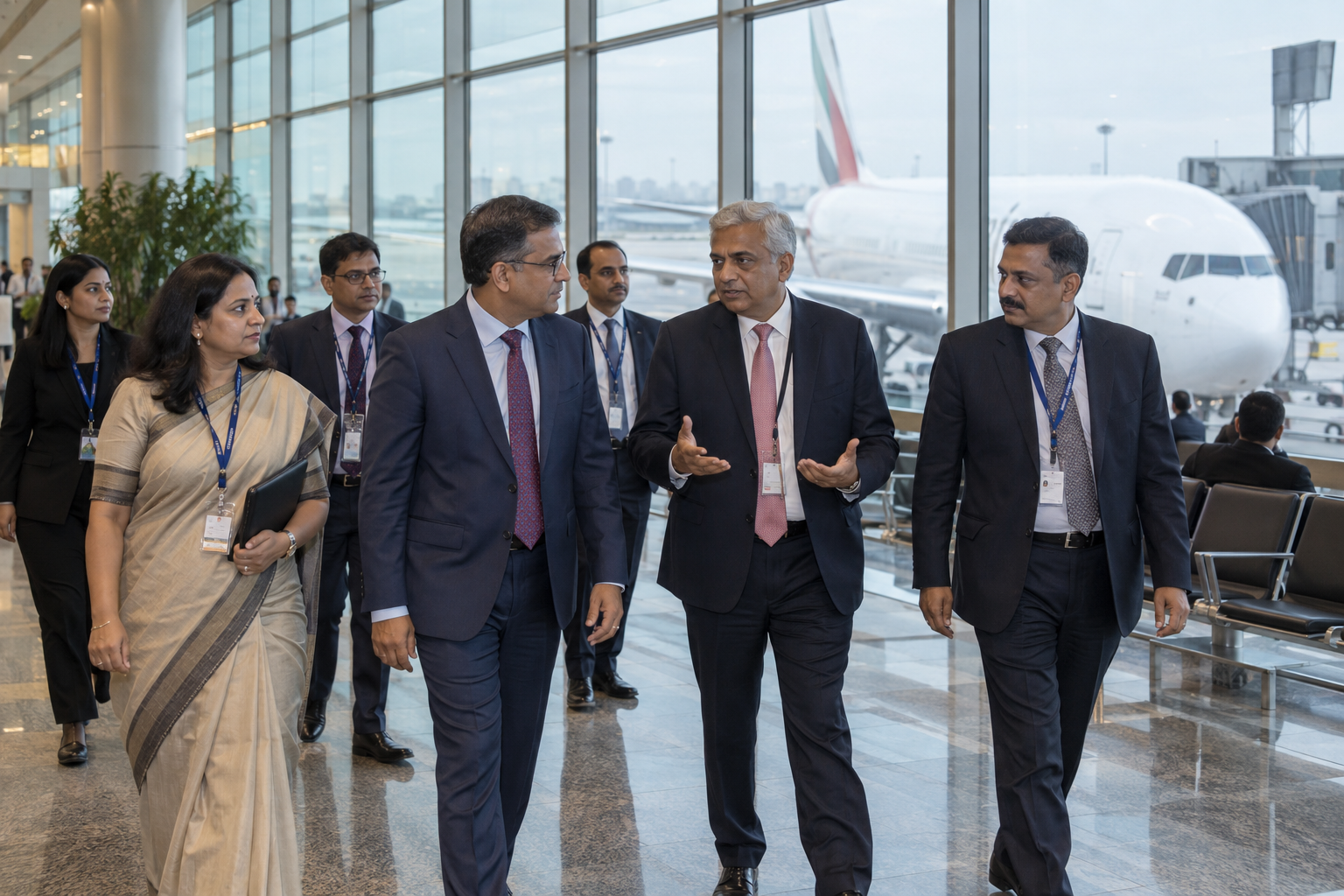
Air India executives at an Indian airport as the airline begins a new leadership and transformation phase.