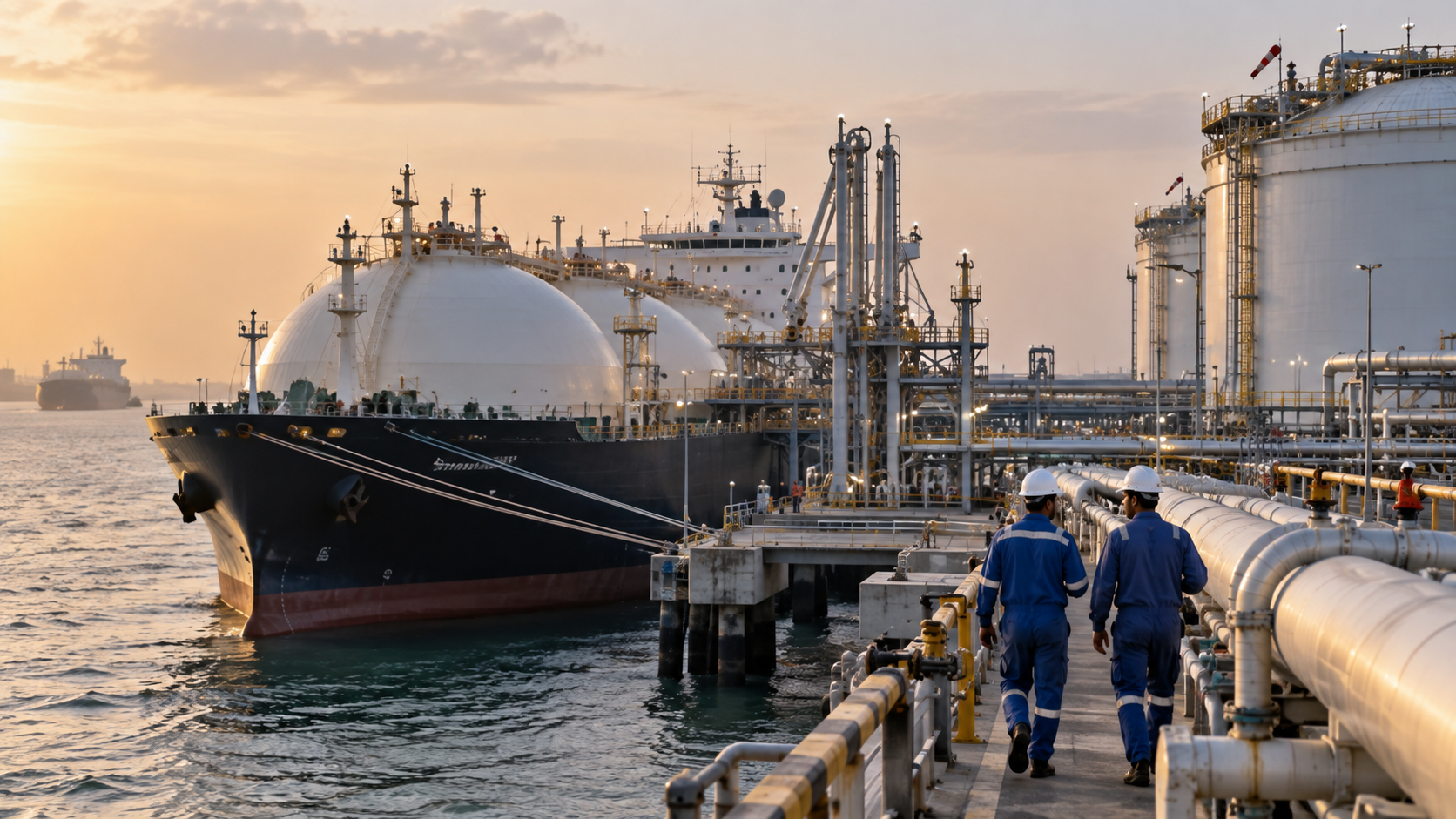
LNG demand in China, India and Pakistan could recover from multi-year lows once the Middle East supply crunch eases, prices become more affordable and additional supplies enter the market, according to industry executives.
Liquefied natural gas demand across China, India and Pakistan is expected to recover after being hit by the Middle East supply disruption linked to the US-Iran conflict. The disruption has restricted Qatar and the United Arab Emirates from sending most of their LNG through the Strait of Hormuz, a key route for global gas supplies.
Asian spot LNG prices have climbed to nearly $30 per million British thermal units (MMBtu), compared with around $10 per MMBtu before the war. Higher prices have weakened demand and encouraged some users to switch from gas to alternatives such as coal and oil.
The impact has been particularly significant for price-sensitive industries in India, where some businesses have shifted to alternative fuels as natural gas became less economically viable. GAIL and PetroChina have deployed trading teams to secure alternative LNG cargoes to replace supplies affected by disruptions from Qatar and the UAE.
Shell estimates that around 36 million tonnes of LNG supply from the Middle East has been lost so far this year. However, industry executives expect the market to improve as additional LNG supply becomes available and prices moderate.
Pakistan could also see LNG demand return if prices become more affordable and additional volumes become available. While increased solar-power adoption has helped the country address power shortages, demand for gas continues from households and other sectors.
In China, PetroChina International CEO Luo Yizhou expects demand from gas-fired power plants to recover when LNG prices return to a more normal range of around $7–$9 per MMBtu. ExxonMobil also expects substantial long-term growth in Chinese LNG demand, supported in part by the country’s extensive import infrastructure.
The global LNG market is also expected to receive significant new supply over the coming years. Industry estimates cited by Reuters indicate that around 150 million to 200 million tonnes of new LNG capacity could come online within five years.
For India and other major Asian buyers, the pace of demand recovery will largely depend on easing supply constraints and LNG prices returning to levels at which gas becomes competitive again with alternative fuels.