

The Made-in-India smartphones are now available through Flipkart and Lava’s website.
The Virat V1 series offers clean Android, large batteries and IP64 protection for budget buyers.

India’s EV Boom Crosses 1 Crore
Electric vehicles now account for 8.26% of all vehicle registrations, up sharply from 0.71% in FY20.
The government is accelerating the rollout of public charging stations and highway EV infrastructure.

Gold, Silver Prices Slip
Gold and silver prices eased after recent gains despite geopolitical tensions in the Middle East.
Global market movements, crude oil prices and inflation concerns continue to influence bullion rates.

Rice Export Prices Soar
Higher demand from Asian and African buyers, along with supply concerns, has pushed export prices to their highest level in nearly a year.
The rise is expected to benefit exporters and farmers but could increase import costs for overseas buyers.

RBI FD Rules Change
Banks will have to offer the same interest rate for the same bulk deposit amount on a given day.The RBI aims to improve transparency and eliminate preferential pricing in fixed deposits. Highlights: The Reserve Bank of India (RBI) has introduced new rules for deposit interest rates that will come into effect from October 1, 2026. The revised regulations are designed to make the pricing of bank deposits more transparent and ensure that customers placing similar deposits receive the same interest rate. Under the amended guidelines, banks will no longer be allowed to offer different interest rates to different customers for the same bulk deposit amount on the same day. The RBI said the move is intended to eliminate preferential pricing and bring greater fairness to the banking system. The new framework will not only apply to commercial banks but also to small finance banks, regional rural banks (RRBs), payment banks, local area banks and urban cooperative banks. This means the transparency rules will cover almost the entire banking sector. The central bank issued the Reserve Bank of India (Commercial Banks – Interest Rate on Deposits) Second Amendment Directions, 2026, on July 30. Similar directions were issued simultaneously to other categories of banks to ensure uniform implementation across the financial system. The RBI believes that standardising deposit pricing will strengthen customer confidence and improve transparency in the fixed deposit market. Earlier, banks had greater flexibility in offering different rates to different customers, particularly for large-value deposits. For retail depositors, the changes are expected to create a more level playing field by reducing the possibility of select customers receiving better rates for similar deposits. While the amendment mainly targets bulk deposits, it also reinforces the RBI’s broader objective of making banking practices more transparent and customer-friendly. Banks are expected to update their internal pricing policies and systems before the new rules become operational on October 1. Customers planning to invest in fixed deposits after that date may see a more uniform interest rate structure across eligible deposit categories.

Meta India Head Booked
Two cases were registered after complaints alleged that manipulated images and videos were shared on Facebook and Instagram.
Police are tracing the account operators, while Meta faces scrutiny over its content-moderation systems

India Jumps 25 Places
The report credits major structural reforms between 2010 and 2023.
GST, IBC and trade facilitation improvements helped reduce market distortions.

Bihar Makhana Reaches Canada
The 7-tonne consignment marks a major milestone for Bihar’s agri-exports.
Value addition is helping Makhana farmers earn over 50% higher returns.

Rs 10,000 Cr Telecom Push
The Centre and Madhya Pradesh have partnered to develop a dedicated Telecom Manufacturing Zone (TMZ).
Union Minister Jyotiraditya Scindia said investment commitments of Rs 2,000 crore have already been secured.
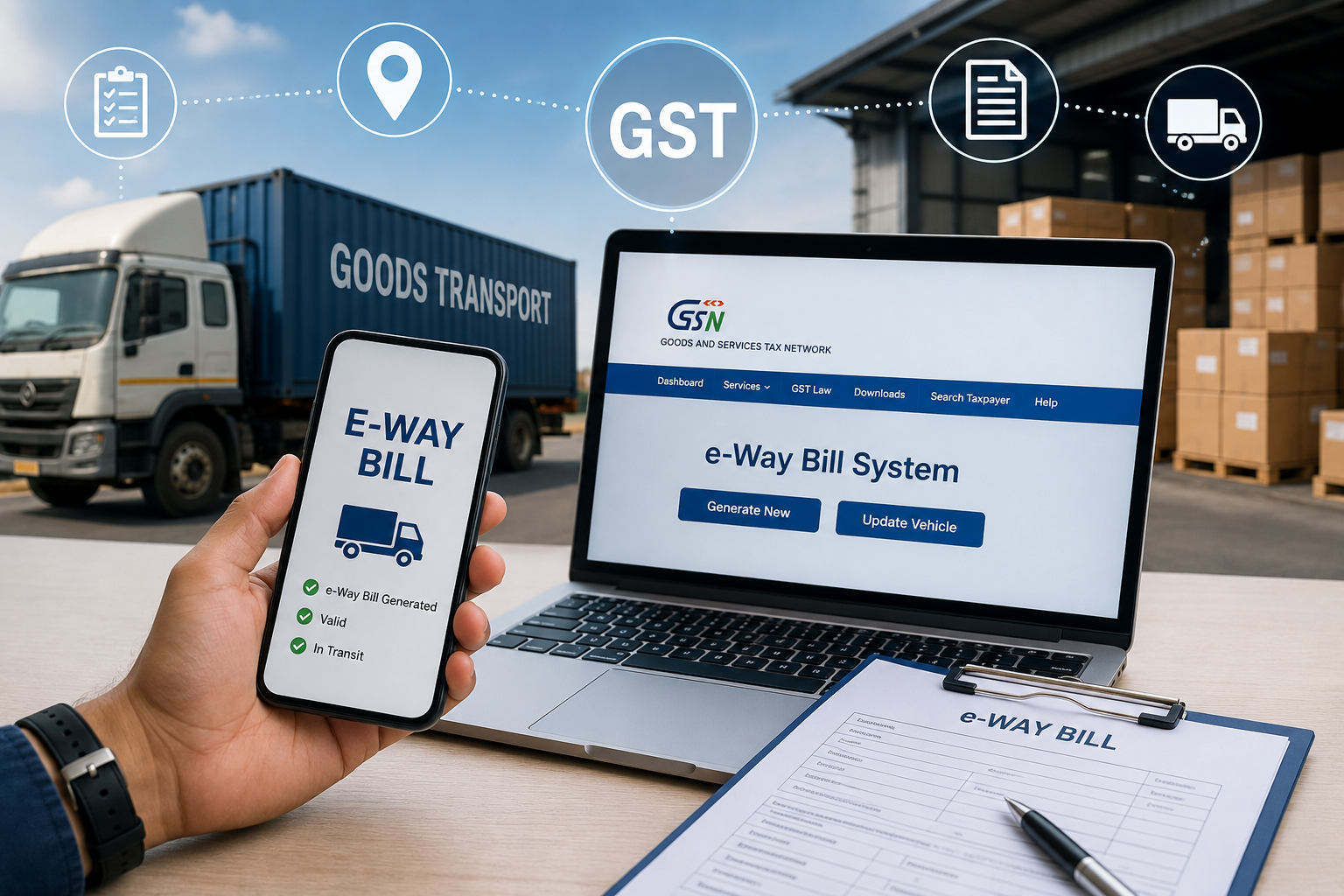
GSTN Defers E-Way Changes
The proposed changes, including mandatory ‘Ship-To GSTIN’ and voluntary e-way bill closure, were scheduled to take effect from August 1.GSTN has deferred the rollout until further notice after receiving feedback from businesses and technology providers. Highlights The Goods and Services Tax Network (GSTN) has put on hold two proposed enhancements to the e-way bill system after receiving extensive feedback from industry stakeholders over implementation challenges. The proposed changes, which were scheduled to come into effect from August 1, 2026, included the mandatory capture of the ‘Ship-To GSTIN’ in Bill-to-Ship-to transactions and the introduction of a voluntary e-way bill closure facility. GSTN has now deferred both proposals until further notice. The mandatory ‘Ship-To GSTIN’ requirement was intended to improve identification of the actual recipient of goods and strengthen the traceability of goods movement. The voluntary closure feature would have allowed taxpayers to close an active e-way bill in situations where the movement of goods was ultimately cancelled. The proposals also required changes to APIs used for ERP systems and e-invoicing integrations. According to GSTN, the advisories issued on June 9 and June 17 regarding these enhancements have been withdrawn for the time being, and the implementation timeline has been suspended until a revised roadmap is announced. Tax experts believe the decision reflects the government’s willingness to incorporate industry feedback. EY India Tax Partner Saurabh Agarwal said many businesses found it difficult to implement the proposed changes alongside the existing e-invoicing and Invoice Reference Number (IRN)-based e-way bill system, particularly in sectors with complex supply chains such as automobile components, engineering, procurement and construction (EPC), and e-commerce. AMRG Global Managing Partner Rajat Mohan said the deferment would help businesses avoid operational disruptions while giving GSTN additional time to refine the system based on stakeholder inputs. Under the GST regime, an e-way bill is mandatory for transporting goods valued above Rs 50,000. Introduced after the rollout of GST in July 2017, the digital system replaced physical interstate check posts, enabling seamless movement of goods while strengthening tax compliance through online monitoring.
