Quick commerce leader Blinkit is expanding into smaller towns, betting that lower operating costs and rising demand will fuel its next phase of growth.
Highlights
- Blinkit is accelerating expansion into Tier-II and Tier-III cities after establishing a strong presence in metros.
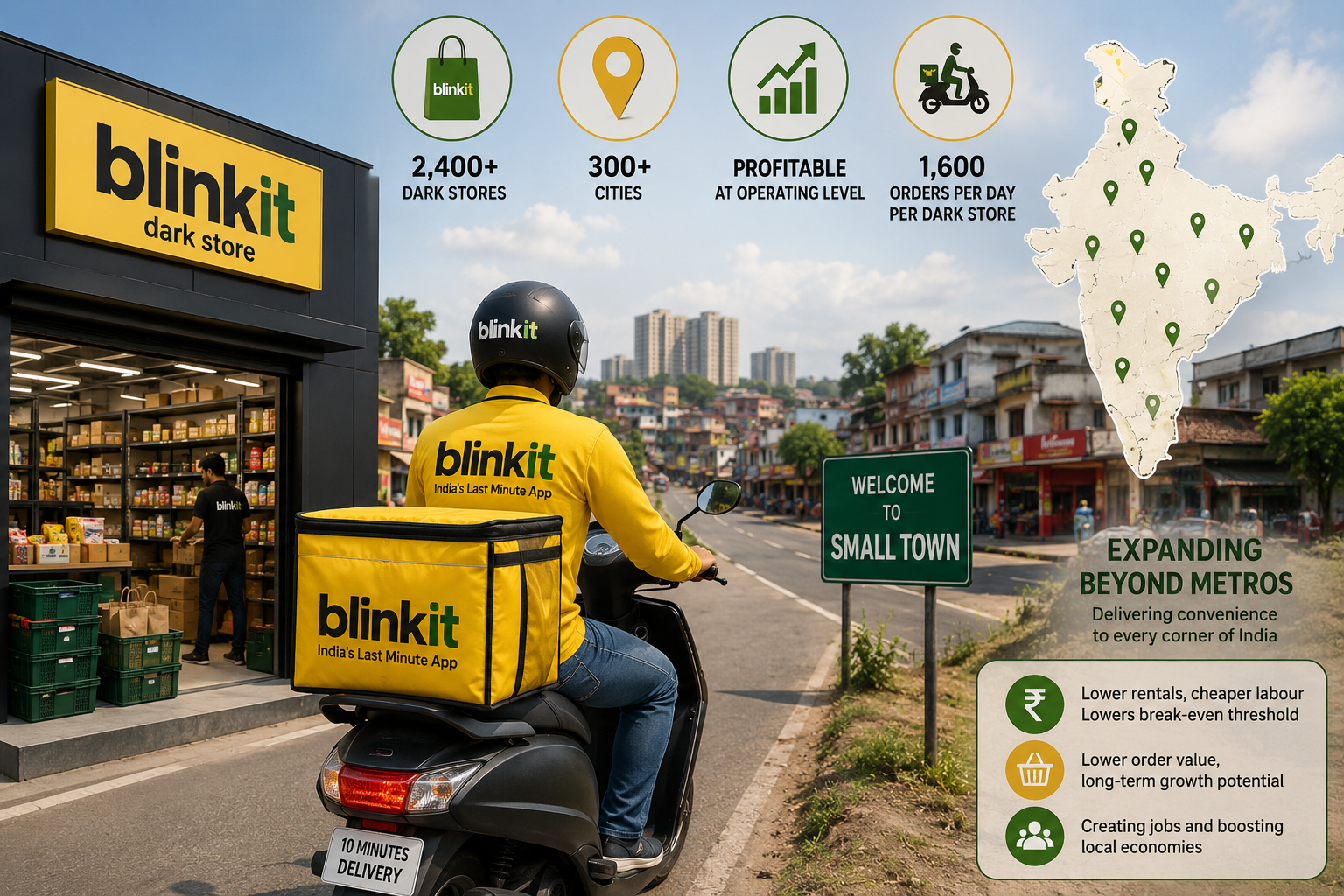
- The company operates more than 2,400 dark stores across 300+ cities, making it one of India’s largest quick commerce networks.
- A dark store in a smaller town needs around 800 daily orders to break even, compared with about 1,300 orders in metro cities.
- Blinkit remains the only major quick commerce company consistently reporting operating-level profitability.
- The platform now processes around 1,600 daily orders per dark store, comfortably above metro break-even levels.
- The company expects smaller towns to have lower average order values but sees long-term growth potential.
Blinkit is preparing for its next growth phase by expanding aggressively into India’s smaller cities, as the quick commerce industry shifts focus beyond metropolitan markets. The company believes Tier-II and Tier-III towns could become the next major driver of online grocery and instant delivery growth.
Unlike metro cities, where competition is intense and operating costs are high, smaller towns offer lower rentals, cheaper labour and compact store formats. These factors significantly reduce the number of daily orders needed for a dark store to become profitable.
Blinkit currently operates more than 2,400 dark stores across over 300 cities, making it one of the country’s largest quick commerce networks. The company has also strengthened its financial performance, becoming the only major quick commerce platform to consistently report profitability at the operating level.
Although Blinkit acknowledges that customers in smaller towns may spend less per order than metro consumers, the company believes growing internet adoption, digital payments and changing shopping habits will help drive long-term demand.
The platform has also improved the productivity of its existing network. Average daily orders per dark store have increased to around 1,600, well above the estimated break-even level for metro markets. This gives Blinkit greater confidence to expand into new geographies.
For consumers, the expansion means faster delivery of groceries, daily essentials and household products in cities that previously had limited access to quick commerce services. It is also expected to create local jobs through new warehouses, delivery partners and retail operations.