UPI Leads Digital Trade Push
Commerce and Industry Minister Piyush Goyal has called on BRICS member and partner countries to link their payment systems, increase the use of local currencies in trade and make digital commerce more accessible globally.
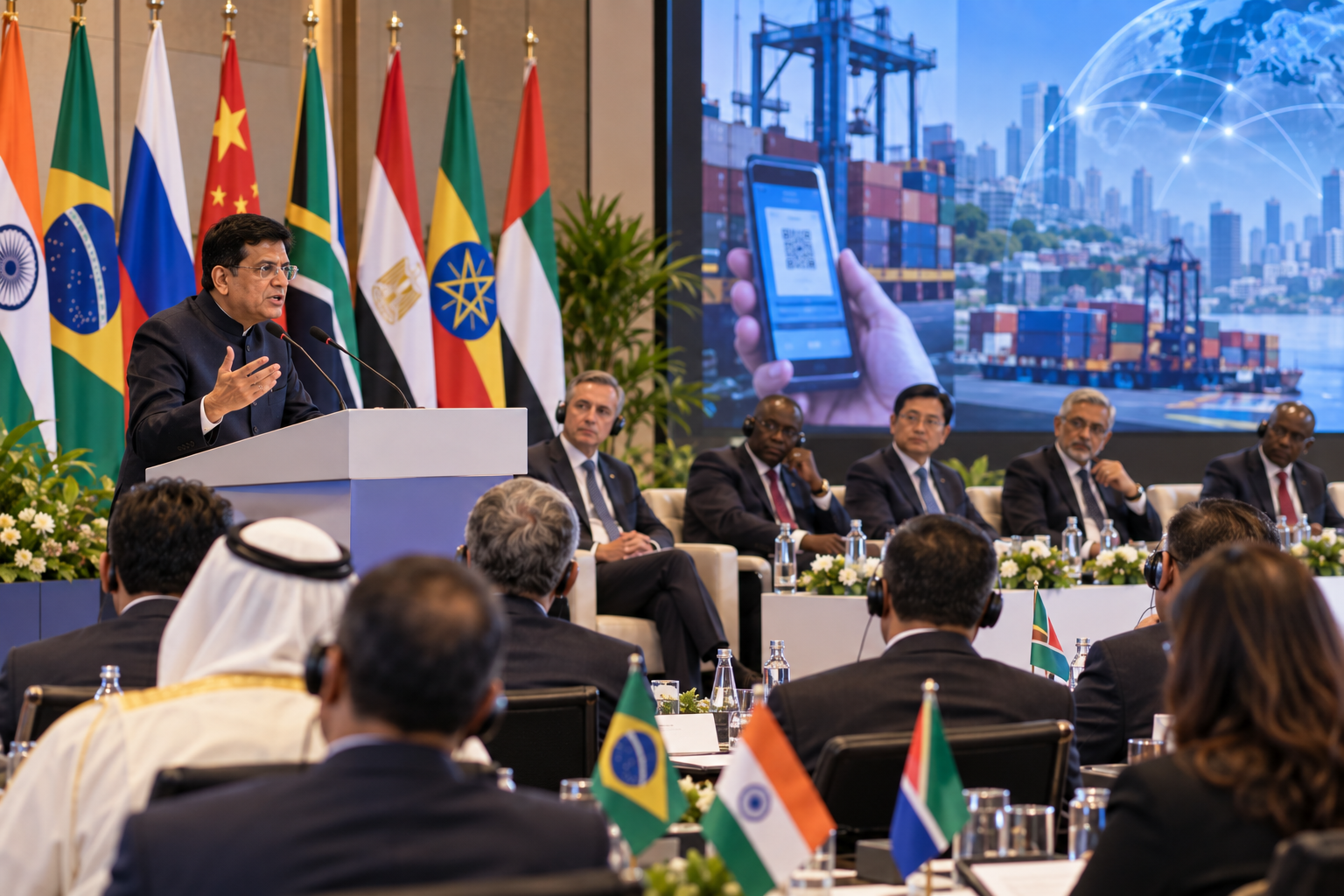
Addressing the opening session of the BRICS Business Forum 2026 in New Delhi, Goyal highlighted India’s digital public infrastructure and the rapid expansion of the Unified Payments Interface.
According to Goyal, UPI has crossed more than 250 billion transactions annually and accounts for more than half of global transaction volumes by number. The payment system is also accepted in 11 countries.
Goyal urged BRICS economies to connect their payment platforms so that businesses and consumers can conduct cross-border transactions more efficiently.
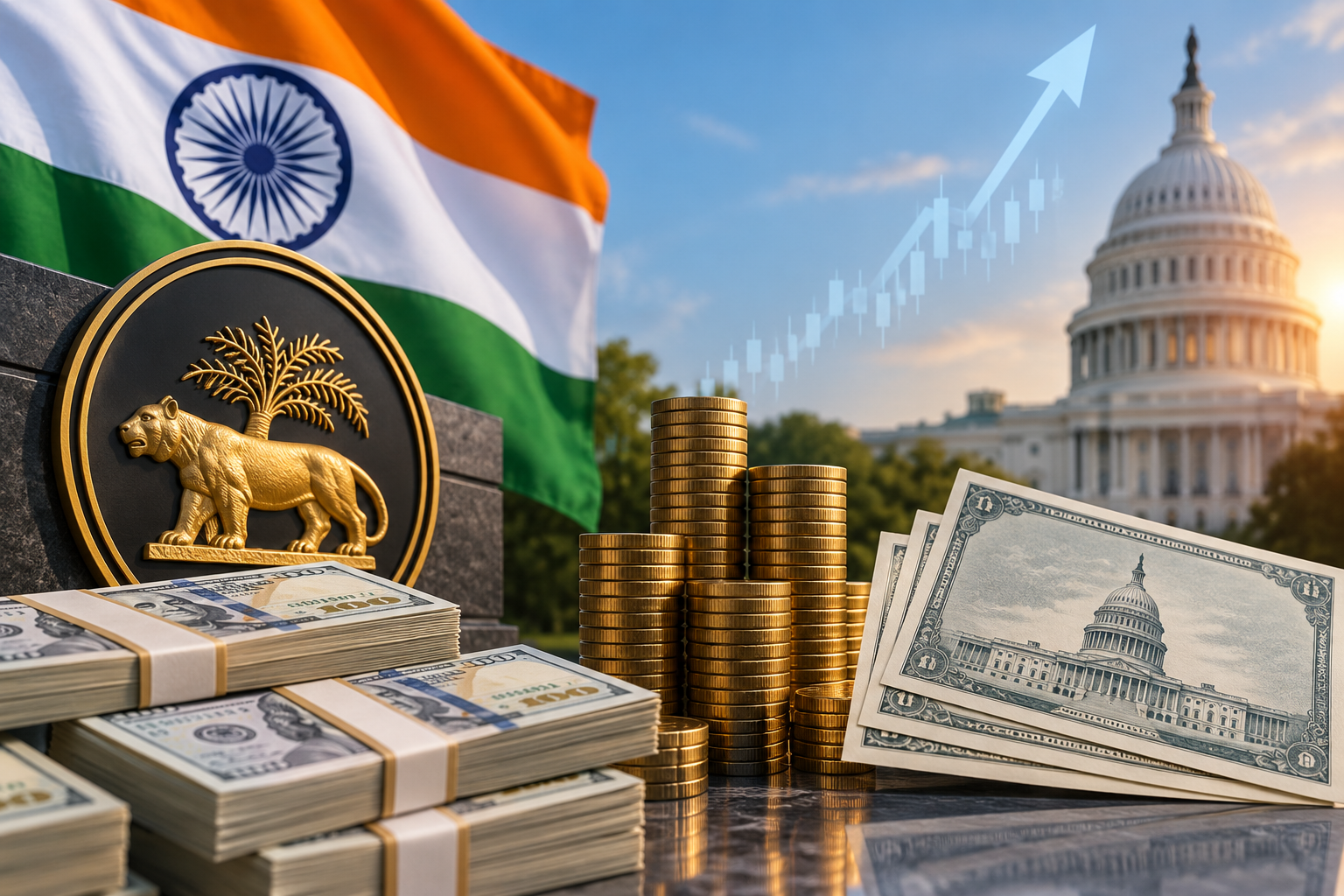
He also called for greater use of national currencies in bilateral and multilateral trade. Such arrangements could reduce dependence on traditional international settlement currencies while improving payment options between BRICS economies.
The minister said digital trade should become more accessible and urged member countries to work together on emerging technologies.
Supply Chains Need Balance
Goyal also stressed the importance of resilient and diversified supply chains.
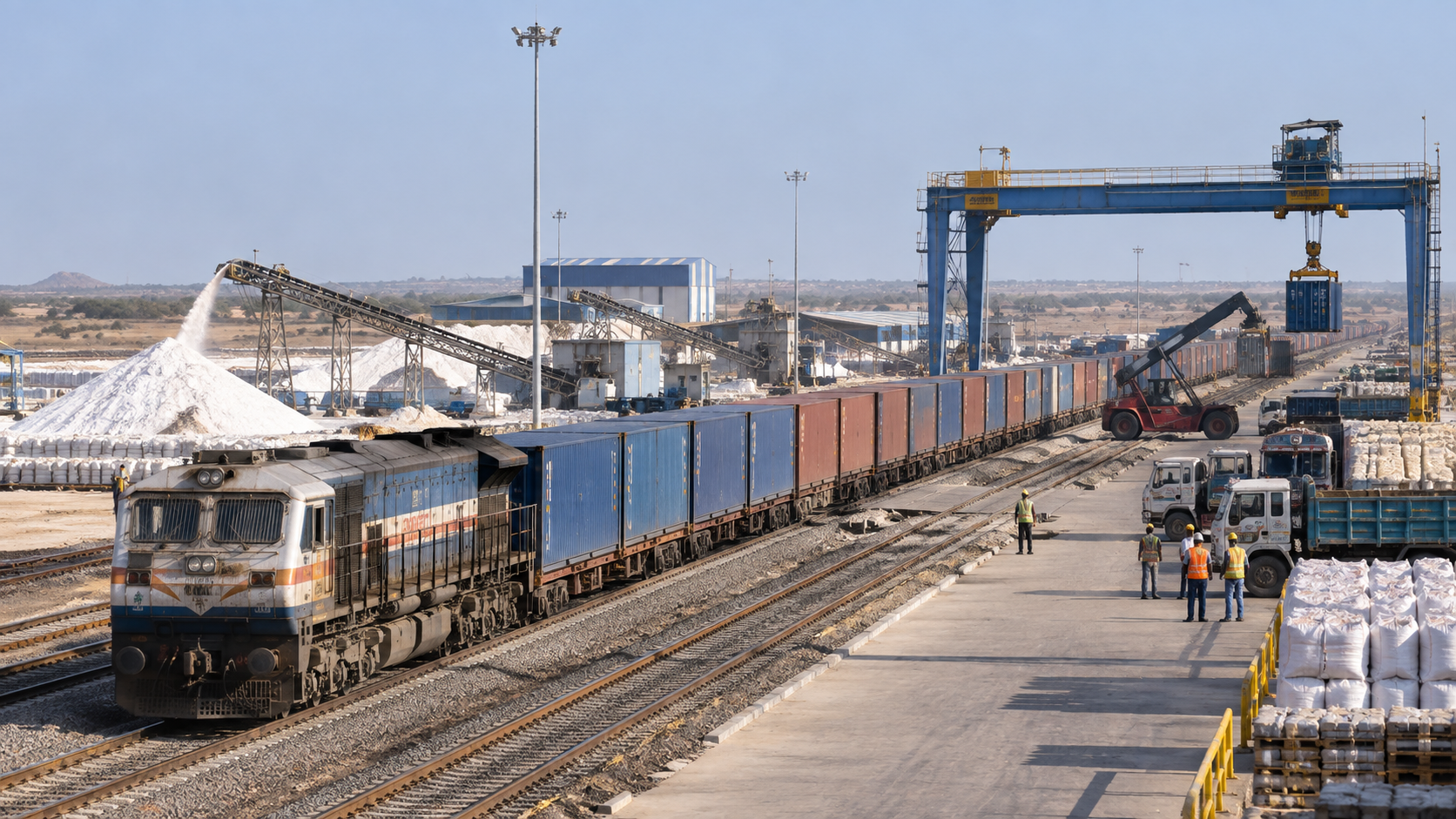
He said trade among BRICS partners should be deep and resilient, with supply chains designed so that trade does not become an impediment to economic growth or public welfare.
He called on members to open their markets to one another, particularly for raw materials and critical minerals.
According to Goyal, supply chains become more resilient when they operate in both directions, allowing countries to both export and import from one another rather than creating one-sided dependencies.
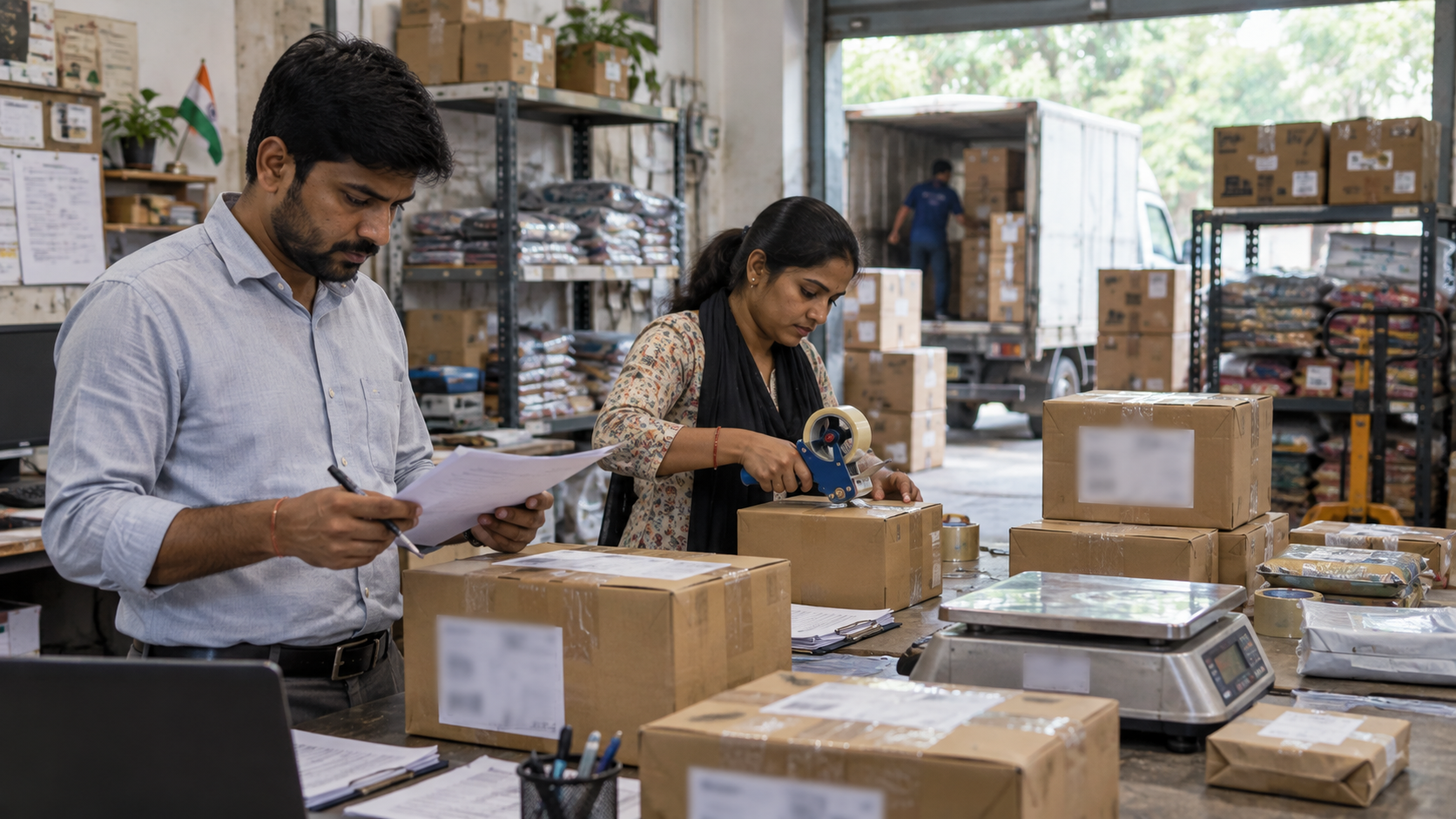
The minister also urged countries to simplify regulatory procedures and speed up customs clearances. He pointed to non-tariff measures as an important source of additional costs for exporters.
Agriculture and agri-tech were also identified as potential areas of cooperation. Goyal suggested that startups across BRICS countries could jointly develop technologies and solutions for farmers, supporting food security.
He also called for greater openness in services trade and easier movement of professionals between member countries, including better recognition of professional qualifications.
Agriculture, pharmaceuticals, engineering, electronics, automobiles, auto components and services were identified as sectors with significant potential for greater cooperation.
Russia Proposes New Initiatives
Russian Economic Development Minister Maxim Reshetnikov said BRICS represented a quarter of the global economy and could play a major role in building resilient supply chains and accelerating the green and digital transition.
He said Russia has implemented measures aimed at supporting exports, economic growth and infrastructure modernisation.
Reshetnikov also highlighted the shift in Russia’s export settlement structure. According to him, the dollar and euro accounted for 85% of settlements for Russian exports three years ago, but that share has now fallen to around 11%.
He said an alternative international financial system has become an important mechanism for Russia and now connects thousands of banks across multiple countries.
Reshetnikov proposed two specific initiatives for BRICS: a BRICS grain exchange and a BRICS Special Economic Zones Association.
The proposed grain exchange would provide a unified platform where producers, traders and buyers could transact directly. He argued that BRICS countries are among the world’s major producers and consumers of agricultural commodities but still rely heavily on price benchmarks reflecting other markets.
Russia has prepared a detailed plan for the proposed exchange and is seeking feedback from BRICS partners.
Reshetnikov also proposed a BRICS business navigator for investors and greater cooperation around the ranking and development of special economic zones.
Trade Finance Gap In Focus
Commerce Secretary Rajesh Agarwal highlighted the global trade-finance gap, estimated at around $2.5 trillion, and called for measures that would enable exporters to access affordable working capital.
He suggested that financing could be linked to confirmed orders and reliable payment records, potentially making credit more accessible to smaller exporters.
The Jaipur Consensus, adopted at the 16th BRICS trade ministers’ meeting in August 2026 under India’s BRICS chairship, provides a foundation for exploring a common BRICS mechanism to address trade-finance constraints, particularly for micro, small and medium enterprises.
Agarwal also highlighted initiatives including BRICS Connect, stronger business-to-business partnerships, an annual BRICS Trade and Investment Expo, digital trade documentation and greater sectoral cooperation.
The combined agenda suggests that BRICS economic cooperation is increasingly moving towards practical mechanisms covering payments, trade finance, supply chains, investment and digital commerce.
For India, linking payment systems and promoting UPI could provide an important component of this wider effort, while local-currency trade could give businesses additional settlement options.