Petrol Cars Lose Ground As Alternatives Rise
SEO Keywords
Key Highlights
- Petrol cars are losing ground in India’s passenger vehicle market.
- Buyers are increasingly considering CNG, hybrid and electric vehicles.
- In July, CNG, hybrids and EVs together accounted for 40.59% of passenger vehicle sales.
- Petrol vehicles accounted for 41.68% of sales, leaving only a narrow gap.
- Petrol retail sales declined across Maharashtra, Uttar Pradesh, Haryana, Delhi and Rajasthan.
- Higher fuel costs and changing consumer preferences are encouraging buyers to explore alternatives.
- Automakers are expanding CNG, hybrid and EV options to meet changing demand.
News Story
Mumbai, August 16: Petrol cars are increasingly losing their dominance in India’s passenger vehicle market as buyers show growing interest in CNG, hybrid and electric vehicles.
The changing preference is visible across several major automobile markets, where petrol car sales have weakened while alternative-fuel vehicles continue to gain attention.
The trend suggests that Indian car buyers are looking beyond conventional petrol models as fuel economics, running costs and concerns around long-term mobility increasingly influence purchasing decisions.
Alternative-Fuel Cars Gain Ground
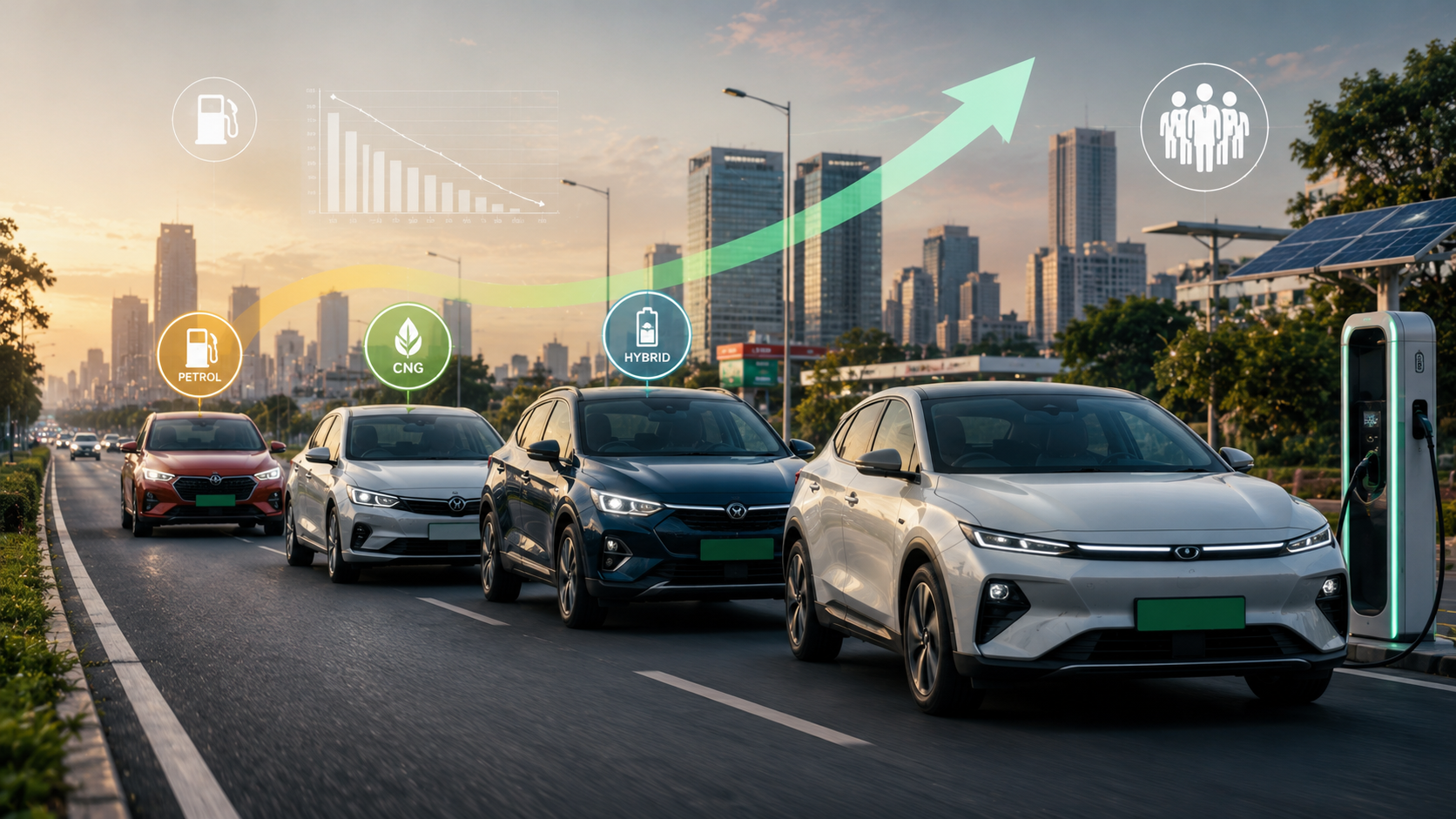
In July, CNG, hybrid and electric passenger vehicles together accounted for 40.59% of the market, according to the data highlighted in the report.
Petrol vehicles, meanwhile, accounted for 41.68% of sales.
The narrow gap indicates how quickly alternative powertrains are approaching petrol in terms of consumer preference.
CNG vehicles continue to attract buyers looking for lower running costs, while hybrids offer a combination of fuel efficiency and conventional driving convenience. Electric vehicles are also becoming increasingly visible as charging infrastructure expands and more models enter the market.
Petrol Sales Decline Across States
The shift is particularly visible in retail sales across several major states and regions.
In Maharashtra, petrol car retail sales declined from 14,611 units in July 2025 to 13,800 units in July 2026. Uttar Pradesh recorded a decline from 13,396 units to 13,058 units during the same period.
Haryana saw a sharper fall, with petrol car sales dropping from 9,928 units in July 2025 to 7,929 units in July 2026.
Delhi’s sales declined from 7,445 units to 6,593 units, while Rajasthan recorded a reduction from 6,821 units to 5,959 units.
The figures point to a broader slowdown in petrol vehicle demand across important automobile markets.
Fuel Costs Influence Buying Decisions
The changing consumer preference is closely linked to concerns over fuel expenses and long-term ownership costs.
As petrol prices remain a major consideration for car owners, buyers are increasingly evaluating vehicles based on fuel efficiency and overall running expenses.
CNG vehicles have emerged as an attractive option for customers seeking lower fuel costs, while hybrid models offer improved efficiency without requiring a complete shift to electric mobility.
Electric vehicles, meanwhile, are gaining traction among buyers looking for an alternative to traditional internal-combustion engines.
Automakers Respond To Changing Demand
The growing popularity of alternative powertrains is also influencing automakers’ product strategies.
Manufacturers are expanding their CNG, hybrid and EV portfolios to address changing consumer preferences and reduce dependence on conventional petrol-powered models.
The shift could become more significant as charging infrastructure expands, battery technology improves and more affordable electric and hybrid models enter the Indian market.
For automakers, the challenge will increasingly be to offer consumers a combination of affordability, range, efficiency and convenience across different powertrain technologies.
Petrol’s Dominance Under Pressure
Petrol remains one of the largest fuel categories in India’s passenger vehicle market, but its lead is becoming increasingly narrow.
With CNG, hybrid and electric vehicles collectively reaching 40.59% of passenger vehicle sales in July, the market is moving towards a more diversified powertrain mix.
The trend indicates that Indian consumers are no longer viewing petrol as the default choice. Instead, factors such as running costs, fuel efficiency, technology and long-term ownership value are playing a growing role in car-buying decisions.
If the current shift continues, India’s automobile market could see alternative-fuel vehicles capture an increasingly larger share of passenger car sales in the years ahead.