Government clears procurement to ensure better prices for farmers and support rural incomes.
Key Highlights
- Centre has approved procurement of copra and Totapuri mango under MSP and MIS.
- 96,879 metric tonnes of Totapuri mango will be procured in Tamil Nadu under the Market Intervention Scheme (MIS).
- The intervention price for Totapuri mango has been fixed at ₹1,545.41 per quintal.
- Government has also approved procurement of 87,226 metric tonnes of copra under the Price Support Scheme (PSS).
- More than ₹1,049.16 crore has been allocated for copra procurement at MSP.
- The move aims to protect farmers from distress sales and strengthen rural incomes.
News Story
New Delhi: The Central Government has approved the procurement of Totapuri mangoes and copra under the Market Intervention Scheme (MIS) and the Minimum Support Price (MSP) framework, providing relief to farmers facing low market prices.
Union Agriculture and Farmers Welfare Minister Shivraj Singh Chouhan approved the procurement to ensure that farmers receive remunerative prices for their produce and are not forced into distress sales.
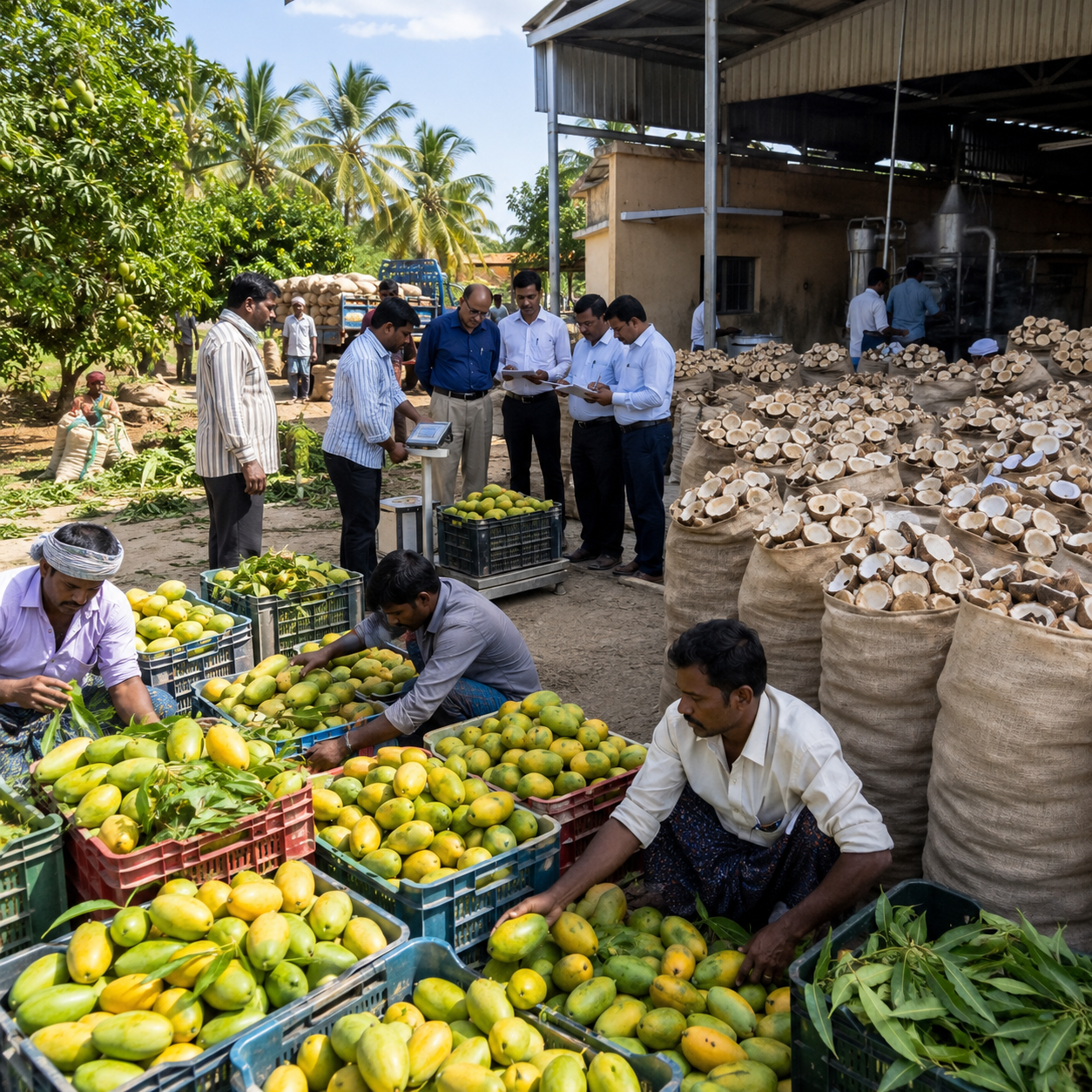
Under the Market Intervention Scheme, the Centre has approved the procurement of 96,879 metric tonnes of Totapuri mangoes in Tamil Nadu. The intervention price has been fixed at ₹1,545.41 per quintal, offering price support to mango growers affected by weak market demand.
The government has also approved the procurement of 87,226 metric tonnes of copra under the Price Support Scheme (PSS) for the 2026 season. The approved quantity includes 87,000 metric tonnes of milling copra and 226 metric tonnes of ball copra.
According to the government, more than ₹1,049.16 crore has been earmarked for copra procurement at the Minimum Support Price, ensuring eligible farmers receive assured returns.
The decision follows requests from the Tamil Nadu government for market intervention to support Totapuri mango growers, who have been facing declining prices.
The Centre said the procurement measures are expected to strengthen farmers’ incomes, improve rural economic activity, and boost confidence in the agricultural sector.