Supreme Court has directed the government to submit the proposed airfare regulation framework within two weeks.
Key Highlights
- Supreme Court has asked the Centre to submit the proposed airfare regulation rules within two weeks.
- The government informed the court that the draft rules are ready and will be tabled in Parliament within 30 days.
- The case concerns a PIL alleging excessive airfare hikes during festivals and emergencies.
- The next hearing in the matter is scheduled for August 3.
- The PIL seeks an independent regulator to monitor airline fares and additional charges.
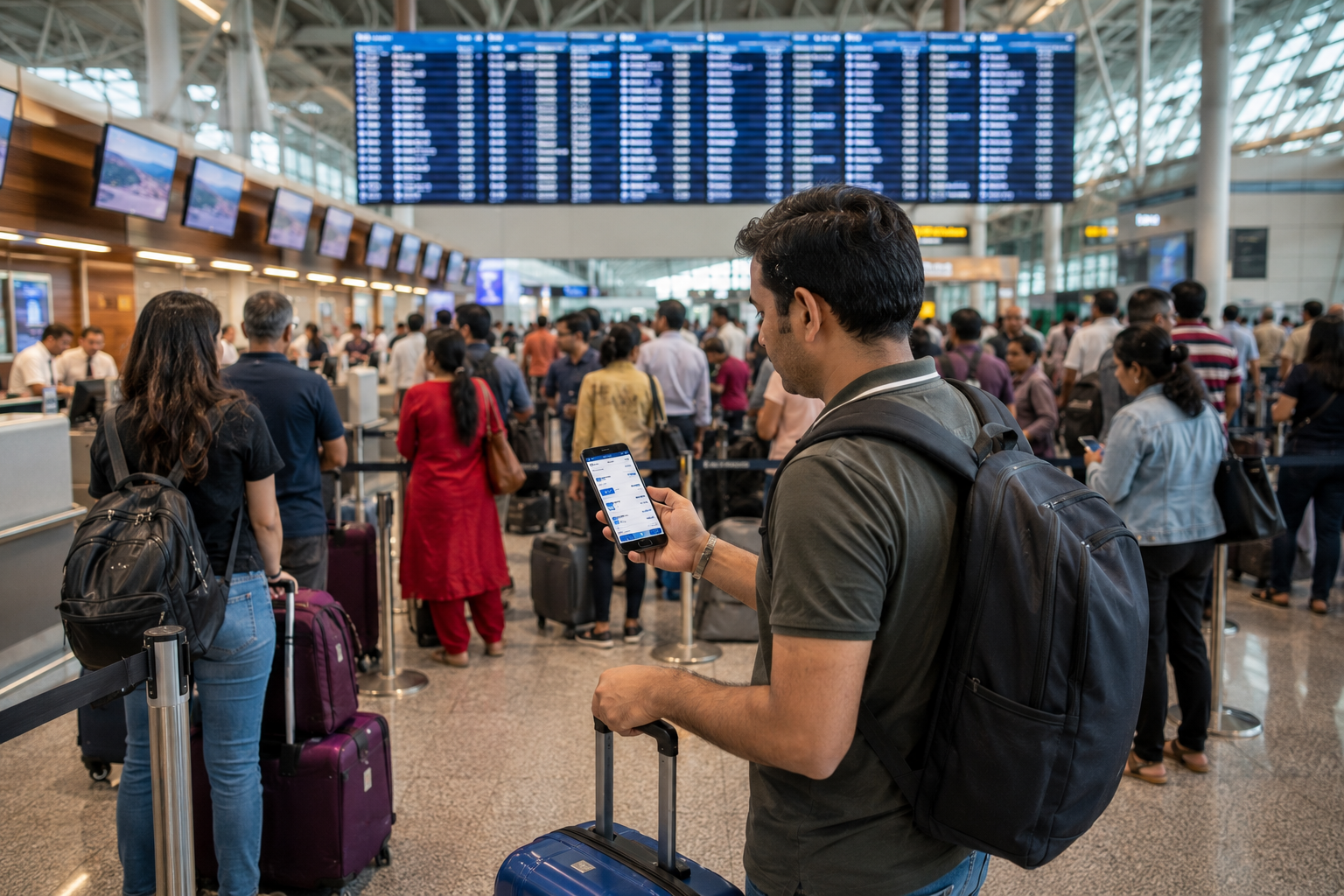
New Delhi: The Supreme Court has directed the Central Government to submit the proposed rules for regulating domestic airfares within two weeks, as it continues hearing a public interest litigation (PIL) challenging steep airfare hikes during festivals and emergency situations.
A bench comprising Justices Vikram Nath and Sandeep Mehta was informed by the Centre that the draft regulations have already been prepared and are expected to be presented in Parliament within the next 30 days.
The court, however, said that irrespective of the parliamentary process, the government must submit a copy of the proposed rules in a sealed cover within two weeks. The matter has been listed for further hearing on August 3.
The PIL was filed by social activist S. Lakshminarayanan, who argued that airline ticket prices often increase by as much as 300% during peak travel periods. The petition also calls for the creation of an independent regulator to oversee airfare pricing and additional charges imposed by airlines.
The issue has been under judicial scrutiny for several months. In earlier hearings, the Supreme Court had expressed concern over arbitrary fare increases during festivals and emergencies and had sought the Centre’s response on measures to protect consumers.
Airfare volatility has also been linked to rising aviation fuel costs. Jet fuel remains the largest operating expense for airlines, accounting for nearly 30–40% of total operating costs, prompting carriers worldwide to revise ticket prices during periods of higher fuel costs.