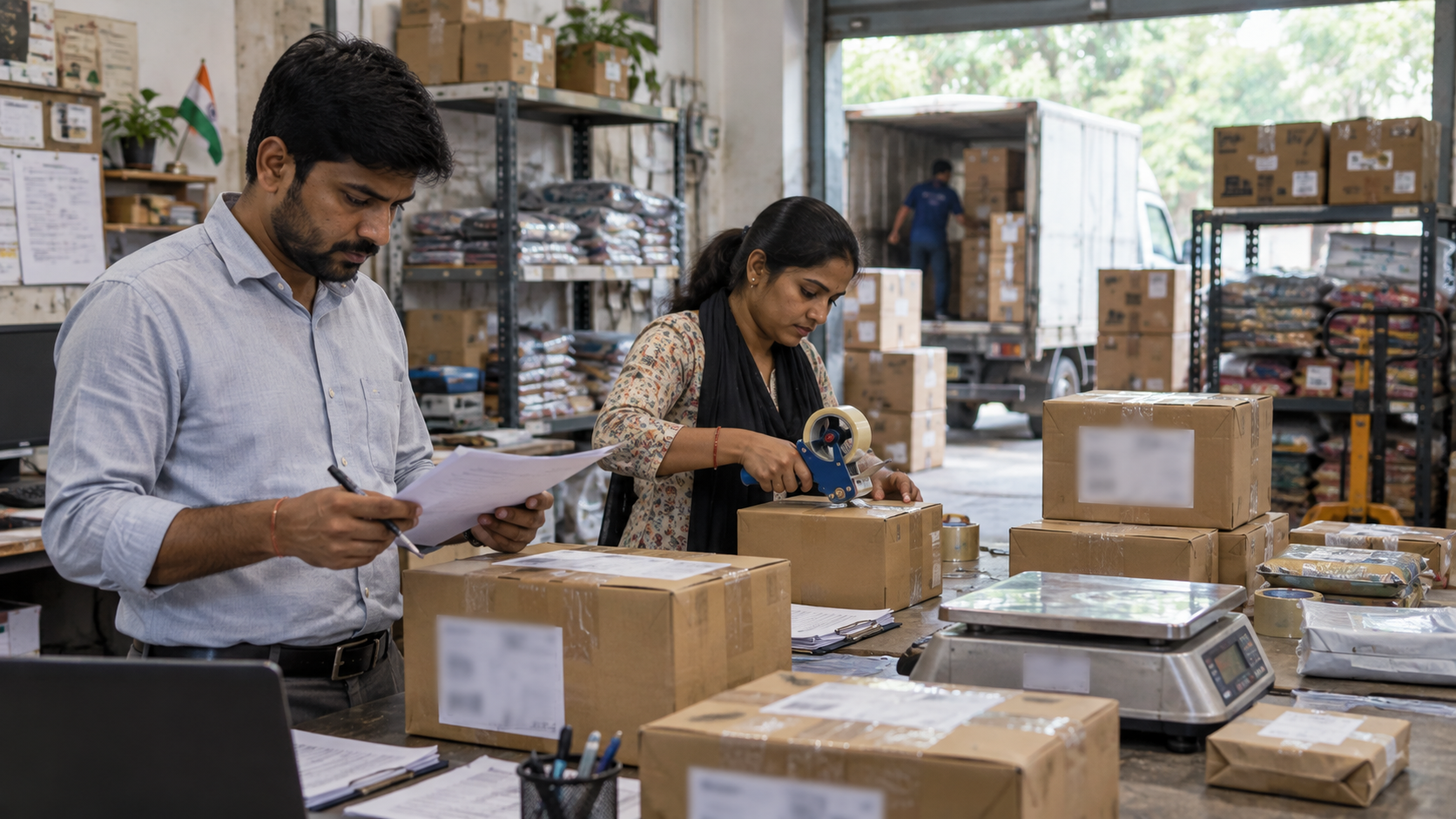
Export-only inventory model gets formal approval under a new regulatory framework.
FDI-backed e-commerce firms must maintain separate export inventory and ensure full traceability.
Highlights:
- Government has notified a new e-commerce export framework under the DGFT.
- FDI-backed firms can build inventory only against confirmed export orders.
- Export inventory must be maintained separately through a digital repository.
- Export goods cannot be diverted for sale in the domestic market.
- Exporters must pay Indian sellers within seven days.
- The policy aims to boost MSME exports while strengthening regulatory oversight.
Story:
The Centre has notified a new policy framework for e-commerce exports, introducing stricter rules for foreign direct investment (FDI)-backed companies while allowing them to maintain inventory exclusively for confirmed export orders. The Directorate General of Foreign Trade (DGFT) notified the framework, which seeks to promote exports without allowing inventory-based retail operations in the domestic market.
Under the new rules, FDI-backed e-commerce entities must create separate legal entities if they wish to participate in exports. These companies will be allowed to maintain export inventory only against confirmed overseas orders. The framework requires export inventory to be distinctly identified, digitally recorded and fully traceable throughout the export process.
The policy clearly states that inventory meant for exports cannot be diverted for sale in the domestic market, even if exported goods are later returned to India. Companies must also maintain a digital repository to ensure transparency and regulatory compliance.
To improve payment discipline, exporters will be required to make payments to Indian sellers within seven days. The notified framework also encourages exporters to use designated E-commerce Export Hubs (ECEHs) for carrying out export operations.
The move is expected to benefit global e-commerce companies such as Amazon and Walmart-owned Flipkart, while also creating new export opportunities for Indian micro, small and medium enterprises (MSMEs). Easier access to overseas buyers could help smaller businesses expand exports without setting up their own international distribution networks.
However, some industry experts have expressed concerns that the new inventory-based export model could put competitive pressure on traditional exporters. The government has maintained that the framework includes sufficient safeguards to prevent misuse and ensure that export inventory is used only for genuine overseas shipments.
SEO / Google Discover Keywords:
e-commerce export policy India, DGFT e-commerce export rules, FDI e-commerce inventory policy, Amazon Flipkart export rules, MSME export policy India, E-commerce Export Hubs, DGFT notification 2026, India export regulations