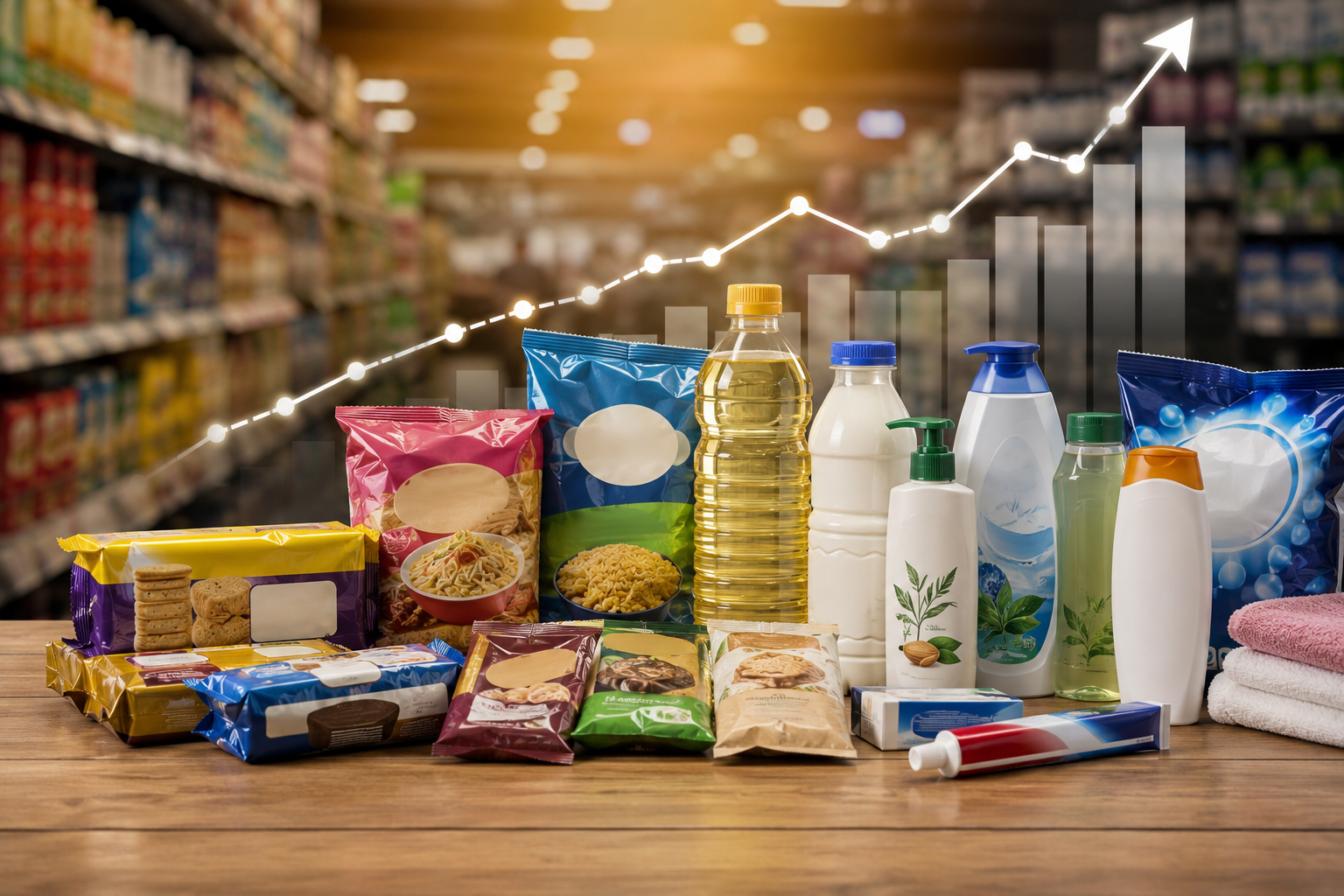
Rising commodity costs, geopolitical uncertainty and inflation are pushing major FMCG companies towards calibrated price hikes and shrinkflation in the September quarter.
Key Highlights:
- FMCG companies may raise prices in the September quarter.
- Input costs and commodity inflation are driving pricing actions.
- Britannia expects another 1.5-2% pricing through shrinkflation.
- Godrej Consumer Products may take similar pricing action in Q2.
- Dabur expects inflation to put pressure on volumes.
- HUL anticipates 2-5% sequential inflation in the September quarter.
- Tata Consumer Products may take further pricing interventions.
- Companies remain optimistic about overall consumer demand.
- Geopolitical tensions and crude prices remain key concerns.
Leading FMCG companies are preparing for calibrated price increases in the September quarter as rising input costs, commodity inflation and geopolitical uncertainties put pressure on margins.
The sector had already implemented average price increases of around 2-5% in the June quarter. Companies are now considering further selective price increases and shrinkflation, which involves reducing the quantity or grammage of products while keeping the price unchanged.
Britannia Industries expects to add another 1.5-2% in pricing during the second quarter, particularly through shrinkflation in its Rs 5 and Rs 10 biscuit packs. The company said elevated sugar and palm oil prices are contributing to higher input costs.
Britannia also indicated that the demand environment remains strong and that it expects to protect its FY27 EBITDA margins at least at FY26 levels if input costs remain elevated.
Godrej Consumer Products Ltd, which implemented an average price increase of around 5% in the June quarter, may introduce a similar increase in the current quarter. However, the company is waiting for greater clarity on commodity prices before taking further action.
Many of Godrej Consumer Products’ input costs are linked to crude oil prices, which typically affect costs with a lag of three to four weeks. The company said its current pricing remains broadly adequate and does not expect a significant additional increase at present.
Dabur India also expects elevated input costs to continue in the near term. The company plans calibrated price increases along with productivity and cost-efficiency measures to protect margins.
Dabur said inflation is likely to result in higher price and value growth while putting pressure on volumes. The company nevertheless remains confident of achieving double-digit revenue growth in FY27, supported by its brands, innovation pipeline and execution.
Hindustan Unilever Ltd is also expected to raise prices across multiple product categories during the September quarter. The company anticipates sequential inflation of 2-5% compared with the April-June period and plans to take calibrated pricing action depending on how input costs develop.
Tata Consumer Products has also indicated that further pricing interventions could be considered if required. The company said input costs remain dynamic, while geopolitical developments, particularly the situation in West Asia, continue to create uncertainty.
Nestle India has highlighted geopolitical and inflationary pressures as key concerns and warned that overall consumption could moderate in the short term. The company is also monitoring the potential impact of El Niño conditions on monsoons and the broader food and beverage sector.
Despite the pricing pressure, FMCG companies remain optimistic about demand, supported by resilient consumption trends, premiumisation and expectations of improved revenue growth. However, commodity prices, crude oil volatility, weather conditions and geopolitical uncertainty will remain important factors influencing pricing decisions in the coming quarter.