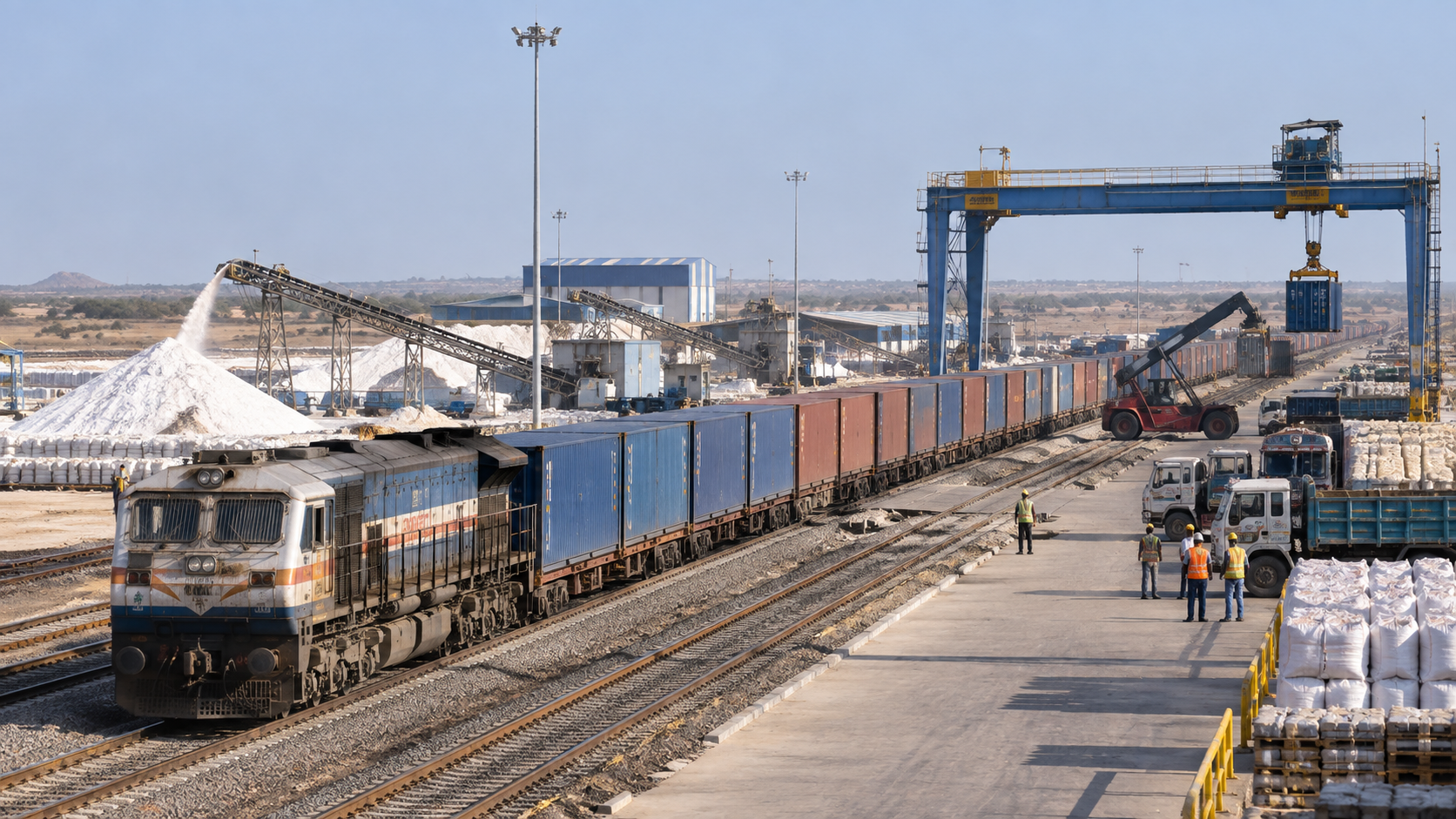
Foreign Trade Policy 2021-26: Productivity, technology and sustainability

Dr Sunitha Raju, Professor at Indian Institute of Foreign trade feels that the upcoming Foreign Trade Policy should address structural constraints of India’s huge informal sector. Also, it should prepare exporters for quantum shifts in the global trade environment towards sustainable development goals, rising non-tariff measures as well as technologies like blockchain, AI and ML.

Sunitha-Raju_TPCI

India’s Foreign Trade Policy (2021-2026) is scheduled to be announced on 1 April, 2021 and is awaited with anticipation. Two reasons underline these expectations: one, the FTP provides the plan or targets for India’s engagement with the world; and two, it defines the role of trade in meeting India’s growth and development targets. The policy instruments therein provide insights into the outcomes and the complexities of the growth trajectory for a diversified developing economy.

The FTP (2015-2020) had projected India’s share in global exports to increase from 2% in 2015 to 3.5% in 2020. The need to increase our merchandise exports stems from the need to address employment, which, in turn, affects private consumption or demand, which is so necessary for meeting the development targets of reducing poverty and inequalities. In the overall macro framework, net exports boost aggregate demand for goods produced domestically with wide multiplier effects that cover investments, production processes/technology, infrastructure and support services (logistics).

However, in 2019, India’s share in world merchandise exports was 1.7% and that of commercial services was 3.5% (WTO Statistical Review, 2020). This is despite numerous export promotion schemes and incentives as detailed in FTP. The launch of “Make In India” campaign in 2014 has also been an effort to accelerate India’s export growth by focusing on increasing manufacturing productivity and FDI and thereby transform India into a global manufacturing hub. But quantitative assessment suggests otherwise (ESCAP, 2020).

The Trade Policy Review report by the WTO Secretariat in January 2021, although with the intention of assessing how India’s trade policy instruments conform to WTO commitments and disciplining, also provides insights into the effectiveness of these policy interventions.

The structural shifts in the product composition of merchandise exports point to a decline in traditional exports and shift towards machinery & electricals. Between 2014/15 and 2019/20, the share of textiles decreased from 12.1% to 10.9%; precious stones and metals from 13.4% to 11.5%. As against this, the share of Machinery & Electricals increased from 7.3% to 11.5%, Chemicals from 10.8% to 15.1% (TPR, 2021, Page 27).

While these shifts indicate changes in global demand, India’s share in global exports of agricultural and manufactures continued to be low as compared to other developing countries (Table 1). Even with the policy thrust to expand exports and schemes for promoting exports for over 3 decades, we have not been able to accelerate our export growth. The moot question is why?

Table 1: Share in Global Exports (%)

India vs peer countries export share TPCI


Source: WTO, World Trade Statistical Review, 2020.

A quick introspection will show that the manufacturing value added in 2019 was below 15% of GDP inspite of the New Manufacturing Policy that has aimed at increasing this share to 25% by 2022. The observed stagnation in manufacture production is the result of the dualism wherein over 95% of the establishments are in the unorganized sector with less than 30% share in production and over 75% share in employment. The lack of integration between the organized and unorganized manufacturing across industries has not only suppressed productivity growth but also resulted in export underperformance. (the automobile sector is the only exception to these trends). These industrial organization issues have resulted in India largely confining to low technology manufacture exports, which accounted for over 70% of manufacture exports in 2018.

Unlike India, the success of Vietnam, Philippines, Malaysia and Thailand in boosting their manufacture exports is because of formalizing the informal manufacturing sector, which also enabled them to move up to medium to high technology manufacture exports.

This discord between production and exports is also evident in the agriculture sector. With rise in incomes and convergence in global consumption patterns for processed foods, India’s inability to meet this change in demand for agricultural products has resulted in a continued focus on the exports of food commodities like rice and wheat. The opportunities for developing value added exports of cereals, fruits & vegetables, meat and meat products have not been effectively seized, resulting in almost stagnant global share over the last two decades even when India is the largest producer of fruits and vegetables. Additionally, the huge wastage (20-40%) across crops is largely due to low processing capacity, which underlines the supply chain, logistics and marketing issues that have eroded the gains from trade.

Considering this close nexus between increasing production/productivity and export growth, the trade policy frame and instruments should facilitate in addressing these structural constraints. To a large extent, the current focus of the trade policy instruments are more like ‘reward’ rather than supporting a sustainable and competitive trade engagement.

With most of the current schemes (EOU, MEIS, SEIS, SEZ,EPCG, DFIS) being WTO non-compliant, the new FTP should go beyond these incentives and focus on schemes that would enable firms to undertake technological upgradation, innovation & product development and develop efficient processes by leveraging the new technologies. This is necessary to address the challenges of the emerging global trade environment.

Preparing for a post-COVID upheaval

The UN Sustainable Development Goals (SDG) Agenda 2030 mandates an inclusive and sustainable industrial development as one of the goals (goal 9), which necessitates transformative productive capacities that are environment and climate compliant. The five targets under this SDG goal 9 require country-level implementation of raising the share of manufacturing in GDP and employment, integrating the small scale sector into manufacturing value chains and financial inclusion, upgrade technological capabilities and increase access to information technology. The 17 SDG goals will define the future global environment and country preparedness to meet these conditions will be necessary.

Secondly, the rise in the incidence of Non-tariff barriers (NTB) in global trade is because of their strong relation to SDG goals and increasing protectionism at national level with the fall in tariffs. Estimates indicate that over 57% of the imports are subjected to NTBs or on an average 2.5 NTBs on each imported product. Of this, TBT (Technical barriers to trade) and SPS (sanitary and phytosanitary) measures have the largest shares. The scope and numbers of TBT and SPS have increased by 16% over the previous year (ESCAP, Asia Pacific Trade and Investment Report,2020).

Addressing these global challenges for sustaining exports in future requires a strong policy frame that leverages new technologies. One, blockchain technologies have effectively been used to reduce the cost burden of rising NTBs and for effectively integrating SMEs into the manufacturing value chain.

The Global Digital Identity System (based on blockchain) will allow rapid and agile verification off suppliers, exporters and importers across jurisdictions, thereby reducing the transaction costs in complying to TBT and SPS measures.

British Columbia, Canada has designed Verifiable Organisation Network (VON) to enable a trusted digital environment for business. With credentials defined and decentralizing of verification keys, VON has enabled businesses to engage globally with the identities provided by the local government. By March 2019, 7 million verifiable credentials were provided. The potential of this development in integrating SMEs into the manufacturing value chain and and developing resilient supply chains needs no emphasis.

Two, AI and ML, by using Big Data can predict emerging market opportunities, particularly in terms of identifying markets and customers, and they are therefore gaining significance. Small enterprises will not be able to capitalize on these opportunities. State support in providing access to these technologies through investment in trade infrastructure, access to these digital platforms and integrating R&D with technology is necessary in the current context. And Three, with 3D Manufacturing, India can develop pockets of high technology/skill based products. Here, scale will not be an important determinant but skill orientation will be important. In this regard, India is well placed than the peer countries in Asia.

In the context of these challenges, the New FTP should provide a vision for integrating these digital economy opportunities into mainstream production of manufacturing and agriculture.

The schemes should enable producers (both big and small) to effectively engage globally by providing digital identities through appropriate investment in infrastructure. For this, the focus of FDI should be on technology transfer instead of converting India into a mere geographical factory set up. The importance of complementing macro policies like industrial, fiscal, exchange rate, monetary needs to be taken as continuum for trade policy.

At the country/regional level, engaging in DEPA (Digital Economy Partnership Agreements) will integrate small producers into global trade by effectively reducing the high transaction costs. If Singapore, Chile and New Zealand can implement DEPA (in June 2020), why not India? That is why, the New FTP becomes critical for positioning India on the global map, especially in the current context.


Dr. Sunitha Raju is a Professor at IIFT. She has 30 years of extensive experience in Education, Research, Policy formulation and Evaluation and held the positions of Chairperson (ICCD), Chairperson (Research) and Chairperson (GSD). Her areas of expertise include Trade Policy Formulation & Evaluation, Trade modelling, Agricultural Policy Analysis, WTO rules & Regulatory framework, Free Trade Agreements, Survey Research, Performance Reviews, Training & Management Development Programmes.

Previous Post
Next Post

Most Recent Posts

  • All Post
  • 8th Pay Commission
  • Aadhar
  • Aditya Birla Capital
  • Advertising Standards
  • Affordable Housing
  • Agriculture
  • Agriculture & Food
  • AI in Healthcare
  • AI Technology
  • Airlines
  • alcohol industry
  • Android
  • APEDA
  • Apple
  • Artificial Intelligence
  • Ashwini Vaishnaw
  • Asset Management
  • Atmanirbhar Bharat
  • Audio Devices
  • Audio Products
  • Auto Industry
  • Automobile
  • Automobiles
  • Automotive
  • Automotive Industry
  • Aviation
  • Bain Healthcare Report 2026
  • Bank
  • Banking
  • Banking Technology
  • Battery Industry
  • Beverage Industry
  • Beverages
  • Bihar
  • biotechnology
  • Bitcoin
  • BMW Group India
  • Brand Insight
  • BRICS
  • Bullion Market
  • Business
  • Business & Economy
  • Business & Trade
  • Business Leadership Post COVID-19
  • Business News
  • Business Terminology
  • Business Utilities
  • Buyback
  • Capital Goods
  • Capital Markets
  • CarsBusiness
  • CBIC
  • CCI
  • Child Investment
  • China
  • China technology news
  • Citizen Services
  • Clean Energy
  • Clean Technology
  • Cloud Computing
  • coal
  • Commerce
  • Commerce and Industry
  • Commercial Real Estate
  • Commercial Vehicles
  • Commodities
  • Communications
  • Companies
  • Competition Law
  • Compliance
  • Computer Accessories
  • connected cars
  • Consumer Affairs
  • Consumer Electronics
  • Consumer Finance
  • Consumer Goods
  • Consumer Health
  • Consumer Markets
  • Consumer News
  • Consumer Protection,
  • Consumer Rights
  • Consumer Spending
  • Consumer Trends
  • Content Creation
  • Copper
  • Corporate
  • corporate affairs
  • Corporate Earnings
  • Corporate Governance
  • Corporate News
  • Corporate Social Responsibility
  • Cost of Living
  • Country
  • CRED
  • Credit Cards
  • CREDIT RATING
  • Crude Oil
  • Cryptocurrency
  • CSR
  • Culture
  • Currency
  • Customs Duty
  • Cyber Security
  • Cybersecurity
  • Dairy Industry
  • Data & Analytics
  • Defence
  • Delhi Government
  • Delhi-NCR
  • Demographics
  • Derivatives
  • DGCA
  • DGFT
  • DigiLocker
  • Digital Assets
  • Digital Economy
  • Digital Health India
  • Digital Identity
  • Digital India
  • Digital Infrastructure
  • Digital passport for robots
  • Digital Payments
  • Digital Platforms
  • digital services
  • Diplomacy
  • Dixon Technologies
  • DPIIT
  • E Commerce
  • E-commerce
  • E-Governance
  • Ease of Doing Business
  • Economic Growth
  • Economy
  • Edible Oil Industry
  • Editor Choice
  • EdTech
  • Education
  • Electric Mobility
  • Electric Vehicles
  • Electronics
  • Employment
  • ENERGY
  • Engineering
  • Entertainment
  • Environment
  • EPFO
  • Ethanol Economy
  • EV Industry
  • EV Technology
  • Exports
  • EXTER
  • Farmers
  • Fashion
  • FINANCE
  • Finance Ministry,
  • Financial Marketing
  • Financial Markets
  • Financial News
  • Financial Planning
  • Financial Results
  • Financial Services
  • Fintech
  • FnTech
  • Food & Beverage
  • Food & Beverages
  • Food Exports
  • Food Industry
  • Food Manufacturing
  • Food Processing
  • Food Regulations
  • food safety
  • Foreign Exchange
  • Foreign Investment
  • Foreign Policy
  • Foreign Trade
  • Forex Reserves
  • fssai
  • FTA
  • Fuel
  • Fuel Prices
  • Future Energy
  • Gadgets
  • Gadgets & Apps
  • Gaming
  • GDP
  • Generative AI Healthcare
  • Geopolitics
  • GI Products
  • Global Brand Alliance
  • Global Economy
  • Global Markets
  • Global Politics
  • Global Tech
  • Global Trade Policy
  • Global Trends\
  • Gold
  • Gold Market
  • Gold Prices
  • Gols & Silver
  • Government
  • Government & Policy
  • Government Affairs
  • Government Bonds
  • Government Data
  • Government Initiatives
  • Government Policy
  • Government Policy & Regulation
  • Government Scheme
  • Government Schemes
  • Government Services
  • Green Energy
  • Green Mobility
  • GroupGlobal
  • GST
  • GST Council
  • GST Counsil
  • Hair Care
  • Hardware
  • Hatchback Segment
  • Health Supplements,
  • Horticulture
  • Housing
  • HSBC
  • Human Resources
  • humanoid robot market
  • Hyundai
  • IBT Infographics
  • iinvestment
  • Imports & Exports
  • Income Tax
  • India
  • India Auto Market
  • India Business News
  • India Inc
  • India News
  • India Retail
  • India-Canada Relations
  • India-China
  • India-Japan Relations
  • India-Russia Relations
  • India-South Korea Relations
  • India-US Relations
  • Indian Economy
  • Indian Navy
  • Industrial Pollution
  • Inflation
  • Infra
  • Infrastructure
  • Innovation
  • Instagram
  • Insurance
  • international
  • International Affairs
  • International Cooperation
  • International Relations
  • International Trade
  • Internet & Connectivity
  • Internet Policy
  • Internet Regulation
  • Interview
  • Investing
  • Investment News
  • Investments
  • iPhone News
  • IPO
  • IT Industry
  • Jewellery
  • Jio Platforms
  • JioBlackRock
  • Jobs & Careers
  • Joint Ventures
  • Kim Kardashian
  • Labour
  • Latest
  • Launches
  • Leadership
  • Leaderspeak
  • Lending
  • Lifestyle
  • Lifestyle Tech
  • List
  • Loans & Credit
  • Local News
  • Logistics
  • LPG
  • Luxury Cars
  • Machinery
  • Macroeconomics
  • Macroeconomy
  • maharashtra
  • Maharashtra News
  • Make in India
  • Makhana
  • Manufacturing
  • Market Outlook
  • Markets
  • Maruti Suzuki
  • Mergers & Acquisitions
  • Meta
  • Microsoft
  • Middle East
  • Mobile Apps
  • Mobile Industry
  • Mobile Launch
  • Mobility
  • Monetary Policy
  • Monsoon
  • MoSPI
  • MSME
  • Mutual Funds
  • Nano Tech
  • National
  • National news
  • NEET 2026
  • NewsElectric
  • NewsTata
  • NPCI
  • NPS Vatsalya
  • Office Market
  • Oil & Gas
  • Oil and Gas
  • Others
  • OTT
  • Packaged Drinking Water
  • Packaged Foods
  • Packaging Industry
  • Packaging Innovation
  • Passenger Vehicles
  • Paytm
  • Pension & Retirement
  • Pensions
  • Personal Care
  • Personal Finance
  • Perspectives
  • Petroleum
  • PFRDA
  • Pharmaceuticals
  • PM Modi
  • PMAY-G
  • PMAY-U
  • PMAY,
  • PMI
  • policy
  • Population
  • PORTS
  • Positive News
  • PPF
  • Precious Metals
  • Pricing
  • Product Labeling
  • Product Labelling
  • Product Launch
  • Property Market
  • PSU
  • PSU Banks
  • Public Health
  • Public Policy
  • Public Safety
  • Public Sector
  • Public Services
  • Public Welfare
  • Quarterly Results
  • Railways
  • Rajasthan
  • Raksha Bandhan
  • Raksha Bandhan Gifts
  • Rare Earths
  • RBI
  • Real Estate & Realty Sector
  • Recycling
  • Regulation
  • Regulatory Action
  • Regulatory Affairs
  • Regulatory Updates
  • REIT
  • Reliance Industries
  • Renewable Energy
  • RERA
  • Research
  • Retail
  • Retirement Planning
  • Road Infrastructure
  • Robotics & Automation
  • robotics standards
  • Rupee
  • Rural Development
  • Rural Housing
  • SAIL
  • Salaries
  • Samsung
  • Savings
  • Science & Technology
  • Sebi
  • Security
  • Semiconductor
  • Services Sector,
  • SHIPPING
  • Silver Prices
  • Skill Development
  • Skills Development
  • Small Business
  • Smart Devices
  • Smart Home
  • Smart Mobility
  • Smartphones
  • Social Impact
  • Social Media
  • Society
  • Software Development
  • Solar Energy
  • Space Technology
  • Startups
  • Statistics
  • Steel Industry
  • Stock Market
  • stocks
  • streaming
  • Sugar Industry
  • Sukanya Samriddhi Yojana
  • Sustainability
  • SUV
  • Tamil Nadu Pollution Board
  • Tariffs
  • Tariffs & Duties
  • Tata Group
  • Tata Motors
  • Tata Sons
  • Tax Planning
  • Taxation
  • Tech
  • Tech Branding
  • Technology
  • Telecom & Technology
  • Telecom Industry
  • Top Story
  • Tourism
  • Trade
  • Trade Agreement
  • Trade Basket
  • Trade Partner
  • Trade Policy,
  • Transportation
  • Travel
  • Trending
  • Two-Wheelers
  • UIDAI
  • UPI
  • Urban Development
  • US-Iran Conflict Economic Impact
  • US–India Relations
  • Uttar Pradesh
  • VehiclesLuxury
  • vivo
  • Wastewater Management
  • Water Quality,
  • Wealth Management
  • Wearables
  • Wellness
  • WhatsApp
  • Wheat
  • Workplace
  • World
  • World News
  • Worldview
  • Yamaha
  • zLead Slider
    •   Back
    • Healthcare
    • Auto
    • Fmcg
    • Hospitality
    •   Back
    • Cash Crop
    • Organic
    • New Era Agri
    • Processed Food
    •   Back
    • Construction
    • Power
    • Mining
    • Telecom
    •   Back
    • ENERGY
    •   Back
    • Export/Import
    • Trade Deal
    • Trade Fair
    •   Back
    • Policies
    • Industry
    • Finance
    •   Back
    • Others technology
    • Mobile phone
    • Gadgets
    •   Back
    • Manufacturing
    • Services
    • Startup

India Business & Trade is a national media platform decoding the ideas, decisions and shifts shaping India’s growth story—across plicy, business, global commerce and a rapidly evolving marketplace.

Reach Us

India Business & Trade
M-62, Saket, New Delhi-110064, India

Subscribe To Newsletter

Stay ahead in the dynamic world of trade and commerce with India Business & Trade’s weekly newsletter.

Copyright © 2026 India Business & Trade. All Rights Reserved


Fatal error: Uncaught TypeError: Unsupported operand types: string * int in /var/www/sites/indiabusinesstrade.in/wp-content/plugins/royal-elementor-addons/admin/includes/wpr-templates-modal-popups.php:192 Stack trace: #0 /var/www/sites/indiabusinesstrade.in/wp-content/plugins/royal-elementor-addons/admin/includes/wpr-templates-modal-popups.php(128): WprAddons\Admin\Includes\WPR_Templates_Modal_Popups::get_template_settings() #1 /var/www/sites/indiabusinesstrade.in/wp-content/plugins/royal-elementor-addons/admin/includes/wpr-templates-modal-popups.php(106): WprAddons\Admin\Includes\WPR_Templates_Modal_Popups::render_popup_content() #2 /var/www/sites/indiabusinesstrade.in/wp-content/plugins/royal-elementor-addons/admin/includes/wpr-templates-modal-popups.php(64): WprAddons\Admin\Includes\WPR_Templates_Modal_Popups::display_popups_by_location() #3 /var/www/sites/indiabusinesstrade.in/wp-includes/class-wp-hook.php(341): WprAddons\Admin\Includes\WPR_Templates_Modal_Popups->render_popups() #4 /var/www/sites/indiabusinesstrade.in/wp-includes/class-wp-hook.php(365): WP_Hook->apply_filters() #5 /var/www/sites/indiabusinesstrade.in/wp-includes/plugin.php(522): WP_Hook->do_action() #6 /var/www/sites/indiabusinesstrade.in/wp-includes/general-template.php(3224): do_action() #7 /var/www/sites/indiabusinesstrade.in/wp-content/plugins/royal-elementor-addons/admin/templates/wpr-canvas.php(64): wp_footer() #8 /var/www/sites/indiabusinesstrade.in/wp-includes/template-loader.php(132): include('...') #9 /var/www/sites/indiabusinesstrade.in/wp-blog-header.php(19): require_once('...') #10 /var/www/sites/indiabusinesstrade.in/index.php(17): require('...') #11 {main} thrown in /var/www/sites/indiabusinesstrade.in/wp-content/plugins/royal-elementor-addons/admin/includes/wpr-templates-modal-popups.php on line 192