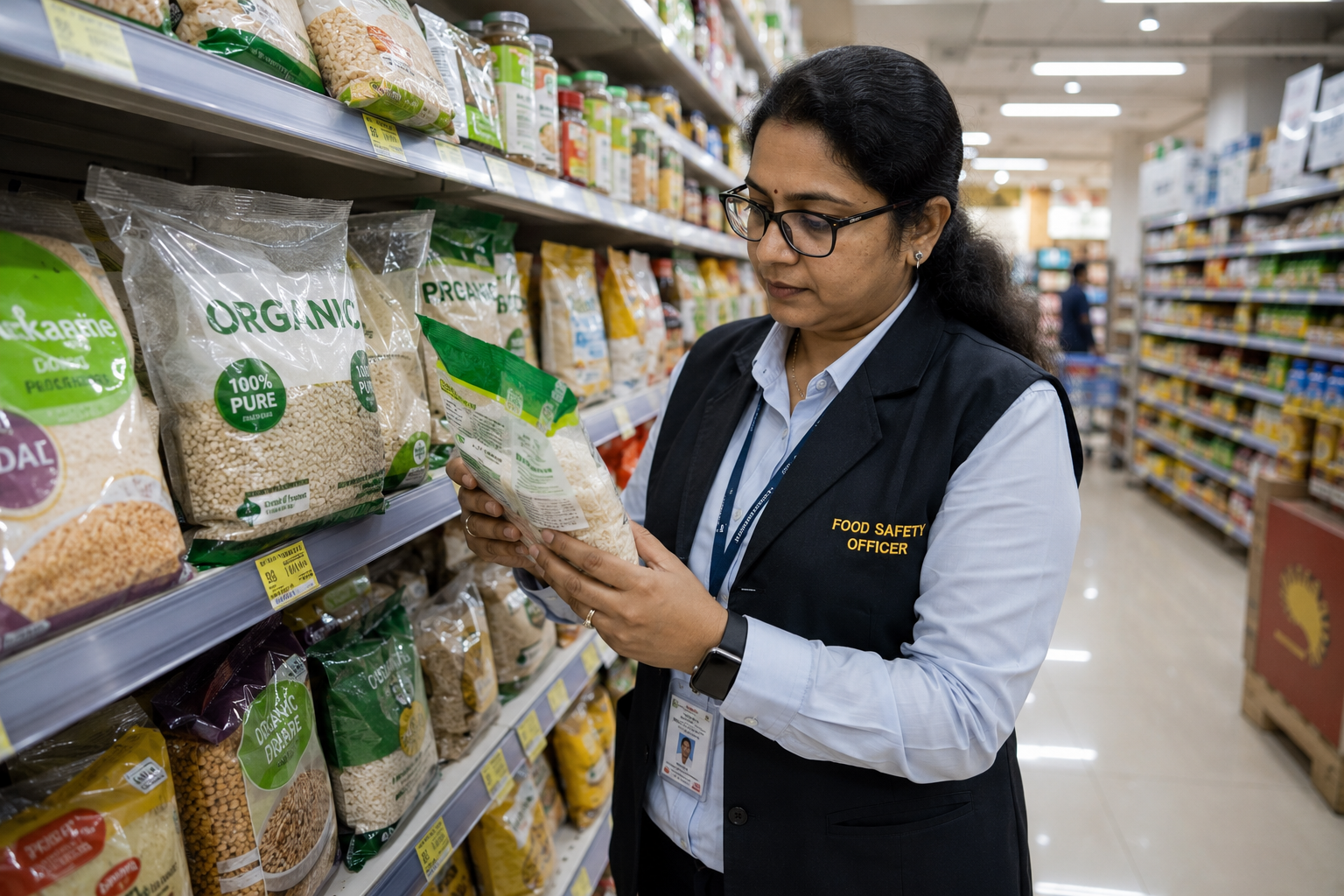
FSSAI has directed food companies across India to stop using absolute purity and natural claims such as “100% Pure” and “100% Natural” on product labels and advertisements unless they can be fully justified, aiming to prevent misleading marketing and improve consumer transparency.
Key Highlights
- FSSAI warned food companies against misleading purity and natural claims.
- Labels such as “100% Pure” and “100% Natural” must be scientifically substantiated.
- The regulator aims to improve transparency in food marketing.
- Companies violating labeling norms could face regulatory action.
News Story
New Delhi, August 6: The Food Safety and Standards Authority of India (FSSAI) has issued fresh directions to food manufacturers and brands, cautioning them against using misleading claims such as “100% Pure,” “100% Natural,” and “100% Purity Guaranteed” on product packaging and promotional material without adequate scientific or regulatory justification.
The food regulator stated that such absolute claims can create a false perception among consumers regarding a product’s quality, composition, or safety. Companies have been advised to ensure that all advertising, packaging, and labeling accurately reflect the product and fully comply with the Food Safety and Standards regulations.
According to FSSAI, the move is part of a broader effort to strengthen consumer protection by preventing deceptive marketing practices in the food and beverage sector. The authority has emphasized that manufacturers should avoid exaggerated or unverifiable claims that may influence purchasing decisions unfairly.
The latest advisory follows a series of enforcement actions by FSSAI against food and beverage companies over quality violations and non-compliance with food safety standards. The regulator has reiterated that businesses must maintain transparency in product labeling while ensuring that promotional statements are supported by evidence wherever required under existing regulations.
Industry experts believe the stricter approach will encourage greater accountability among food manufacturers and help consumers make more informed purchasing decisions based on factual product information rather than marketing slogans.