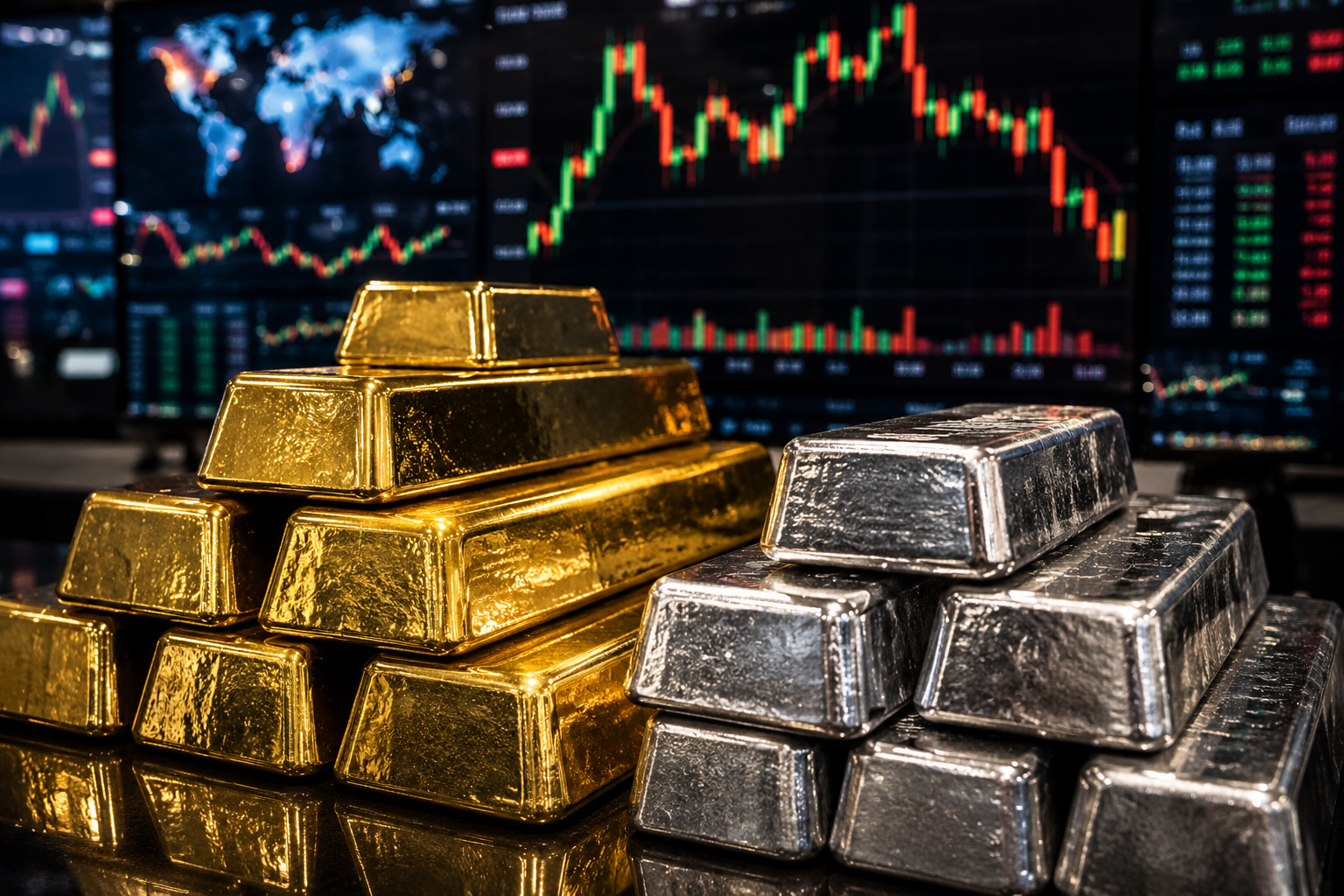
Precious metals declined after renewed US-Iran strikes pushed oil prices higher and increased inflation and interest rate worries.
Key Highlights
- Gold and silver prices fell following fresh military strikes between the US and Iran.
- Rising crude oil prices increased concerns over global inflation.
- Higher inflation expectations have strengthened the possibility of future interest rate hikes.
- Spot gold dropped as much as 1.6%, extending last week’s losses.
- Uncertainty continues over the status of the Strait of Hormuz despite conflicting statements.
Global gold and silver prices declined sharply after renewed military exchanges between the United States and Iran heightened geopolitical tensions and pushed crude oil prices higher.
Spot gold fell by as much as 1.6%, extending last week’s decline as investors reacted to the possibility of higher inflation caused by rising energy prices. Higher inflation has also increased expectations that central banks could keep interest rates elevated or introduce further rate hikes.
Market sentiment remained cautious amid uncertainty surrounding the Strait of Hormuz, a key global oil shipping route. While Iran reportedly suggested that the waterway would remain closed until further notice, US officials denied those claims. Meanwhile, the US Central Command confirmed another round of strikes in response to attacks on a commercial container ship.
The rise in oil prices added pressure on precious metals, as expectations of tighter monetary policy typically reduce the appeal of non-interest-bearing assets such as gold and silver.
Investors are now closely monitoring developments in the Middle East along with upcoming economic data and central bank signals for further direction in commodity markets.