China’s Allegation Disrupts Indian Rice Shipments
Key Highlights
- Indian rice exporters have sought government intervention over GMO-related allegations by China.
- China suspended registrations of seven affected Indian rice exporters.
- Three rice consignments were rejected in March over alleged traces of GMOs.
- Exporters maintain that commercial cultivation of genetically modified rice is not permitted in India.
- TREACG and ICAR have expressed concern over the testing and certification process.
- Exporters have sought an early joint technical review involving Indian and Chinese authorities.
- The industry wants a transparent mechanism for resolving differences in GMO test results.
- Exporters say the dispute could affect future rice shipments and India’s agricultural export interests.
New Delhi, August 18: Indian rice exporters have sought the government’s intervention to restore registrations of seven exporters affected after China suspended them over alleged genetically modified organism (GMO) contamination in rice consignments.
The Trade Exporters Association of Chhattisgarh (TREACG) has urged Commerce Minister Piyush Goyal to take up the issue with Chinese authorities and facilitate an early joint technical review.
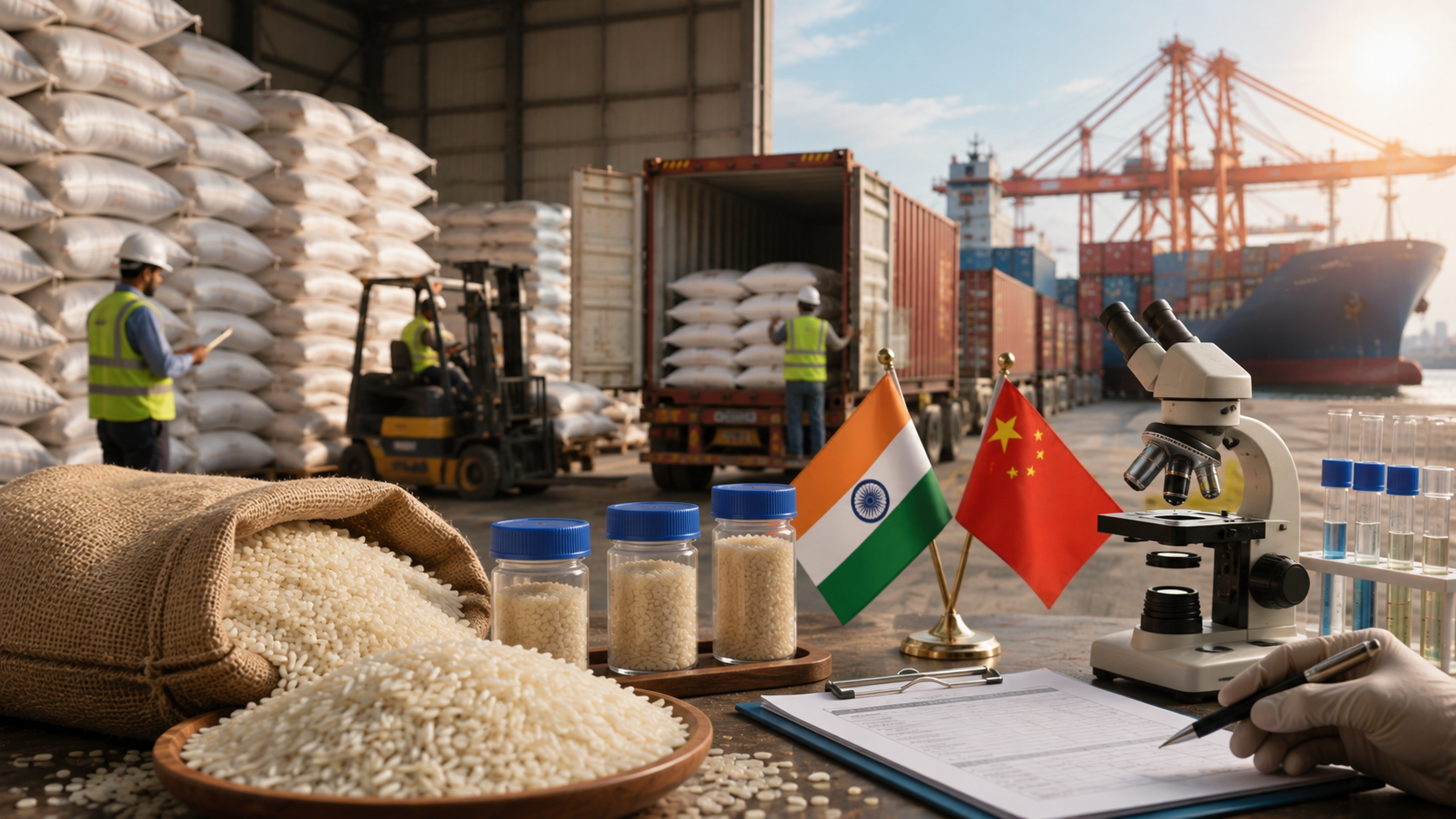
The dispute follows China’s rejection of three consignments of rice from Indian exporters in March, with Chinese authorities claiming that traces of GMOs had been detected. Registrations of seven exporters were subsequently affected.
Exporters have raised concerns about the findings, pointing out that commercial cultivation of genetically modified rice is not permitted in India.
Exporters question GMO findings
TREACG said the Indian Council of Agricultural Research (ICAR) and the Genetic Engineering Appraisal Committee (GEAC) had clarified that commercially cultivated genetically modified rice is not permitted in the country.
According to the association, the affected shipments had undergone prescribed non-GMO testing and certification procedures before being exported from India.
The exporters have therefore raised questions about the differences between testing results in India and those reported by Chinese authorities.
The association said the issue requires scientific, transparent and fact-based engagement between the competent authorities of both countries.
Joint technical review sought
TREACG has urged the government to initiate discussions with China for a joint technical review of the rejected consignments.
Such a review could examine testing procedures, sampling methods and certification standards used by both countries and help determine the reason for the differing test results.
The association has also called for a transparent and mutually acceptable mechanism to prevent similar disputes from recurring in future shipments.
A coordinated approach between Indian and Chinese regulatory authorities could help identify whether differences in laboratory procedures, testing standards or other technical factors contributed to the conflicting results.
Exporters flag impact on trade
The rice exporters’ body said an early and amicable resolution would be important for maintaining confidence in India-China rice trade and safeguarding India’s agricultural export interests.
It also argued that resolving the issue would protect Indian exporters, particularly micro, small and medium enterprises, from avoidable financial and commercial losses.
China represents an important market for agricultural commodities, making regulatory certainty critical for exporters seeking to maintain access to the market.
Three consignments rejected in March
China rejected three consignments of rice from Indian exporters in March after claiming that traces of GMOs had been detected. The exporters subsequently had their registrations or licences affected.
Industry representatives have challenged the findings and are seeking restoration of the affected registrations.
The exporters now want the government to engage directly with Chinese authorities so that the technical dispute can be resolved and normal trade can resume without similar disruptions.