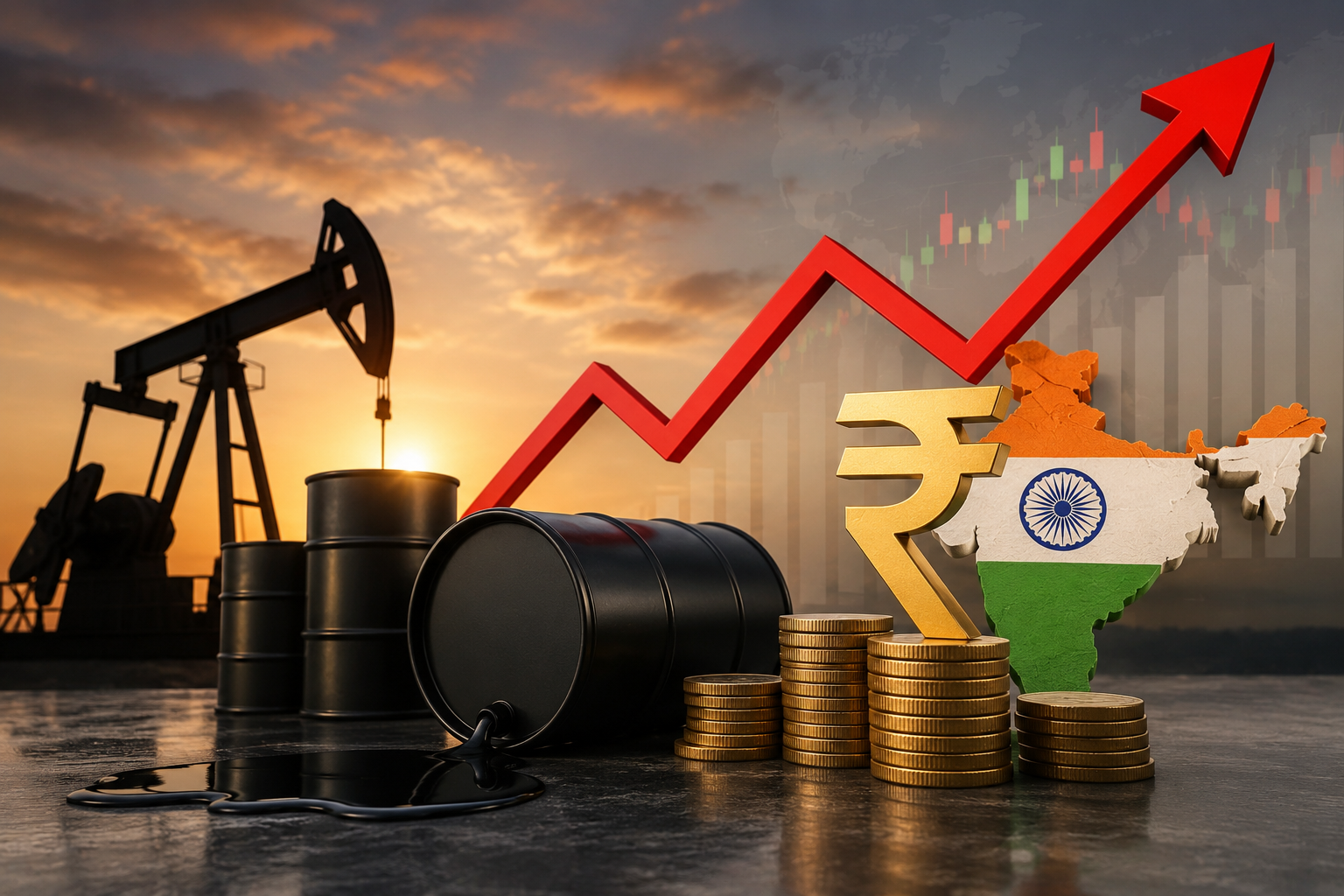
The Finance Ministry has warned that prolonged high crude oil prices could put pressure on India’s fiscal deficit and current account balance. Rising tensions in the Gulf may also increase inflation, disrupt trade and trigger volatility in capital flows.
Highlights
- Finance Ministry warns prolonged high crude prices could strain India’s economy.
- Fiscal deficit and current account balance may come under pressure.
- Brent crude was trading close to $90 per barrel.
- Gulf tensions could disrupt oil supplies and global trade routes.
- Expensive crude may raise inflation and increase the government’s subsidy burden.
- Possible El Nino conditions also require close monitoring.
The Finance Ministry has warned that sustained high crude oil prices could create fresh challenges for India’s economy by putting pressure on the fiscal deficit, current account balance and inflation.
The warning comes amid rising geopolitical tensions in the Gulf, which have raised concerns about possible disruptions to global oil supplies. Brent crude was trading at around $89.74 per barrel, while US West Texas Intermediate crude stood near $84.52 per barrel after both benchmarks recorded sharp gains.
India imports a large share of its crude oil requirements. Therefore, a prolonged rise in global oil prices directly increases the country’s import bill. A higher import bill can widen the current account deficit, weaken the rupee and raise the cost of fuel, transportation and essential goods.
In its July economic review, the Finance Ministry said elevated oil prices could also affect the government’s fiscal position. If domestic fuel prices are not increased in line with global rates, the government may face pressure to provide subsidies or support oil marketing companies.
Higher petrol and diesel prices can also push up inflation because transportation costs affect the prices of food, manufactured products and services. This could reduce household purchasing power and influence monetary policy decisions.
The ministry further warned that continuing tensions in the Gulf may push up commodity prices, disrupt international trade flows and lead to volatile movement of foreign capital. Any disruption in key shipping routes could also increase freight and insurance costs for Indian businesses.
Apart from geopolitical risks, the government is closely watching the possibility of changing weather conditions, including an El Nino shift, which could affect monsoon rainfall and agricultural production.
Despite these risks, the Finance Ministry remains optimistic about India’s medium-term economic growth. However, it said crude oil prices, global trade conditions, inflation and weather developments would need continuous monitoring to protect economic stability.