
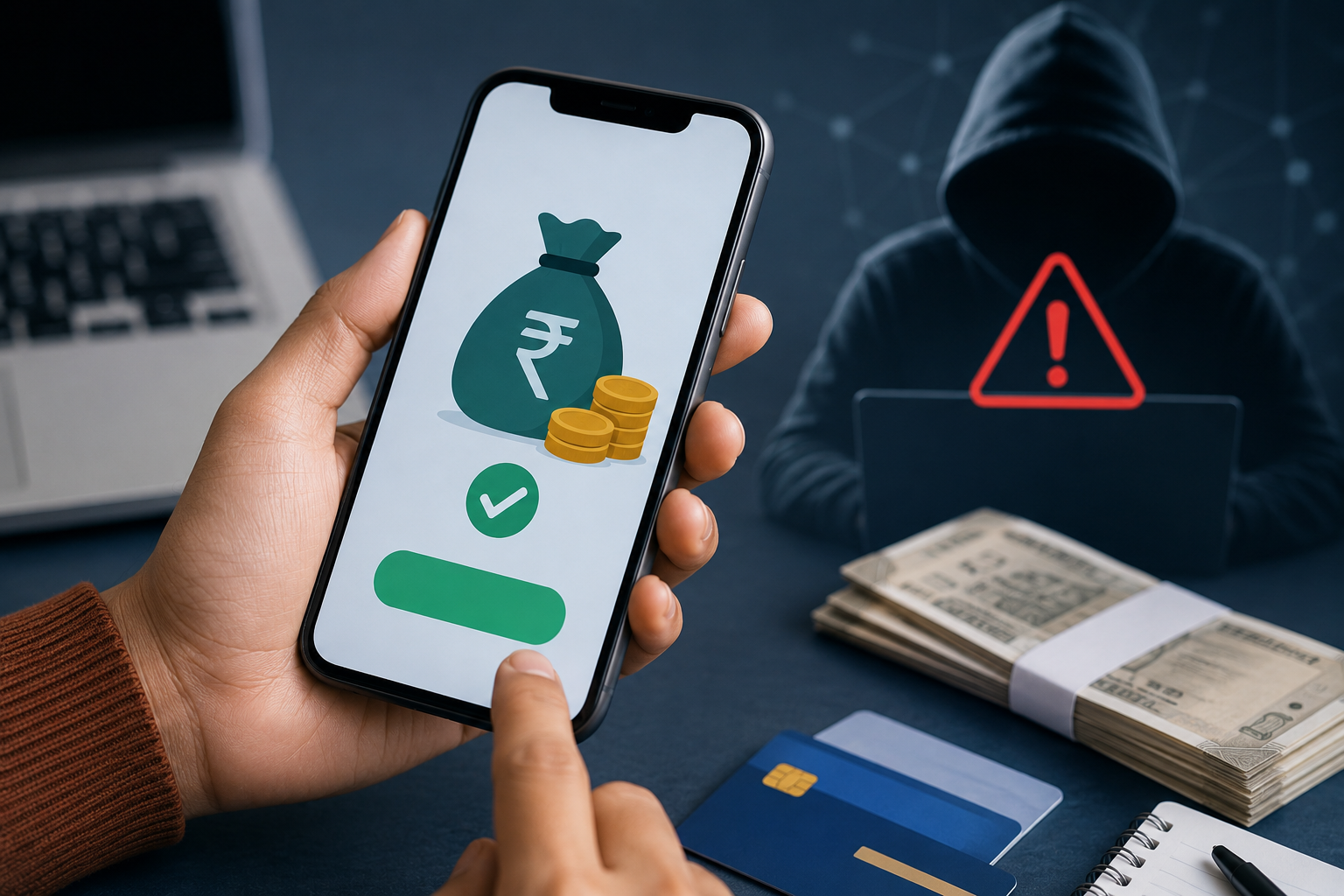
Instant approval and easy documentation can make digital loan apps attractive, but fraudulent platforms may put both your money and personal data at risk.
Borrowers should verify the lender, examine app permissions and understand loan terms before sharing personal or financial information.
Highlights
- Fake loan apps often lure borrowers with instant approval, low rates and minimal paperwork.
- A professional-looking app does not guarantee that the lender behind it is genuine.
- Borrowers should first identify and verify the bank or NBFC actually providing the loan.
- Excessive requests for contacts, photos or other phone data should be treated cautiously.
- Loan costs, interest rates, repayment terms and charges should be clearly disclosed.
- Users should avoid sharing sensitive personal or banking information with unverified apps.
- Borrowers should prioritise lender verification over promises of quick loan disbursal.
Story
Instant digital loans have made borrowing easier, but the convenience can also expose consumers to fraudulent and malicious loan apps. Platforms promising quick approval, low interest rates and easy documentation can appear attractive, particularly when someone needs money urgently.
However, borrowers should verify who is actually lending the money before submitting personal or financial information.
A loan app may look professional and legitimate on a smartphone, but its appearance alone does not establish its authenticity. Fraudulent operators can imitate the language and presentation used by genuine lenders to convince borrowers to proceed.
One of the most important checks is the identity of the lender. Consumers should determine whether the loan is being provided by a legitimate bank or non-banking financial company (NBFC) and verify the lender before accepting an offer.
App permissions can provide another warning sign. Borrowers should carefully review what information an app wants to access on their phones. Requests for unnecessary access to contacts, photographs or other personal data should raise concerns, particularly when such information is unrelated to processing the loan.
Loan terms also need close examination. Borrowers should understand the applicable interest rate, processing fees, repayment schedule and other charges rather than focusing only on how quickly the money will reach their account.
Offers that appear unusually attractive — including extremely low interest rates or almost immediate approval without adequate verification — deserve additional scrutiny.
The risks associated with fake loan apps extend beyond financial losses. Providing personal details, identity documents or banking information to an unverified platform can expose users to misuse of sensitive data.
Consumers should therefore avoid making borrowing decisions solely on the basis of speed and convenience. Before proceeding with any digital loan, identifying the lender, checking the application’s permissions and carefully reading the loan conditions can significantly reduce the risk of falling victim to fraudulent lending platforms.