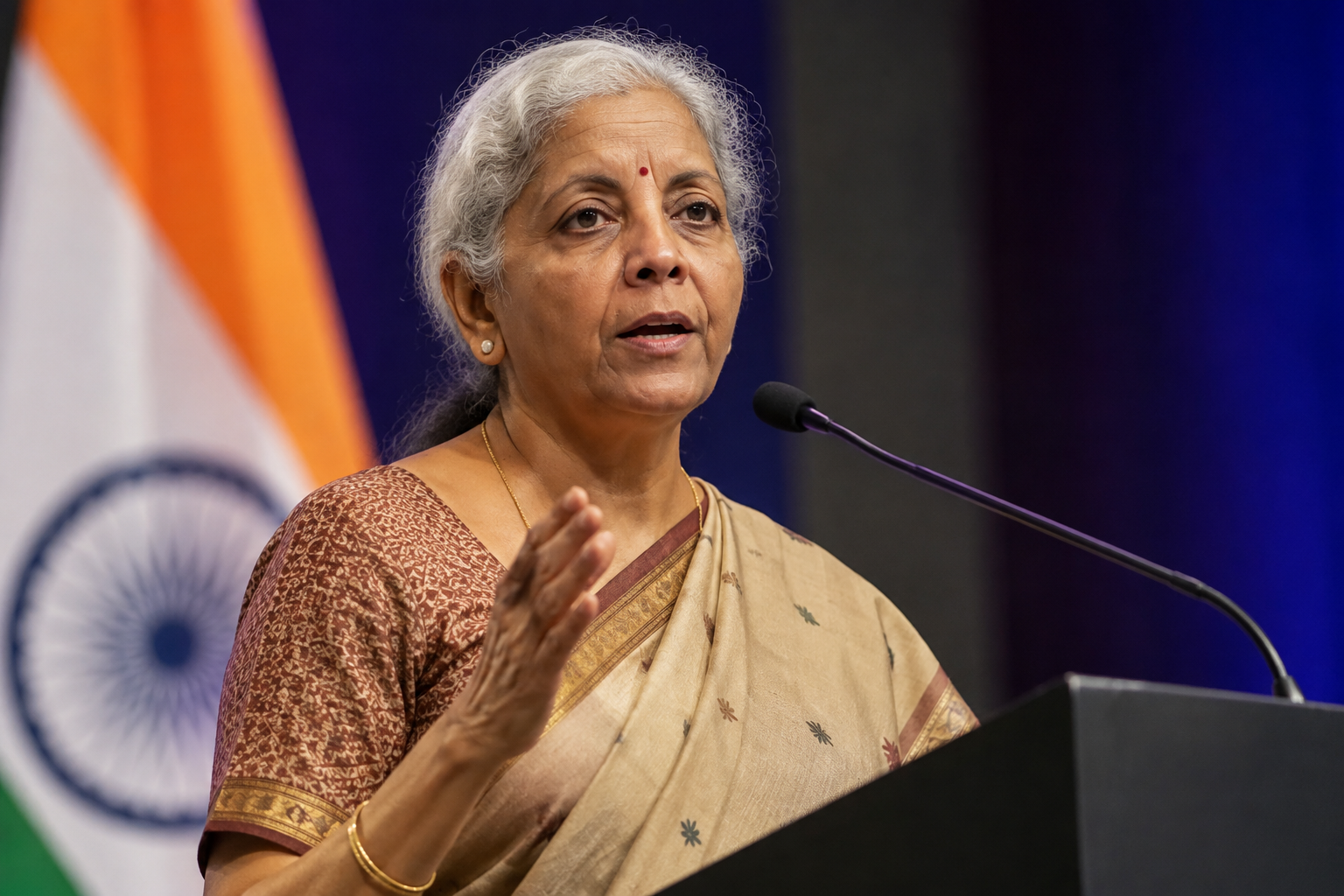
Finance Minister Nirmala Sitharaman said advance planning and keeping markets informed about India’s requirements helped the country maintain fertiliser supplies despite severe global disruptions.
Highlights
- India avoided a fertiliser shortage despite shrinking global supplies.
- Government kept markets informed in advance about India’s fertiliser requirements.
- Crude oil and LPG supplies also faced significant global challenges.
- Government created a mechanism to support higher insurance premiums for shipping companies.
- The measures helped shield farmers and households from the full impact of disruptions.
- Sitharaman said fiscal consolidation was achieved without compromising welfare and infrastructure spending.
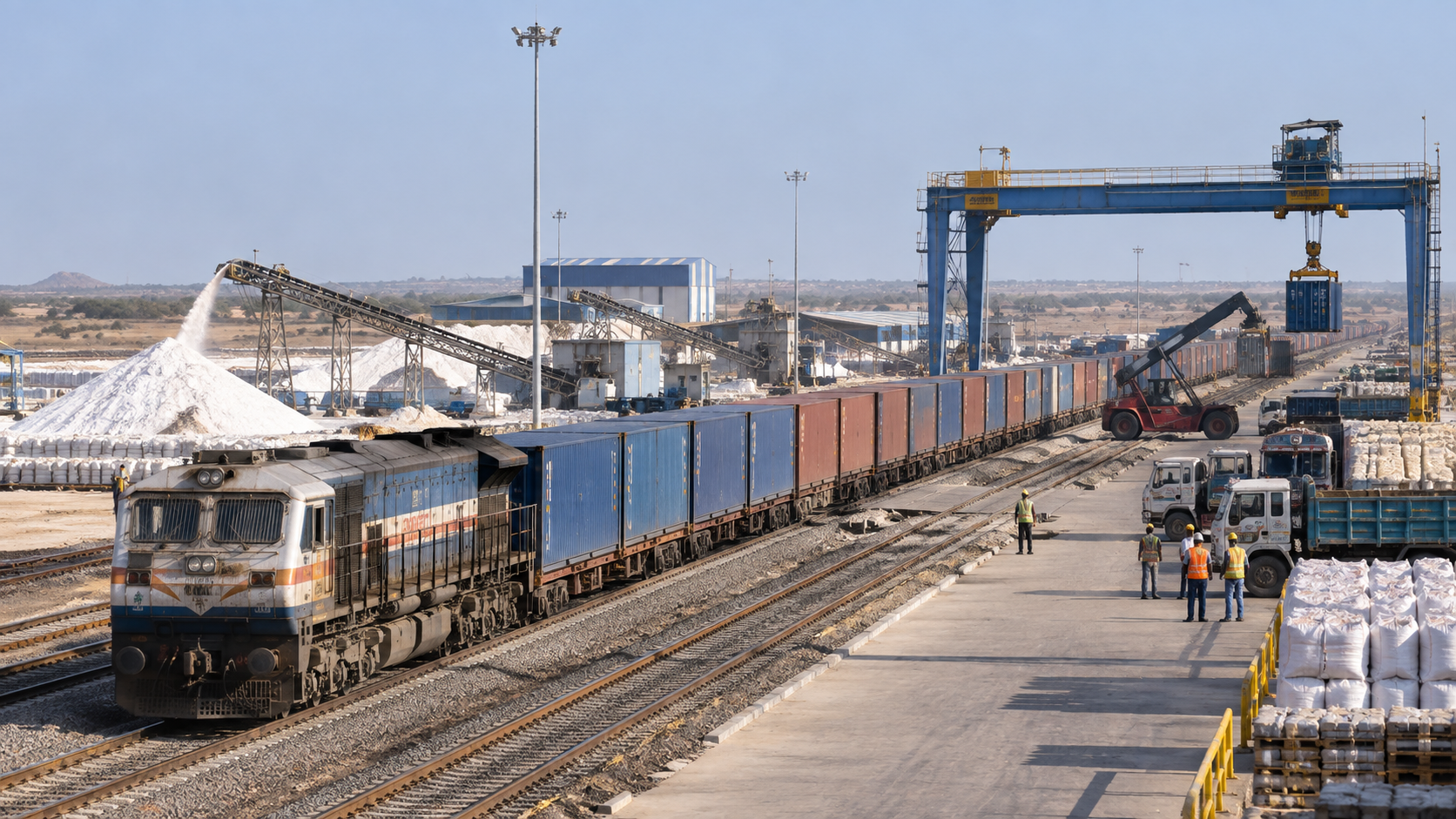
New Delhi: India managed to avoid a fertiliser shortage despite a sharp contraction in global supplies, with Finance Minister Nirmala Sitharaman crediting advance planning and communication with markets for ensuring adequate availability in the country.
Speaking to the Indian diaspora in Chicago, Sitharaman said the global supply disruption was not limited to fertilisers. Crude oil and LPG supplies also faced significant challenges amid heightened risks in international markets.
“The fertiliser shortage was not felt in India because we managed to keep the markets informed about how much we would require,” Sitharaman said.
Government Stepped In To Address Shipping Risks
The Finance Minister highlighted another challenge faced by India while procuring essential supplies from overseas. Ships involved in securing crude oil, LPG and fertilisers struggled to obtain adequate insurance cover as geopolitical and other risks pushed premiums significantly higher.
To address the problem, the government introduced a budgetary mechanism to support the additional insurance premiums being paid by shipping lines due to elevated risks.
According to Sitharaman, the intervention helped prevent farmers, households and logistics operations from bearing the full impact of disruptions in global supply chains.
India’s Credit Ratings Improving
Sitharaman also highlighted India’s economic management, saying the country’s credit ratings are improving without reducing spending on important social welfare programmes.
She said the improvement was being achieved through proper management of the economy rather than by cutting resources meant for welfare or development.
The Finance Minister also stressed that the government’s fiscal consolidation programme had not come at the expense of infrastructure expenditure.
Fiscal Deficit Target Achieved
Sitharaman said the government had fulfilled its fiscal deficit reduction trajectory, with the final milestone set for FY26 achieved. India’s fiscal deficit stood at 4.4% of GDP in FY26.
The government is now focusing on reducing its debt burden further. Sitharaman said India has set a target of bringing government debt down to 50% of GDP by 2030.
She linked the fiscal roadmap with India’s broader Viksit Bharat 2047 ambition, saying the scale and pace of reforms would require greater support in the form of talent, ideas and capital as the country works towards becoming a developed economy